
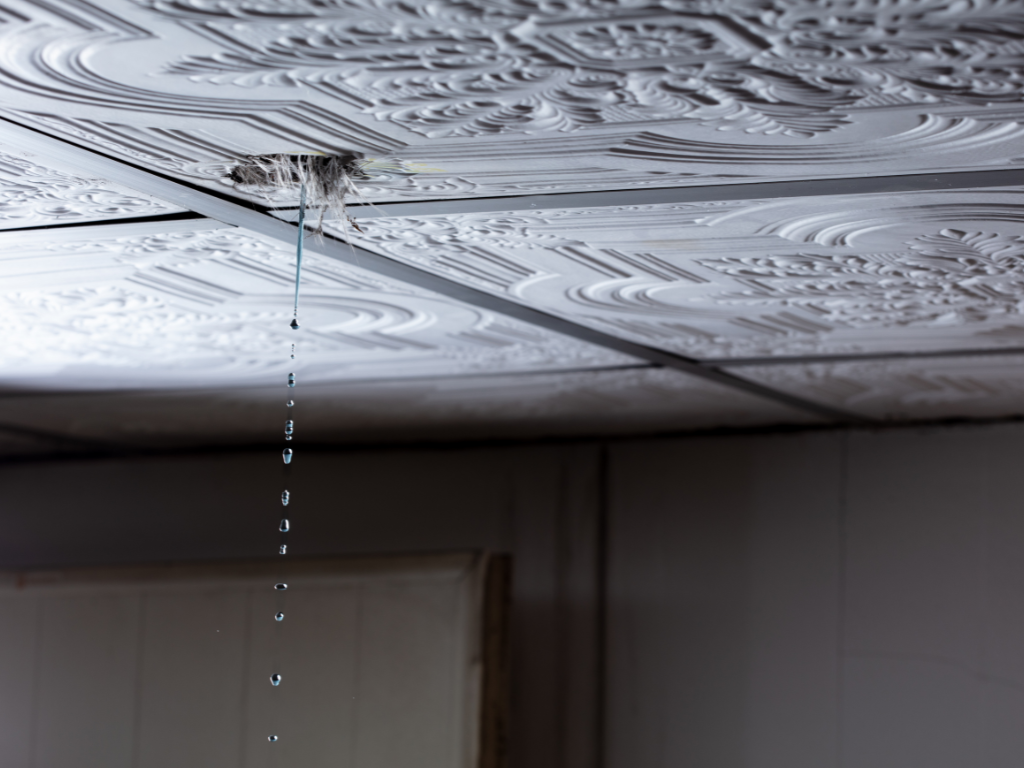

Ceiling leaking from upstairs hdb searches spike after every heavy rain and every 15-year mark since a flat’s original waterproofing was laid. Under HDB’s Goodwill Repair Assistance scheme, wear-and-tear inter-floor leaks are shared: HDB pays 50% of the repair, upper and lower owners split the remaining 50%. This blog walks you through the own-pipe-vs-neighbour diagnostic, the 50/25/25 rule, and dispute escalation for water leak repair service in Singapore.
Is the ceiling leak definitely from upstairs, or could it be my own pipe?
Not always. Around 15 to 25% of “upstairs leak” complaints trace back to the reporting unit’s own concealed piping. Rule out your own pipes first, because a neighbour dispute over a leak that turned out to be yours is expensive to walk back.
Your own piping can produce ceiling wet spots in three scenarios. Ceiling-mounted concealed pipes running from your master bathroom supply to fixtures on an adjacent internal wall. Air-conditioning drainage lines that run through the ceiling void. Concealed hot water piping between a storage water heater and the fixture served.
The diagnostic sequence: turn off your water supply at the main isolation valve for 4 to 6 hours and check whether the ceiling wet spot dries or continues advancing. If it continues, the source is not your unit’s supply. If the wet spot correlates with air-con use, drainage line is the likely source. If neither, the source is above your ceiling slab.
The water leak symptom identification guide covers the 10-symptom diagnostic protocol including the PUB meter drop test. Running these before approaching your upstairs neighbour saves the awkward conversation if the leak turns out to be internal.
Worth noting: HDB ceiling voids are typically 100 to 200mm thick and can carry pipes from more than one source. A leak from your upstairs neighbour’s shower might migrate horizontally along the slab and drip through an area that doesn’t align with the shower directly above.
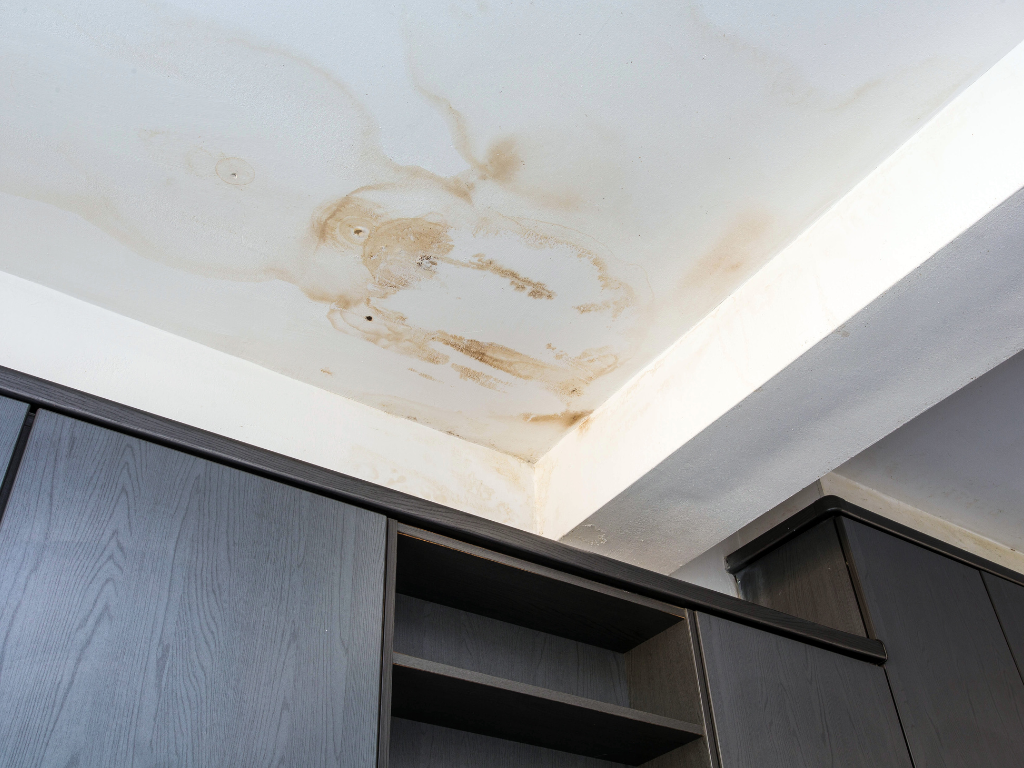
What causes water to drip from an HDB ceiling?
Four causes dominate HDB ceiling leak calls in 2026. Waterproofing membrane failure in the upstairs bathroom (60 to 70% of cases). Concealed pipe leaks in the upstairs unit’s floor slab or riser (15 to 20%). Failure of the toilet wax ring, floor trap seal, or shower zone junctions upstairs (10 to 15%). Structural cracks in the ceiling slab itself, allowing seepage during heavy rain (5 to 10%).
Waterproofing membrane failure is age-driven. Original HDB waterproofing membranes typically last 15 to 20 years before wear-and-tear breakdown allows moisture through the slab. Flats between 15 and 30 years old sit squarely in the risk window. BCA’s Good Industry Practices for waterproofing internal wet areas documents the engineering; ceiling leaks past the 15-year mark are usually membrane-driven, not pipe-driven.
Concealed pipe leaks in older flats trace to copper piping corrosion after 20 to 30 years of chlorinated water exposure. Pinhole leaks develop at joints, bends, and elbow fittings, producing a slower drip pattern than membrane failure but equally cumulative in damage.
Toilet-source leaks trace to the wax ring seal at the toilet base, failing through repeated flushing over 8 to 15 years. The upstairs unit sees a slightly wobbly toilet; the downstairs unit sees ceiling dripping. Diagnostics tie to toilet bowl repair and installation scope.
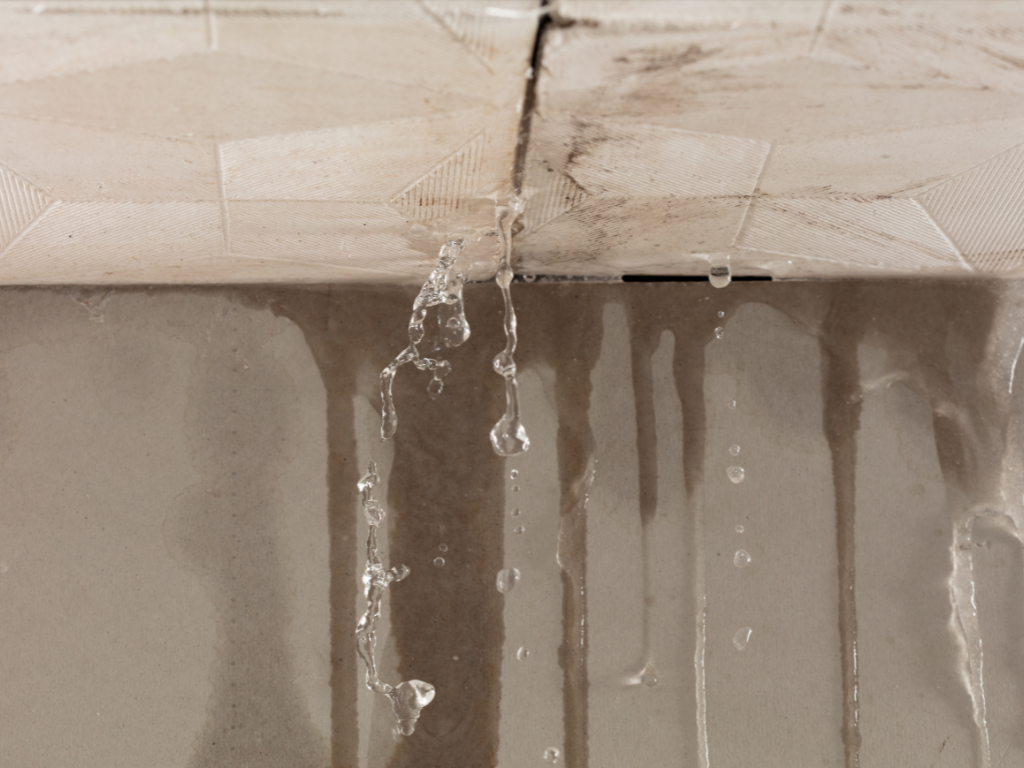
Whose responsibility is a ceiling leak in an HDB flat?
Under HDB’s inter-floor leak framework, wear-and-tear leaks are jointly shared between the upstairs and downstairs flat owners, with HDB co-funding half the repair cost through the Goodwill Repair Assistance (GRA) scheme. When the cause is upstairs owner negligence (recent unauthorised renovation, deliberate blockage, or damage) full liability shifts to the upstairs owner.
The Strata Titles Board framework applies a legal presumption in inter-floor leakage disputes: the upstairs owner bears responsibility for the leak unless they can prove otherwise. The presumption exists because the physical source of most inter-floor leaks is upstairs of the ceiling showing damage.
Where responsibility gets contested: leaks with unclear origin that could be from either unit’s plumbing, or leaks in blocks with recent Home Improvement Programme (HIP) work where the guarantee period is still active.
For condo units, the equivalent framework runs through the MCST under the Building Maintenance and Strata Management Act (BMSMA), and disputes escalate to the Strata Titles Board rather than through HDB. The joint-responsibility principle applies similarly.
Worth noting: the 3-year BTO tile replacement restriction covered in bathroom fixture installation rules exists precisely to protect the original waterproofing membrane during the initial settle-in period. Homeowners who violate the 3-year rule and cause downstream leaks bear full liability rather than sharing under GRA.
What is the HDB Goodwill Repair Assistance scheme?
The Goodwill Repair Assistance scheme is HDB’s cost-sharing framework for inter-floor leaks caused by natural wear and tear. Under GRA, HDB pays 50% of the slab and waterproofing repair cost, and the upper and lower flat owners each pay 25%. The framework sits within HDB’s broader resident renovation guidelines and applies specifically to the shared ceiling and floor slab and its waterproofing layer.
The GRA scheme covers the structural repair scope: hacking and re-waterproofing of the upstairs bathroom floor, or non-hacking PU injection where suitable, plus reinstatement of tiles and finishing. It does not cover the downstairs unit’s personal repair scope (ceiling paint, light fixtures, cabinets) or fittings damaged in the upstairs unit’s renovation.
Both owners must agree to participate. If either party refuses, cost allocation shifts to full self-funding or formal dispute proceedings. Refusal by the upstairs owner is a common trigger for escalation to Town Council mediation.
Applying for GRA runs through the HDB branch office serving the block. HDB assigns an officer to inspect, confirms the leak is wear-and-tear rather than negligence, quotes the repair scope, and coordinates the 50/25/25 split. The full process typically takes 4 to 8 weeks from complaint to physical repair. The scheme applies only to HDB flats; condo owners rely on MCST-managed common maintenance funds where slab and waterproofing are common property under the BMSMA.
How do I approach my upstairs neighbour about the leak?
Document the leak with photos and time-stamped video before making contact. Approach directly first with the documentation ready. Frame the conversation around joint diagnostic rather than blame, because until the source is confirmed, blame is premature.
The opening should cover three things: what you’re seeing (damp patches, dripping, drip frequency), when it started, and what you’re proposing (joint HDB report, or joint independent inspection). Bringing the GRA scheme in early moves the discussion from “who’s at fault” to “how do we jointly resolve this under HDB’s framework.”
Most reasonable neighbours cooperate once GRA is on the table because the 25% split beats full liability if the case escalates with STB presumption against them. Neighbours who refuse tend to fall into two categories: those who suspect their recent renovation caused the leak, or those who genuinely believe your unit’s issue is unrelated.
If the direct approach doesn’t work, escalate to written communication (email or letter) through registered post, with photos attached. Neighbours who ignore verbal communication often respond to formal written notice referencing the GRA scheme and Community Mediation Centre.
What does the joint inspection process for inter-floor leaks involve?
The joint inspection involves both flat owners engaging a qualified waterproofing contractor or HDB officer to identify the leak source, typically over 2 to 5 visits with intermediate tests. The upstairs bathroom undergoes a water ponding test to verify membrane integrity: floor drains blocked, 25mm of water held for 24 hours, monitored for reduction indicating seepage.
Under BCA’s CONQUAS framework, the ponding test is the definitive integrity check for wet-area waterproofing. A membrane that fails ponding is the source. A membrane that passes ponding rules out membrane failure and shifts diagnostic to concealed pipes, floor traps, or toilet base seals.
Additional diagnostics run alongside ponding. Thermal imaging of the ceiling below during the test period reveals moisture migration patterns. Moisture meter readings at 12-hour intervals track drying rate after ponding water is drained.
The inspection report identifies the specific source and the recommended repair method. It’s the basis for either the GRA application or a private waterproofing contractor engagement outside GRA. The cost of independent inspection sits within the plumbing service pricing for 2026 diagnostic band of $180 to $500.
Worth noting: some inspections reveal the source is not the shared slab but a fixture-specific issue (running toilet, worn wax ring, dripping shower valve). These fall outside GRA scope and become the upstairs owner’s sole responsibility to fix.
Should I call HDB, a plumber, or a waterproofing contractor first?
Call HDB first for confirmed inter-floor leaks in HDB flats. HDB’s branch office coordinates the joint inspection with your upstairs neighbour and initiates the GRA scheme. Calling a private waterproofing contractor first bypasses the 50% HDB cost subsidy and typically leads to higher out-of-pocket cost.
For condo residents, the equivalent first call is the MCST management office, not HDB. MCST arranges access to the upstairs unit and coordinates the inspection under the strata management framework.
Call a plumber first only when you’re confident the leak is your own unit’s plumbing (post-diagnostic ruling out upstairs). Plumbers don’t handle waterproofing membrane work; that’s specialised contractor scope.
Call an independent waterproofing contractor only when both flat owners have agreed to bypass GRA and self-fund, or when the leak is confirmed outside GRA scope. The cleanest path: HDB first for HDB flats, joint diagnostic through GRA, then decide whether to accept the GRA scope or self-fund a broader repair.
What if my upstairs neighbour refuses to cooperate on the leak?
Escalate through three tiers. Tier one: written formal notice through registered post referencing HDB inter-floor leak framework and specific damages. Tier two: HDB branch office mediation through the Town Council. Tier three: Community Mediation Centre or, ultimately, Small Claims Tribunal for damages under $30,000.
HDB mediation succeeds in approximately 60 to 70% of contested inter-floor cases because the STB S101(8) presumption puts pressure on the upstairs owner to demonstrate the leak isn’t from their unit. Refusing joint inspection makes their case harder to defend.
Community Mediation Centre (CMC) is a voluntary process with success dependent on both parties agreeing to attend. CMC costs $5 to $10 in 2026, and sessions typically resolve within 2 to 4 hours. Success rate is around 70% when both parties appear.
If mediation fails and damages exceed the Small Claims Tribunal threshold, the matter escalates to the Strata Titles Board (for condo) or a court claim (for HDB). Legal costs at this stage run $2,000 to $10,000+ and cases take 6 to 18 months.
Worth noting: photographs, video, water bill anomalies, and dated correspondence become critical evidence. Maintain a chronological file from the first damp patch onward.
How is the ceiling leak actually repaired?
Two repair methods handle most inter-floor leaks in 2026. Traditional hacking: remove upstairs bathroom tiles and screed, apply new waterproofing membrane, re-screed and re-tile. Non-hacking PU injection: inject polyurethane resin from below into cracks and voids, which expands to seal moisture pathways within the concrete slab.
Traditional hacking runs $3,000 to $6,500 for a standard HDB bathroom in 2026, covers full membrane replacement, and takes 5 to 10 days with the upstairs bathroom out of service. This is the correct method when the existing membrane has substantially failed. The tile regrouting and loose tile repair breakdown covers the tile side of the reinstatement scope.
PU injection runs $800 to $2,500 for a standard HDB inter-floor leak repair, seals within hours, and doesn’t disrupt the upstairs bathroom finish. The method works best for localised leaks caused by hairline cracks or membrane micro-failures. It works less well for widespread membrane deterioration in older flats where multiple failure points exist.
Choosing between methods depends on age and extent. Flats under 20 years old with a single confirmed leak source often resolve cleanly with PU injection. Flats past 20 years with multiple prior leak episodes typically warrant traditional hacking to replace the entire membrane. GRA covers both methods.
Worth noting: some contractors push PU injection as universally superior because their margin is higher and the work is faster. In flats past 25 years with recurring leak history, PU injection often lasts 2 to 5 years before another round is needed. Traditional hacking with new membrane lasts 15 to 20 years to the next expected failure.
Conclusion
Singapore HDB ceiling leaks from upstairs follow a clean regulatory framework once you know it exists. Rule out your own piping first via 4 to 6 hour supply isolation. Approach your upstairs neighbour with documentation and the GRA 50/25/25 cost-sharing framework as the starting point. Escalate through HDB Town Council, then Community Mediation Centre, then STB or Small Claims if cooperation fails. Repair method choice hinges on flat age: PU injection for younger flats with localised failure, traditional hacking with new membrane for older flats with systemic wear.
For a written diagnostic covering the own-pipe-vs-upstairs check and repair scope recommendation, request a written Fix It Papa quote with photos of the ceiling stain, its location, and any dated correspondence with your upstairs neighbour.
FAQs About Ceiling Leaking From Upstairs HDB
How long does the HDB GRA scheme take from complaint to repair?
The Goodwill Repair Assistance process typically takes 4 to 8 weeks from initial HDB branch office complaint to physical repair completion. Peak monsoon months (November to January) extend this to 8 to 12 weeks. The joint inspection typically completes within 2 to 3 weeks; scope agreement and contractor scheduling add the remaining time.
Can I fix my downstairs ceiling myself while waiting for the upstairs repair?
Not recommended. Repainting or patching the downstairs ceiling while the upstairs source is unresolved produces recurring failure within 2 to 6 months as new leaks penetrate the fresh paint. Wait until the upstairs source is fixed and monitored dry for 6 to 8 weeks before addressing your ceiling.
Does insurance cover HDB inter-floor leak damage?
Home content insurance typically covers water damage to your personal belongings and fittings from an inter-floor leak, subject to deductibles and policy terms. It does not cover the structural slab and waterproofing repair, which falls under GRA. Report to your insurer within 30 days.
What if the leak is from my kitchen ceiling, not bathroom?
Kitchen ceiling leaks from upstairs are less common (10 to 15% of inter-floor cases) and usually trace to concealed drainage pipes rather than waterproofing membrane. GRA applies for slab-related repairs. If the source is a concealed pipe rather than the shared slab, cost allocation falls entirely on the upstairs owner rather than shared 50/25/25.
Can new BTO owners face inter-floor leaks in the first 3 years?
Yes, though less commonly. New BTO flats have fresh waterproofing membranes that rarely fail before year 5. Pipe joint defects sometimes produce first-year leaks. These fall under the HDB Defects Liability Period rather than GRA. Report through the HDB defects portal within the DLP window.
Leave a Reply
You must be logged in to post a comment.