

Water leak signs singapore appear in a predictable sequence: damp patches, musty smell, hollow paint, water bill spikes, then visible mould. Homeowners who catch the first two symptoms pay $150 to $400 for early repair; those who miss all five until ceiling collapse pay $3,000 to $8,000. This blog walks you through 10 symptoms, the 30-minute meter test, and location-mapping for water leak repair service in Singapore.
What are the early signs of a water leak at home?
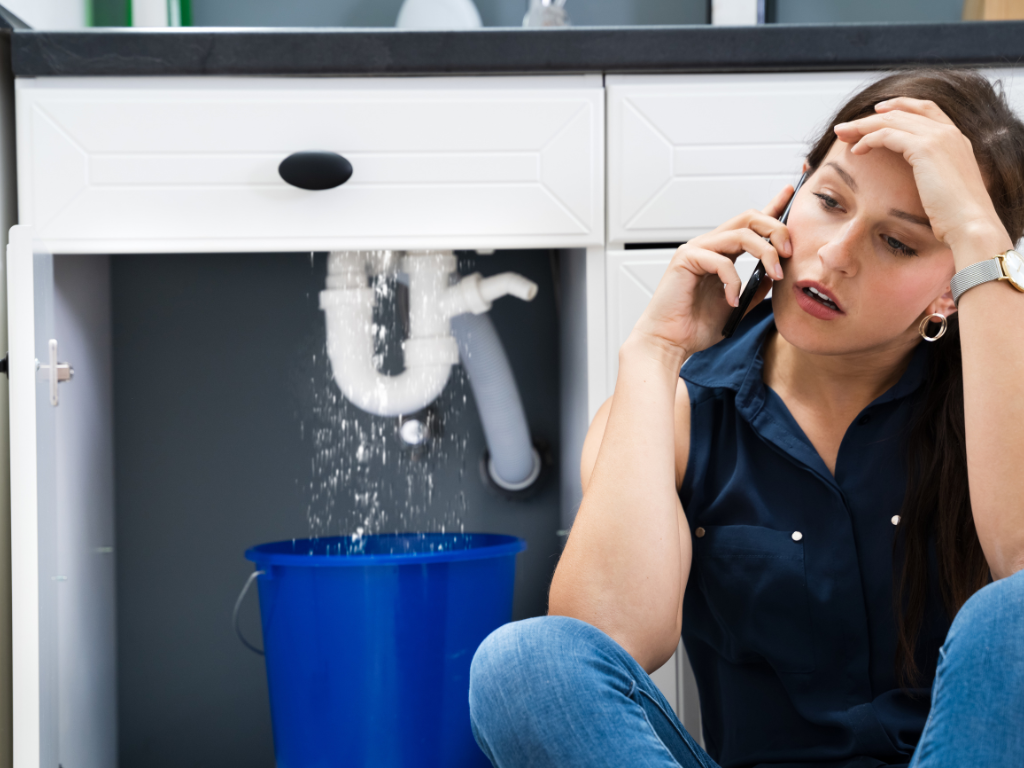
The earliest signs of a water leak in Singapore homes are subtle: a damp patch smaller than a dinner plate on a wall or ceiling, a faint musty smell in an enclosed area (bathroom, kitchen cabinet, wardrobe corner), and paint that feels slightly cool to touch. These three appear before visible staining or bubbling because the leak volume is still small and evaporation lags moisture ingress.
A practical triage framework: one symptom means watch-and-monitor for 2 to 4 weeks. Two symptoms means schedule a diagnostic within 7 to 14 days. Three or more symptoms means immediate action, because the leak is now producing enough water for multiple indicators to manifest, and structural damage is compounding.
Most Singapore water leaks develop over 3 to 12 months from first sign to visible damage. This slow progression fools homeowners into thinking the problem is stable. Where this breaks down: what looks stable is leak volume matched to evaporation rate at current temperature. When dry-season humidity drops or air-conditioning use increases, evaporation shifts and the symptoms accelerate.
How do I tell if my water bill is high because of a leak?
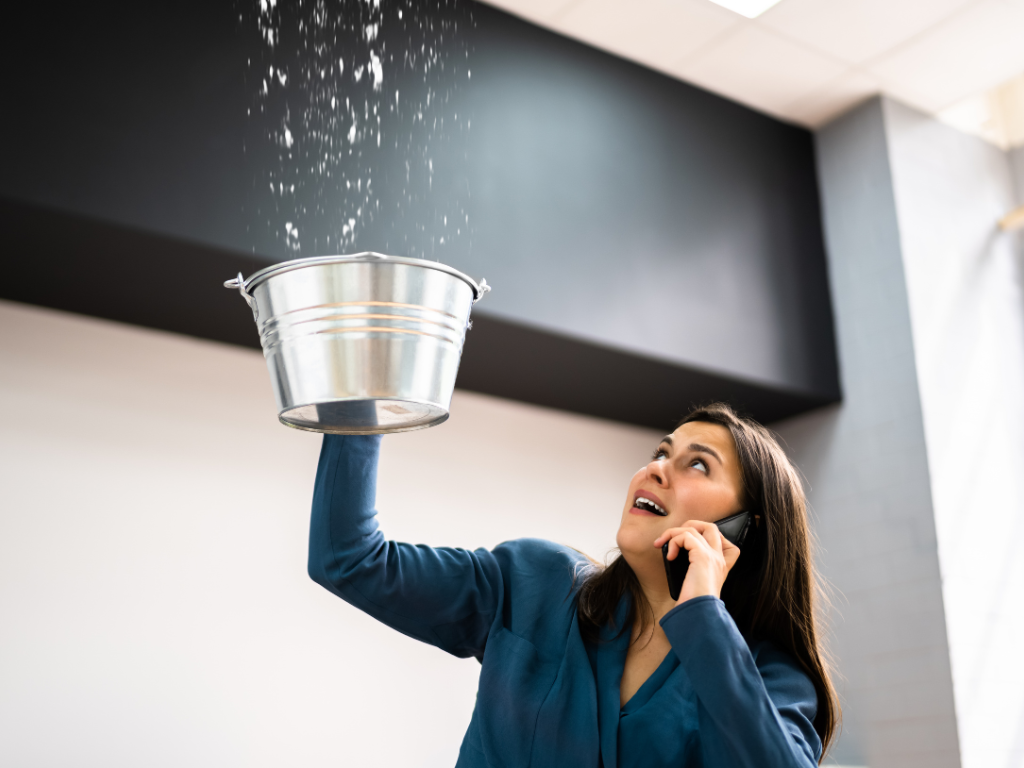
Compare your current PUB water bill against your 12-month rolling average. A single-month spike of 25 to 40% above your typical usage without a lifestyle change (visitors, new appliance, garden watering) indicates a concealed leak. Persistent 15 to 25% elevation across 2 to 3 months confirms it.
The PUB water bill for a typical 4-room HDB flat with 3 to 4 occupants runs $30 to $60 monthly in 2026. A concealed pipe leak dripping at 2 to 3 drops per second adds 40 to 80 litres per day, roughly $8 to $18 monthly. A larger slab leak or hidden burst can add $50 to $150 monthly. These are billing-detectable well before visible damage.
The confirmation test: turn off every water fixture and appliance in the flat, note the water meter reading, wait 30 minutes, then re-read. Any movement of the meter dial or digital reading confirms a leak somewhere between the meter and your fixtures. PUB’s plumbing works framework treats meter movement as the primary confirmation signal for concealed leaks.
Worth noting: some appliances draw water on cycles (dishwasher fills, water heater refills, ice maker on the fridge). Check that all cycle-drawing appliances are between cycles when starting the test, or unplug them for the test duration.
What does a damp patch on a wall or ceiling mean?
A damp patch on an internal Singapore wall or ceiling almost always indicates active water ingress from concealed piping, waterproofing membrane failure, or slab seepage from an upstairs unit. Location tells you the source. Bathroom-adjacent walls point to concealed supply piping; kitchen-adjacent walls point to sink drainage or the kitchen supply line; ceiling patches in wet areas point to slab seepage from upstairs.
Fresh damp patches feel cool to touch and often show a darker ring at the perimeter (the “leading edge” where moisture is advancing). Old damp patches that have cycled wet-dry show concentric rings because each cycle deposits new mineral content at the previous edge. Multiple rings mean the leak has cycled over months.
A damp patch under 15cm across usually indicates a slow leak at a joint, valve, or small pipe crack. Damp patches over 30cm across indicate a burst or long-duration seepage. The damp patch itself is the symptom, not the source; the source is often 30 to 100cm away because water travels along the path of least resistance through the substrate.
Why is there a musty smell in my bathroom or kitchen?
A persistent musty smell in a Singapore bathroom or kitchen indicates trapped moisture supporting microbial growth, usually from concealed pipe leaks, blocked floor traps, or biofilm buildup in drain lines. The smell is a diagnostic signal, not just a nuisance. Untreated musty odours worsen over 2 to 6 months as mould colonies expand.
Common sources: a hidden pipe leak behind a wall or under a cabinet keeps the substrate damp enough for mould, producing the characteristic earthy smell. Blocked floor traps allow sewer gas to bypass the water seal, producing a sulphurous version. Long-neglected drain lines develop biofilm coatings that release volatile organic compounds.
The differentiation test: block the floor trap with a wet cloth or tape and observe over 24 hours. If the smell reduces significantly, sewer gas or drain biofilm is the source, and the fix is drain choke and clog clearing service work. If the smell persists, moisture behind wall or under cabinet is the source, and the fix is leak diagnostic and repair.
Worth noting: musty smells in HDB kitchens often trace to the concealed drain line from kitchen sink to horizontal collector. A CCTV drain camera inspection ($180 to $300) reveals whether biofilm buildup or a partial pipe crack is producing the smell.
What causes hollow bubbling paint on ceilings and walls?
Hollow bubbling paint indicates water saturation of the substrate behind the paint layer. Moisture destroys the paint’s adhesive bond, lifting the film away from the wall. The bubble grows as water accumulates, and eventually bursts or flakes off, exposing damp substrate.
Bubbling paint on a bathroom ceiling almost always indicates slab seepage from an upstairs unit’s bathroom floor. The waterproofing membrane upstairs has failed at some point (typically at floor-trap perimeter, shower zone, or bath-to-wall junction), and water is now migrating through the concrete slab into your ceiling. BCA’s Good Industry Practices for waterproofing internal wet areas covers the engineering, but the practical implication is that fixing your ceiling paint without addressing the upstairs source produces recurring failure within 3 to 8 months.
Bubbling paint on internal walls of your own unit points to concealed pipe leaks or seepage from adjacent wet zones within the same unit. The bubble is downstream of the source; trace the affected area backwards toward the nearest bathroom or kitchen wall.
Worth noting: bubbling paint on external-facing walls can be facade waterproofing failure rather than internal plumbing. This affects whether repair falls within your unit’s scope or the MCST’s common-area maintenance for condos, or HDB town council scope for HDB blocks.
How do I do the PUB water meter drop test?
The PUB water meter drop test detects concealed leaks by isolating your unit’s usage and observing meter movement over a controlled interval. Standard protocol: 30 minutes with zero water use. Any meter movement in that window confirms a leak.
The step-by-step:
- Turn off every water fixture: taps, showers, toilet supply valves at the base of each toilet, washing machine supply valve, dishwasher, water heater inlet.
- Unplug appliances that draw water on timers or cycles.
- Locate your unit’s water meter (electrical or utility riser access panel near the main door, or inside the household shelter).
- Note the current reading. PUB digital meters display cubic metres and litres. Photograph the display.
- Wait 30 minutes without using any water.
- Re-read and compare.
Any measurable movement (a change in the lowest digit or a rotating dial) confirms water is flowing somewhere in your supply system. A meter that stays completely static rules out concealed supply-line leaks, though it doesn’t rule out drainage-side leaks after the fixtures.
The cost of investigation and repair sits within the plumbing service cost breakdown for 2026. Confirming the leak with a drop test before calling a plumber saves a wasted $80 to $150 call-out if the symptoms turn out to be condensation or an isolated fixture leak.
What’s the difference between condensation and a real water leak?
Singapore’s high humidity (65 to 95% relative humidity daily) produces condensation that mimics leak symptoms, especially on cool surfaces near air-conditioners or on external walls with poor insulation. The differentiation matters because condensation doesn’t need a plumber; it needs ventilation or dehumidification.
The five-test differentiation:
- Time-of-day pattern: condensation appears in humid morning hours and after air-conditioning stops. Leaks appear consistently regardless of time.
- Foil test: tape aluminium foil over the suspect patch, sealing the edges. Wait 48 hours. Moisture on the room side is condensation from air. Moisture on the wall side is a leak from behind the wall.
- Dry-and-observe: wipe the surface dry, note the time, check every 2 to 4 hours. Condensation returns overnight and dissipates by mid-morning. Leaks stay damp continuously or grow.
- Location: condensation appears on cool surfaces (external walls, near air-con units, windows). Leaks appear on internal walls, ceilings, and floors adjacent to plumbing.
- Meter test correlation: a leak causes water meter drop test to move. Condensation doesn’t.
The false-positive rate on suspected Singapore water leaks that turn out to be condensation is 30 to 40%. Running the foil test and drop test before booking a plumber avoids the $80 to $120 call-out plus wasted diagnostic time.
Where do water leaks usually happen in HDB flats and condos?
Singapore residential water leaks concentrate in four zones. The bathroom (floor trap perimeter, shower waterproofing, toilet wax ring, concealed supply lines behind vanity). The kitchen (sink drainage trap, dishwasher supply line, refrigerator water line). The utility riser and household shelter (main supply line joints, water heater connections). The ceiling from upstairs (slab seepage through the concrete slab from the upstairs unit’s wet areas).
Bathroom leaks account for 40 to 50% of Singapore residential water leak calls. Toilet wax ring failures alone account for 15 to 20% of bathroom-specific leak diagnostics. The toilet bowl repair and installation service scope handles both the wax ring reseat and associated tile and grout inspection.
Kitchen leaks account for 20 to 25% of calls. The under-sink zone is most common: dishwasher supply hose degradation, garbage disposal seals, P-trap connections. Older HDB kitchens with copper piping show pinhole leaks at bends after 20 to 30 years of chlorinated water exposure.
Slab seepage from upstairs accounts for 15 to 20% of calls and is the most contentious because cost allocation depends on source identification. HDB’s resident renovation guidelines reference the inter-floor mediation framework administered through the HDB Community Mediation Centre when neighbour resolution stalls.
External and structural leaks (facade waterproofing, roof, balcony overflow) account for the remaining 10 to 20%. These fall outside individual unit responsibility, and remediation runs through town council for HDB or MCST for condo.
Should I call PUB or a plumber for a suspected leak?
Call a plumber first for suspected internal leaks. Call PUB only when the leak affects supply from before the meter to your unit. A homeowner who calls PUB for an internal fixture leak wastes time; PUB will refer you to a licensed plumber.
PUB responsibility ends at the water meter serving your unit. Anything from that meter onward (supply pipes into the flat, distribution manifold, fixture supply lines, and the fixtures themselves) is homeowner scope. Anything before the meter (main service line from the estate supply, meter itself, connection to the PUB grid) is PUB scope.
For an HDB flat, the meter is typically inside the household shelter or at an access panel near the main entry door. For a condo, meters are often in the utility floor or riser room per level. Verify meter location before assuming PUB will respond.
The Fix It Papa plumbing services scope covers everything from the meter onward. Where the scope requires a PUB Licensed Plumber (supply line modifications, meter modifications, backflow devices), the referral happens as part of the diagnostic report.
Worth noting: for HDB inter-floor leaks where the source is confirmed to be from your upstairs neighbour’s unit, neither PUB nor your plumber can enter the neighbour’s flat without their consent. Direct communication first, HDB Community Mediation Centre referral if resolution stalls.
Conclusion
Singapore water leaks announce themselves in a five-symptom sequence: damp patches, musty smell, hollow bubbling paint, water bill spike, mould growth. Catching the first one or two symptoms means a $150 to $400 repair; catching them all after ceiling collapse means $3,000 to $8,000 including inter-floor dispute. The 30-minute PUB meter drop test confirms whether a real leak exists before you spend a call-out fee, and the foil test distinguishes leaks from condensation. Location-mapping points diagnostic effort where it belongs.
For a written leak diagnostic including thermal imaging, moisture-meter inspection, PUB meter test, and a source-location report before any repair work commits, request a written Fix It Papa quote with photos of the damp patch, its location, and any water bill anomaly.
FAQs About Water Leak Signs Singapore
How long does a Singapore water leak take to cause visible damage?
A slow concealed water leak in a Singapore HDB flat produces visible damage within 3 to 12 months from onset. Fast leaks (burst pipes, failed joints) produce visible ceiling staining within 1 to 4 weeks. Air-conditioned flats slow evaporation, so damage manifests faster than in naturally ventilated spaces.
Are white powdery stains on my wall a sign of a water leak?
Yes. White powdery or crystalline stains (efflorescence) form when water dissolves salts within concrete or brick and deposits them at the surface as water evaporates. Efflorescence indicates the leak has been active for at least 4 to 8 weeks. Removal without addressing the source produces recurrence within 2 to 4 months.
Does an HDB inter-floor leak require me to fix my ceiling if the source is upstairs?
No. If the source is confirmed to be the upstairs unit’s fixture, pipe, or waterproofing membrane, the upstairs owner is responsible for the source repair. The downstairs unit’s ceiling repair may be shared through negotiation or handled by the source unit. HDB Community Mediation Centre handles disputes.
Will a leaking toilet flapper show up on the water meter drop test?
Yes. A running toilet with a failing flapper valve produces continuous water flow that registers on the PUB meter as sustained movement over 30 minutes. If your drop test shows meter movement and all taps are off, check every toilet by lifting the cistern lid. A worn flapper adds $8 to $25 monthly to your water bill.
How much does a leak diagnostic cost in Singapore?
Professional leak diagnostic in Singapore runs $180 to $350 in 2026 for a standard inspection including thermal imaging, moisture meter readings, PUB meter drop test, and a written source report. Repair cost is separate. Diagnostic fees are usually waived if the same contractor performs the repair valued above $400.
Leave a Reply
You must be logged in to post a comment.