
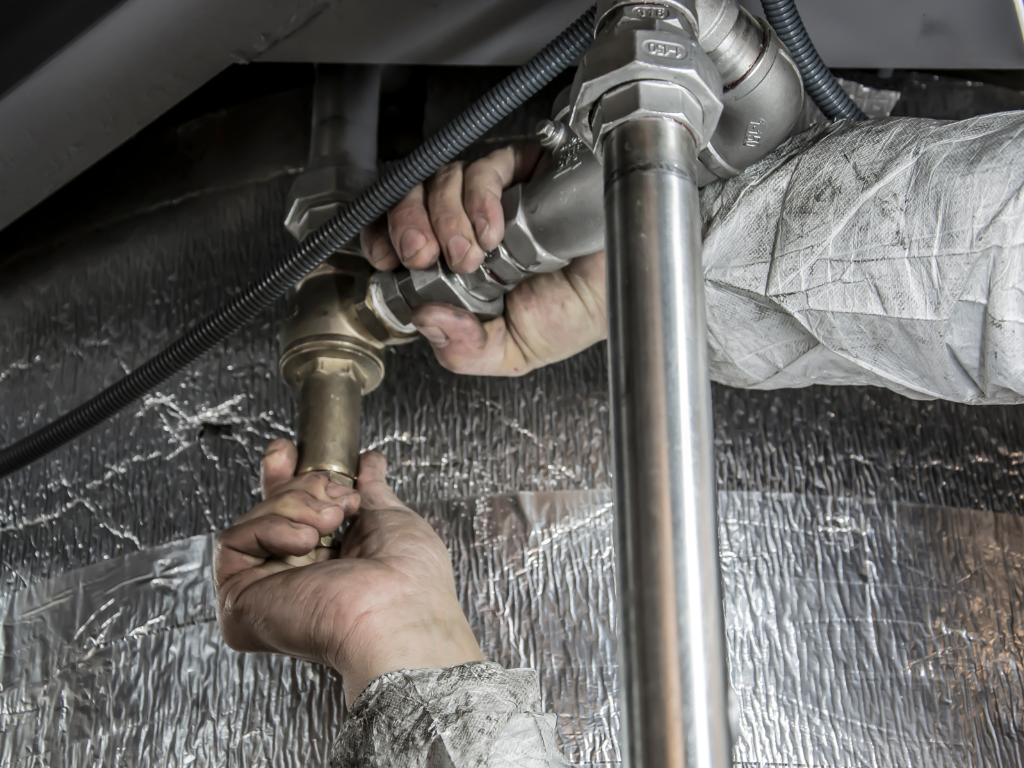

Water hides its tracks. Concealed pipe leak detection in Singapore now leans on acoustic sensors and thermal cameras, since a buried pipe can weep for weeks before a stain shows. PUB logged household water use at 141 litres per person daily in 2023; a hidden leak inflates that. This blog walks you through the signs, the methods, the costs, and who pays for water leak diagnosis and repair.
What does a concealed pipe leak behind a wall actually look like?
A concealed pipe leak rarely announces itself with a drip. It shows as a damp patch that darkens after every shower, blistered paint that lifts in the same spot after each repaint, or a faint musty smell near a wet wall. On a hot-water line, the patch feels warm; on a cold supply line, cool. A white salt crust, called efflorescence, often edges the stain as water carries minerals out through the plaster.
Size gives it away. A concealed weep usually spreads a damp zone 200 to 600 mm across that returns within days, not a one-off mark. The cleanest confirmation costs nothing: shut every tap and appliance, then watch your water meter dial. Movement with everything off means a live leak somewhere in the pipework.
A slow weep is not the same as a burst joint spraying under the sink, which needs burst pipe emergency response the same hour. The hidden leak is the patient one. Left alone, it feeds mould and, in older Housing and Development Board slabs, corrodes reinforcement steel until concrete spalls. A damp patch that dries and returns is a pipe, not humidity.

How do plumbers locate a hidden leak without hacking the wall?
Professionals run a sequence, not a single gadget. The logic is simple: prove there is a leak, then narrow it, then open the smallest possible hole. Fix It Papa follows a symptom-to-method-to-access order. First a pressure test confirms a pipe is losing water. Then acoustic listening tracks the escape noise along the run. Then a thermal camera and moisture meter map the wet zone on the surface. Only after those three agree on a spot does any cutting start.
That order is what makes non-invasive leak detection worth paying for. Guesswork means hacking a full wall to expose a whole run of embedded pipe. A located leak means one access window, often a single 300 mm square of tile, over the exact fault.
The methods overlap on purpose. Acoustic detection pinpoints pressurised supply lines; thermal imaging catches evaporative cooling on the surface; a moisture meter confirms what the camera suggests. Used together, they cross-check each other, which is the difference between the non-invasive detection technology a trained plumber brings and a homeowner poking at plaster. Each tool covers the blind spot of the last.

Is acoustic leak detection accurate enough to pinpoint a buried pipe?
Yes, for pressurised supply pipes. Acoustic leak detection uses ground and contact microphones that amplify the hiss of water forcing its way out of a pipe under pressure. The plumber sweeps the microphone across the wall or floor and follows the sound to its loudest point, which sits directly over the fault. On a copper riser pipe in an HDB flat, a skilled operator narrows the leak to within about 300 mm.
The method has honest limits. It needs the system pressurised, so a mains valve stays open during the test. It performs best on metal pipes, which carry sound cleanly, and weaker on PVC, which dampens it. A drainage pipe, unpressurised by design, produces almost no escape noise, so acoustic listening cannot trace it.
That is why acoustic work pairs with a pressure hold. The plumber isolates a section, pressurises the embedded pipe, and listens along the concealed conduit for the tell-tale rush. Background noise from a busy corridor or a running aircon compressor forces the test into quieter hours. Done properly, sound does most of the locating before a single tile moves.
Can thermal imaging really see a leak inside a wall?
Thermal imaging does not see water. It sees temperature. A thermal camera reads surface heat, and escaping water changes that surface in two ways. A cold-water leak evaporates and cools the plaster, showing as a dark, cooler patch. A hot-water leak warms a plume that fans out from the pipe run. Either contrast, often a difference of one to three degrees Celsius, points the plumber to the wet zone.
The camera locates the area; a moisture meter confirms the depth of the problem. Moisture mapping presses a meter across the suspect wall and reads moisture content as a percentage, marking where readings spike. Two independent signals, thermal and moisture, reduce false alarms.
Limits matter here too. A thermal camera reads the surface, not the pipe itself, so a leak buried deep behind dense concrete may show only a faint, spread-out signature. A cold supply pipe or an aircon condensate line can mimic a leak’s cold patch, which is why thermal readings never stand alone. Fix It Papa treats the camera as a mapping tool, cross-checked against acoustic and pressure results before committing to an access point.
What is a pressure drop test, and when do plumbers use it?
A pressure drop test answers the first question of any concealed leak job: is a pipe actually losing water, or is the damp coming from somewhere else? The plumber isolates a section of supply pipe, pressurises it to a set test pressure, then watches the gauge. A steady reading means the pipe holds. A falling reading means water is escaping into the wall.
The test runs static, held for a set period, often 15 to 30 minutes, so a slow drop shows clearly. It comes first in the sequence because it saves everyone from chasing a leak that is not there. A damp wall can come from failed bathroom waterproofing, a sweating concealed conduit, or condensation, none of which a pipe repair would fix.
Applied to a riser pipe or an embedded branch line, the pressure test also tells the plumber which section holds and which fails, narrowing the search before acoustic work begins. It separates a genuine supply-pipe leak from a waterproofing problem, and that single distinction decides whether you need a plumber or a waterproofing contractor. A clear gauge drop is the green light to start listening.
How much does concealed pipe leak detection cost in Singapore?
Detection is priced separately from repair, and that split matters. Fix It Papa quotes concealed pipe leak detection from $150, then gives a flat repair price only after the source is confirmed. Visible leak repairs, such as a tap or sink fix, start from $80. An HDB or condo ceiling leak assessment starts from $120 and includes a written report you can show a neighbour or a Town Council.
The reason detection carries its own fee is the equipment and the time. Acoustic sets, thermal cameras and pressure rigs cost more than a wrench, and pinpointing a leak can take an hour of methodical sweeping. Paying for detection first is cheaper than paying for a hacked wall that missed the leak.
Concealment work is billed on top of the plumbing repair. Once a plumber cuts into a wall or floor to reach the pipe, the hacking and the retiling are separate line items, which is exactly why minimal-access detection pays back. The full picture of trade rates sits in this 2026 plumber cost breakdown. Precise detection keeps the hacking bill small.
Do I need a PUB-licensed plumber, or can a handyman do it?
Detection can be done by a competent technician, but repairing a concealed water service pipe is regulated. PUB requires that regulated water service and sanitary plumbing works are “carried out by Licensed Plumbers.” Since 1 April 2018, engaging an unlicensed plumber for such works has been an offence, and PUB runs a 24-hour line, 1800-CALL-PUB, for reports.
The boundary is practical. A handyman may legally swap a tap, a mixer, or a flexible hose. A handyman may not cut into a concealed supply pipe behind your wall, because that is regulated water service work under the Public Utilities (Water Supply) Regulations. Hiring the wrong trade voids the compliance trail and, often, your home insurance.
This is where a one-call service helps. Fix It Papa coordinates the concealed leak detection and, where the repair touches regulated pipework, brings in a Licensed Plumber so the whole job stays compliant across HDB, condominium and landed homes. You can see the broader island-wide plumbing service on the main page. Detection finds the leak; a licensed plumber closes it out legally.
My HDB ceiling is leaking from a concealed pipe. Who pays?
For an HDB inter-floor leak caused by floor-slab wear and tear, the cost is shared, not dumped on one flat. Under HDB’s Goodwill Repair Assistance scheme, HDB “will pay 50 per cent of repair costs,” and the upper and lower flat owners split the remaining half, 25 per cent each. The scheme exists to break the standoff that ceiling leaks tend to trigger between neighbours.
The catch is cause. The Goodwill Repair Assistance scheme covers slab wear and tear, not every leak. If the water comes from a supply pipe inside your own flat, or from renovation work in the unit above, the responsible party bears the full cost. Diagnosis decides which case you are in, which is why a written assessment matters before any money changes hands.
That is the value of a neutral report. Fix It Papa’s ceiling leak assessment identifies whether the source sits in your unit, the unit above, or the shared slab, then states it in writing. With cause established, the GRA split or the responsible-party rule applies cleanly. Establish the source first, argue about the bill second.
Conclusion
Concealed pipe leak detection is a sequence, not a lucky guess. Pressure-test to prove the leak, listen with acoustics to trace it, map it with thermal and moisture readings, then open one small window instead of a wall. Get the source in writing, because in Singapore it decides both the repair trade you legally need and how the HDB cost split lands.
Send Fix It Papa a photo of the damp patch and book a concealed leak detection visit on +65 8091 6366. You get a flat detection quote before anyone touches your wall.
Frequently Asked Questions
How long can a concealed pipe leak go unnoticed?
Weeks, sometimes months. A slow supply-pipe weep can run 6 to 12 weeks before a stain surfaces, quietly adding to a bill that already averages 141 litres per person daily in Singapore (PUB, 2023). Fix It Papa recommends a water-meter test the moment paint blisters or a patch keeps returning.
Is a damp patch on my wall always a pipe leak?
No. A wall damp patch can come from failed waterproofing, condensation, or a concealed conduit sweating, not only a leaking supply pipe. A pressure drop test tells Fix It Papa whether a pipe is genuinely losing water before anyone hacks a tile, which separates a plumbing job from a waterproofing one.
What is tracer gas leak detection?
Tracer gas detection injects a safe hydrogen-nitrogen mix into an emptied pipe. The gas escapes at the leak and rises through the wall, where a sensor catches it. Fix It Papa uses it on PVC or drainage lines that carry almost no sound, the exact cases where acoustic listening struggles to pinpoint a fault.
Does concealed pipe leak detection involve any hacking at all?
Usually none during detection. Acoustic, thermal and pressure methods locate the leak first, so any hacking is limited to a small access window, often a 300 mm square, rather than a full wall. The PUB-licensed repair follows once the exact spot is confirmed, keeping the tiling bill low.
Leave a Reply
You must be logged in to post a comment.