
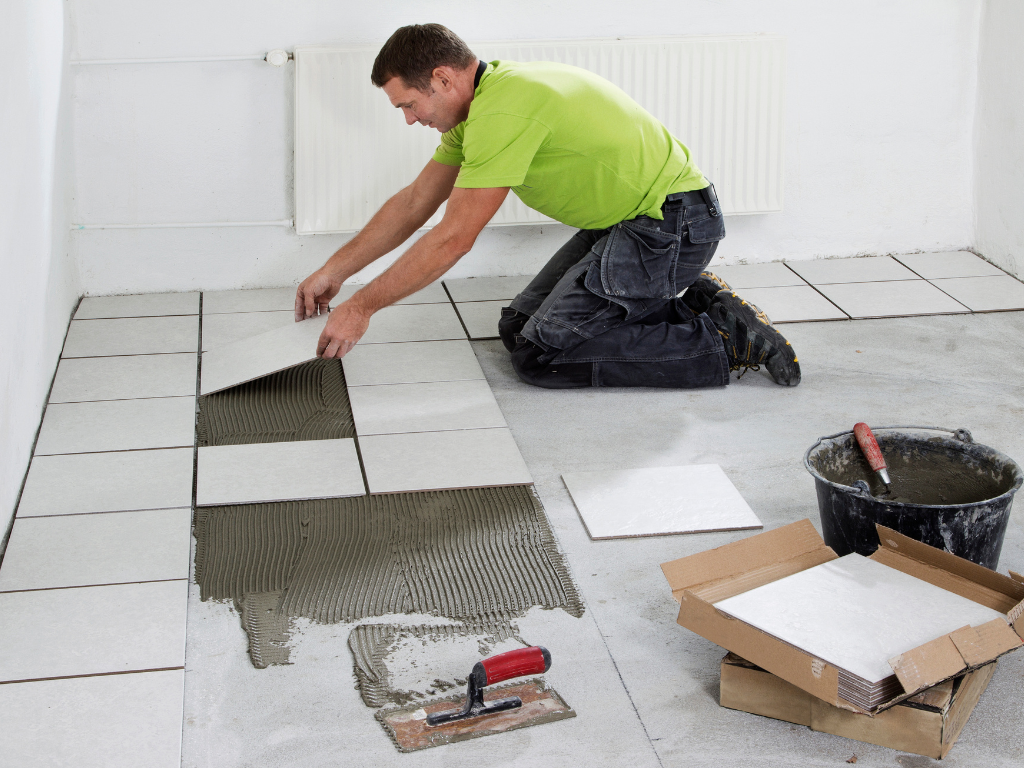

Tile regrouting singapore quotes typically come in at $400 to $900 per HDB bathroom in 2026. Replacement quotes for the same bathroom land at $4,000 to $7,000. The cost gap is real, and most homeowners pay 5x more than needed by skipping the diagnostic step. This blog walks you through grout versus tile failure, the regrout-replace decision, BTO restrictions, and pricing for minor renovation and home improvement service.
How much does tile regrouting cost in Singapore in 2026?
Tile regrouting in Singapore costs $400 to $900 for a typical HDB bathroom (40 to 60 sqft floor plus 80 to 120 sqft wall) in 2026. Smaller wet areas (single shower zone, kitchen splashback) run $200 to $450. Larger bathrooms or master ensuites with shower screens reach $900 to $1,400. Pricing scales with linear metres of grout line and whether old grout is fully chased out or topped up.
Full chase-and-replace involves cutting out old grout to a depth of 3 to 5mm with a manual rake or oscillating tool, vacuuming dust, then applying fresh grout. This is the only durable method. Topping up applies new grout over the existing layer; this looks fresh on day one but fails again within 12 to 18 months because the new layer doesn’t bond chemically to the old.
Cost difference: $500 to $700 for full chase-and-replace versus $250 to $400 for top-up. Lifespan difference: 8 to 10 years versus 12 to 18 months. The $250 saving on the cheaper option becomes a $700 second invoice within 18 months. Pay the full chase-and-replace price once.
Multi-area bookings reduce per-zone cost. Both bathrooms plus kitchen splashback regrouted in one visit lands at $1,200 to $1,800 instead of three separate jobs combined. The detailed pricing logic sits in minor renovation cost breakdown for 2026.
When should I regrout instead of replacing tiles?
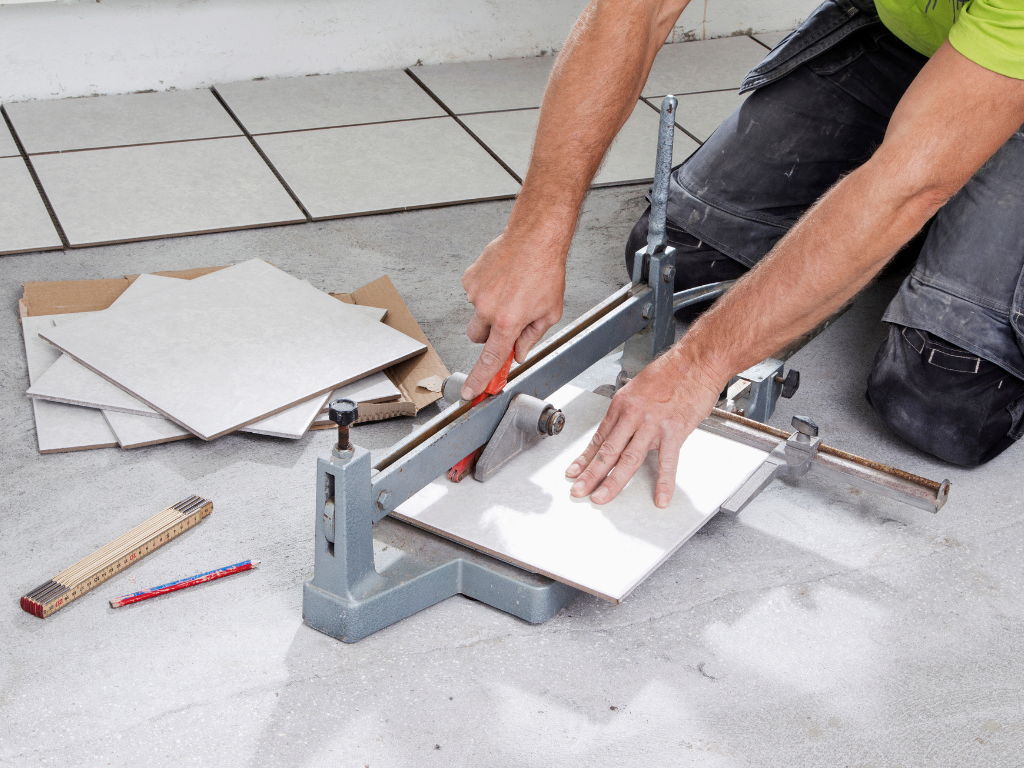
Regrout when tiles tap solid but the grout is cracked, crumbling, or stained. Replace when tiles tap hollow, when water staining appears on the ceiling below, or when more than 25% of the tile field shows bond failure. The decision hinges on whether failure is at the grout (surface) or at the bond layer beneath the tile (structural).
The five-test diagnostic:
- Tap test: tap the centre of each tile with a coin. Solid tiles ring sharp and high-pitched; hollow tiles produce a lower, drumlike sound. Less than 10% hollow tiles in a wet area means regrouting is the right intervention.
- Grout depth: run a thin blade along grout lines. Crumbling or chalky grout that gives way under light pressure is replacement-grade. Stained-but-firm grout is cleaning territory.
- Water staining: yellow or brown ceiling staining in the unit below indicates the waterproofing membrane is compromised. Replacement territory regardless of tile or grout condition.
- Tile alignment: shifted, lifted, or visibly gap-varied tiles indicate bond failure.
- Tile damage: cracked tiles, chipped corners, or lost glaze need replacement, not regrout.
The full diagnostic protocol sits in hollow tile diagnostic and tap test method. For the regrout-only scenario where tiles tap solid and grout is failing, the work lands within the $400-$900 HDB bathroom range.
In practice, more than 70% of Singapore bathroom “tile problem” inquiries are grout failure rather than tile bond failure. The grout layer is the weakest link because it sits at the surface and absorbs every cleaning cycle, foot-traffic load, and humidity swing.
Why are my floor tiles popping up suddenly?
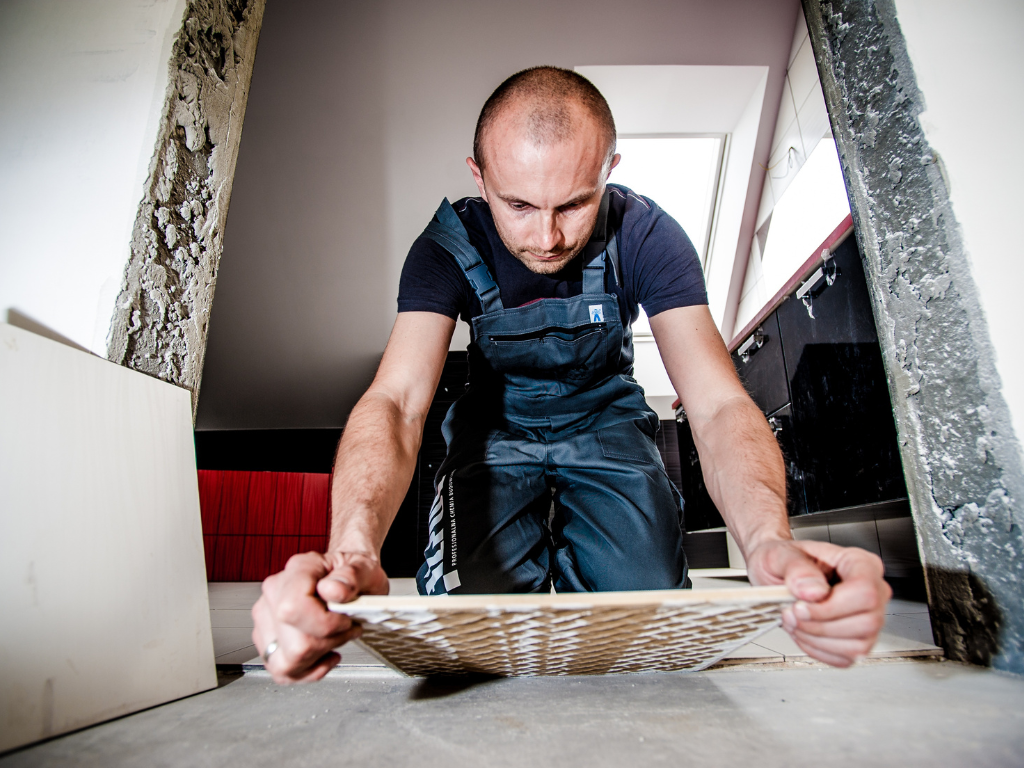
Floor tiles that pop up with a loud crack are reacting to thermal expansion against a substrate with no room to absorb movement. Cement screed and tile bed expand and contract with Singapore’s humidity cycle and air-conditioning on-off patterns. When there’s no expansion joint or the joint is filled with rigid grout, stress concentrates at the weakest tile and forces it upward.
This is most common in tiled balconies (highest temperature swing), living rooms with extended air-conditioning use, and renovated flats where overlay tiling was done over original tile without expansion provision. Most “sudden popping” occurs 12 to 36 months after install, which coincides with the substrate reaching full thermal equilibrium with the new tile layer.
The mechanics: BCA’s Good Industry Practices guide on ceramic tiling requires 80% adhesive coverage under wet-area tiles and 65% under dry-area tiles. Tiles installed at speed often achieve 40 to 60% coverage, leaving voids that fail under thermal stress. Combined with rigid grout at perimeter joints (instead of flexible silicone), the tile has nowhere to relieve stress and pops.
If the tile is intact, re-bedding with fresh thinset and replacing the perimeter joint with flexible silicone resolves the issue. If the tile cracked, replacement is needed and tile matching becomes the next problem. Popped tiles in BTO flats within the 3-year window are HDB-defect territory; document with photos and report through the HDB e-feedback portal before any repair work.
What causes grout to crack, crumble, or pull away from tiles?
Five causes drive grout failure in Singapore homes, in order of frequency: cement wash-out from frequent water exposure, mechanical wear from cleaning brushes and chemicals, mould and mildew weakening the binder, thermal expansion movement at junctions, and original installation defects (insufficient grout depth, mixing ratio errors, premature water exposure).
Cement-based grout in shower zones absorbs water with every use. Over 5 to 8 years, the cement binder slowly leaches out, leaving a porous matrix that crumbles under finger pressure. Daily showers accelerate this cycle; intermittent guest-bathroom use slows it.
Acidic cleaners (lime descaler, bleach-based bathroom cleaners) attack cement grout chemistry. Singapore homeowners cleaning regularly with strong cleaners degrade grout in 3 to 5 years versus 8 to 10 years with neutral-pH cleaning. The cleaner approach is using pH-neutral bathroom cleaners and saving acidic cleaners for tile glaze.
Mould and mildew grow in damp grout pores. Black or pink staining isn’t just cosmetic; the organic growth weakens the cement binder. Sanitary-grade grout with anti-mould additives (Mapei Kerapoxy Design, BASF MasterTile, equivalent) lasts 2 to 3 years longer than standard grout in Singapore bathrooms.
Thermal expansion at tile-to-wall, tile-to-floor-trap, and tile-to-bath junctions cracks rigid cement grout. These spots need flexible silicone movement joints, not grout. Handymen who fill these joints with cement grout instead of silicone produce visible failure within 12 to 24 months.
Can I regrout my HDB bathroom in the first 3 years?
Yes. The HDB 3-year restriction prohibits replacing wall and floor tiles in BTO bathrooms from the date of Temporary Occupation Permit issuance. Regrouting doesn’t touch tiles; it works on the joints between tiles. Regrouting sits firmly outside the restricted scope, and HDB permits it without notification.
The full BTO bathroom restriction context sits in HDB’s resident renovation guidelines, with regulatory rules detailed in the bathroom fixture installation rules breakdown. Both regrouting and accessory installation through tile are permitted within the 3-year window.
Why regrouting in a fresh BTO matters: original HDB grout uses a standard cement formulation. New BTO owners with intensive shower use sometimes see grout staining or minor cracking within 18 to 30 months. A proactive regrout with sanitary-grade or epoxy grout extends the original install lifespan by 5 to 8 years without touching the protected tile layer.
Worth noting: drilling depth restrictions still apply during the 3-year window. Regrouting doesn’t drill into anything, so the 35mm depth limit doesn’t apply. If the visit also involves accessory installation, the 35mm rule applies to those tile penetrations.
How long does professional tile regrouting take?
A typical HDB bathroom regrouting takes 1.5 to 2.5 days from start to finish including cure time. Day one: chase out old grout, vacuum thoroughly, apply fresh grout. Day two: cure period (24 hours minimum) during which the bathroom should not be used. The bathroom can be used after 24 hours but full waterproof bond is achieved at 7 days.
Cure time is non-negotiable. Bathrooms used within the first 24 hours produce shower-water erosion at the new grout lines, undermining the bond. Usable at 24 to 48 hours but avoid heavy shower spray. After 7 days, the grout has reached full cure.
Larger or more complex bathroom regrouts (master ensuite with shower screen, marble or natural-stone tile requiring specialty grout) run 2 to 3 days work plus 7 days cure. Multi-area jobs (both bathrooms plus kitchen) typically run 3 to 4 days work with overlapping cure schedules.
Minor renovation contractors typically book 1 to 2 weeks ahead for grout work alone, longer during peak BTO key-collection cycles (March-April, September-October). Same-day or next-day regrouting bookings carry a $50 to $100 surcharge from most providers.
Do I need to remove old grout completely, or can I top up?
Remove old grout completely. Topping up looks fresh on installation day but fails within 12 to 18 months because the new layer doesn’t chemically bond to the existing cement matrix. Fresh grout needs a clean, porous substrate to bond, which means cutting out the old grout to a depth of 3 to 5mm before applying new.
The chase-and-replace process: a manual grout saw or oscillating tool with carbide grout blade removes the top 3 to 5mm of old grout. Dust gets vacuumed completely (residual dust contaminates the new grout bond). New grout is applied with a rubber float, worked into the joints, then excess wiped 15 to 30 minutes after application.
Topping up skips the chase-out and applies new grout directly over the old. Day one looks identical. Mechanical result over time is failure: the new layer is thin (1 to 2mm), bonds only to the old grout surface, and lifts as a unitary skin within months.
Cement grout failures show first at the wettest junctions: floor-trap perimeter, shower zone corners, bath-to-wall junctions. If these spots fail at 12 months on a “regrouted” bathroom, the top-up shortcut was used. Request written confirmation of the chase-and-replace method before booking.
What happens if my tile colour is discontinued and replacement matching is impossible?
Three options exist in order of cost and disruption. Source from a less-visible area (under the WC, behind the door, inside corners) and use those tiles to patch visible damage, then install new tiles in the donor location. Source aftermarket equivalents in close-but-not-perfect colour from major suppliers. Replace the entire tile run with a fresh design.
The donor-tile method works for partial repairs (1 to 5 affected tiles). Aged tiles match perfectly because they share the same UV exposure, foot-traffic polishing, and chemical-cleaning history. Most HDB bathrooms have 2 to 4 sqft of hidden tile area that can serve as a donor zone.
For larger damaged areas (5 to 15% of the field), aftermarket equivalents from Hafary, Soon Bee Huat, or Lian Hin sometimes carry close matches to discontinued HDB-spec tiles. Shade match is rarely perfect (5 to 15% tonal variance is typical), but acceptable in dry-zone areas where lighting variation already masks small differences.
For damage above 25% of the tile field, or visible feature walls where any mismatch is unacceptable, full retile is the honest call. Cost gap: $300 to $700 for partial replacement versus $4,000 to $7,000 for full bathroom retile with waterproofing. The contractor tier breakdown sits in home improvement contractor tiers.
When does tile failure signal something worse than grout?
When ceiling staining appears in the unit below, when hollow tiles cluster in a linear pattern, or when water seeps from the floor trap area despite a sealed-looking bathroom, the failure is likely behind the tile rather than at the grout surface. These signals indicate waterproofing membrane breach or concealed pipe leak, both requiring diagnostic plumbing work rather than regrouting.
Water seepage diagnostics typically run through water leak repair work by a PUB-licensed plumber before any tile or grout work begins. Singapore’s plumbing licensing framework under PUB’s plumbing works guidelines requires licensed plumbers for work involving water supply lines or drainage. Regrouting work doesn’t require this, but tracing suspected seepage does.
The cost of misdiagnosis: $400 to $900 spent on regrouting that fixes nothing, plus the original problem continuing silently for 6 to 18 months until ceiling staining worsens enough to trigger inter-unit dispute. The cleaner approach is investing in the diagnostic visit first when seepage indicators are present.
For visible grout failure with no seepage indicators (clean ceiling below, no water trail, no mould pattern beyond surface staining), the work is straightforward regrouting and the diagnostic step is the tap test alone.
Conclusion
Singapore tile regrouting at $400 to $900 per HDB bathroom is the right intervention when tiles tap solid and grout is the failure point, which describes more than 70% of “tile problem” inquiries. Replacement at $4,000 to $7,000 is reserved for tile bond failure, ceiling staining indicating membrane breach, or confirmed substrate damage. The five-test diagnostic separates the two cleanly. Topped-up grout looks fresh for 12 months then fails; full chase-and-replace lasts 8 to 10 years.
For a written quote covering regrouting, partial tile replacement, or full bathroom retile with itemised line items and BCA-standard adhesive coverage, request a written Fix It Papa quote with photos of the affected area, any ceiling staining in the unit below, and the original tile size if known.
FAQs About Tile Regrouting Singapore
How much does it cost to regrout a small HDB bathroom in Singapore?
A small HDB common bathroom (40 to 50 sqft floor plus 80 to 100 sqft wall) regrouts in 2026 at $400 to $700 with full chase-and-replace methodology. Top-up regrouting ($200 to $350) fails within 18 months. Multi-bathroom bookings reduce per-room cost by 15 to 25%.
What’s the difference between cement grout and epoxy grout?
Cement grout is the standard residential grout, cost-effective at $0.80-$2 per linear metre supplied, lasting 8 to 10 years in normal bathroom use. Epoxy grout (Mapei Kerapoxy, BASF MasterTile, equivalent) costs 4 to 8 times more, resists water and chemical attack, and lasts 15 to 25 years. Epoxy fits high-traffic showers and kitchen splashbacks.
How long does freshly applied grout last in a Singapore bathroom?
Cement grout in a Singapore HDB bathroom lasts 8 to 10 years with full chase-and-replace and pH-neutral cleaning. Epoxy grout lasts 15 to 25 years under the same conditions. Topped-up grout lasts 12 to 18 months. Lifespan drops to 3 to 5 years if cleaning uses acidic descalers regularly.
Should I regrout before selling my HDB or condo?
Yes. Fresh grout is one of the highest-ROI pre-sale moves in Singapore. A $500 to $900 regrouting investment can add $2,000 to $5,000 to perceived bathroom condition during viewings. Buyers consistently rank bathroom condition as a top-3 inspection factor, and stained grout signals neglect.
Can I DIY regrouting my bathroom in Singapore?
DIY regrouting works for a single small wet area (kitchen splashback, single shower zone) at $50 to $100 in materials. Full HDB bathroom DIY takes 12 to 20 hours over 2 to 3 days, requires renting an oscillating tool with grout blade, and typically achieves 60 to 75% of professional finish quality.
Leave a Reply
You must be logged in to post a comment.