
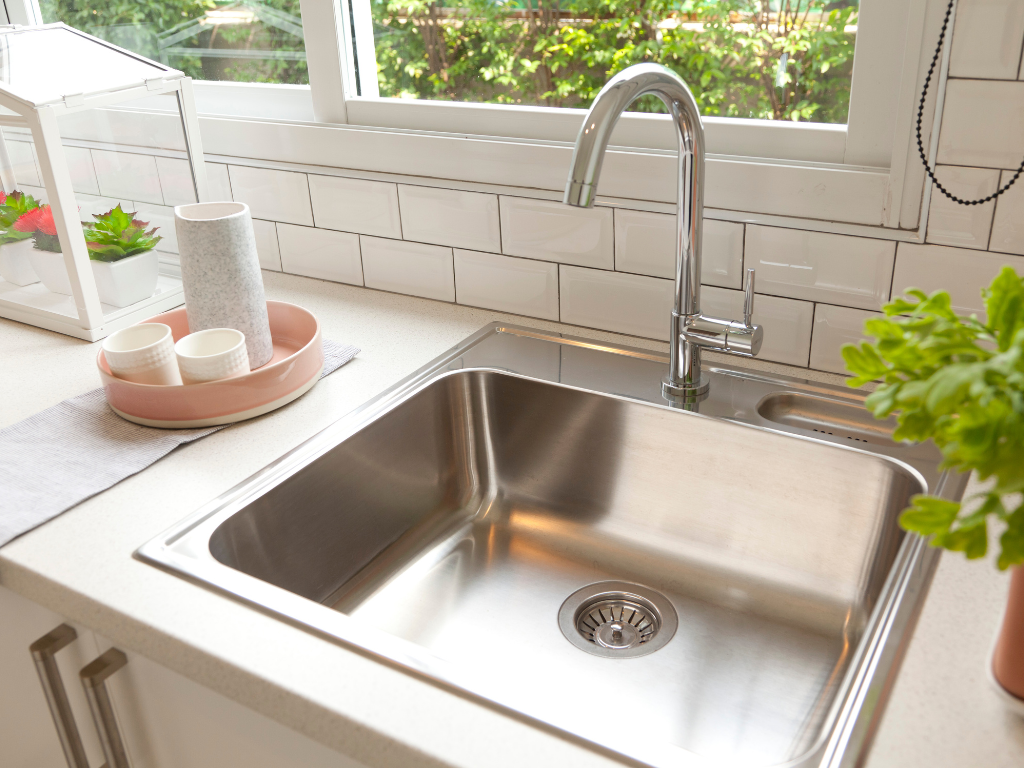

A kitchen sink that won’t drain is the plumbing complaint Singapore homes report most. Kitchen sink not draining in Singapore almost always traces to grease and food waste hardening in the bend under the basin. Fix It Papa clears these from $50 per point. This blog walks you through the DIY fixes that work, the ones that waste your time, and when to book professional drain unclogging.
Why is my kitchen sink not draining?
A kitchen sink stops draining when the waste pipe narrows enough that water backs up faster than it clears. The cause is buildup, almost always. Grease and cooking oil pour down warm, then cool and harden on the pipe wall. Food waste, coffee grounds, and starchy rinse water catch on that greasy layer until the bend under the basin closes.
The choke point is predictable. In a Singapore kitchen, the blockage sits in the bottle trap or P-trap directly under the sink, the U-shaped bend that holds a water seal and traps solids before they reach the branch pipe. That bend is both the problem and the access point, because it is the first place a homeowner can open and clear by hand.
Grease drives most of it. The US Environmental Protection Agency attributes 47% of reported sewer blockages to grease, and kitchen sinks are where that grease enters the system. Add Singapore’s warm, humid waste pipes, which let fat congeal faster, and a slow kitchen sink becomes a full standstill within weeks. A sink that drains slower each day is telling you grease is closing the pipe, not that a one-off object fell in.
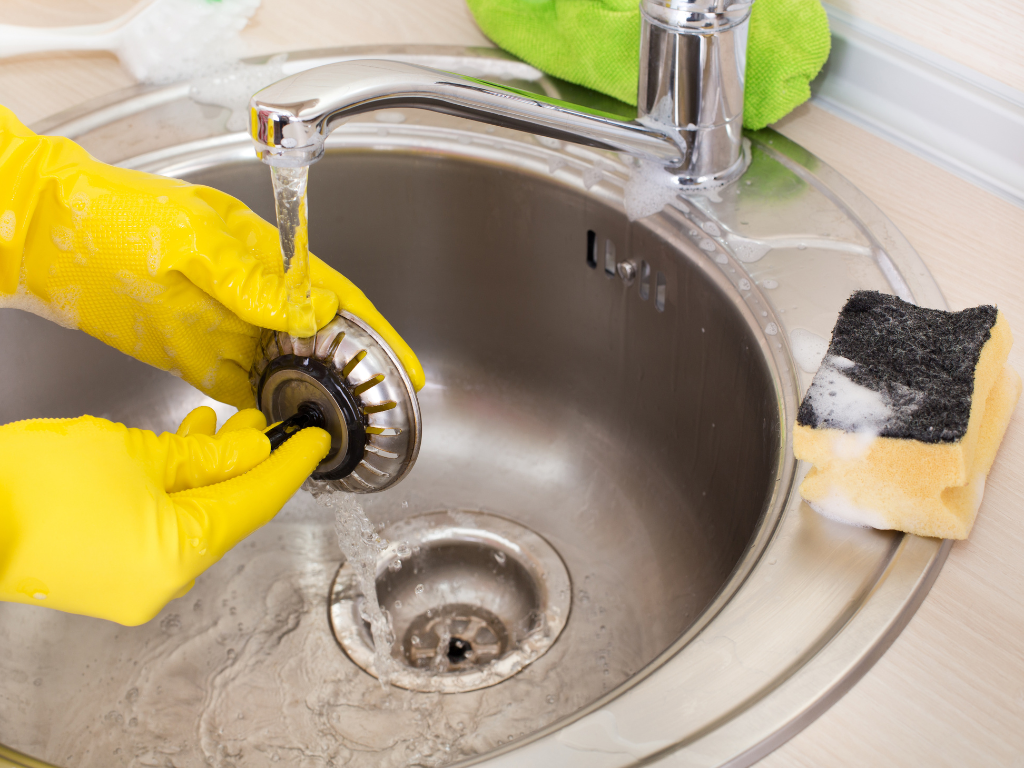
How do I unclog a kitchen sink myself?
Work through four steps in order, stopping when the water clears. Start with a hot-water flush: pour a kettle of hot, not rolling-boiling, water down the drain to soften a light grease film. Next, plunge. Fill the basin with a few inches of water to seal the cup, block the second drain on a double sink, and push hard 15 to 20 times.
If the water still holds, move to a baking soda flush, then to the trap. These four steps clear the majority of kitchen sink chokes without a plumber. The order matters because each step reaches a little deeper, and skipping to chemicals corrodes your pipes without touching a hardened grease plug.
Two rules keep DIY safe. Never mix a chemical drain cleaner with any other product, because the reaction releases dangerous fumes. And never pour rolling-boiling water into a PVC line repeatedly, since the heat loosens the slip-joint seals over time. Fix It Papa uses a mechanical spring rather than chemicals for exactly this reason, and clears roughly 90% of chokes without removing any fixture.
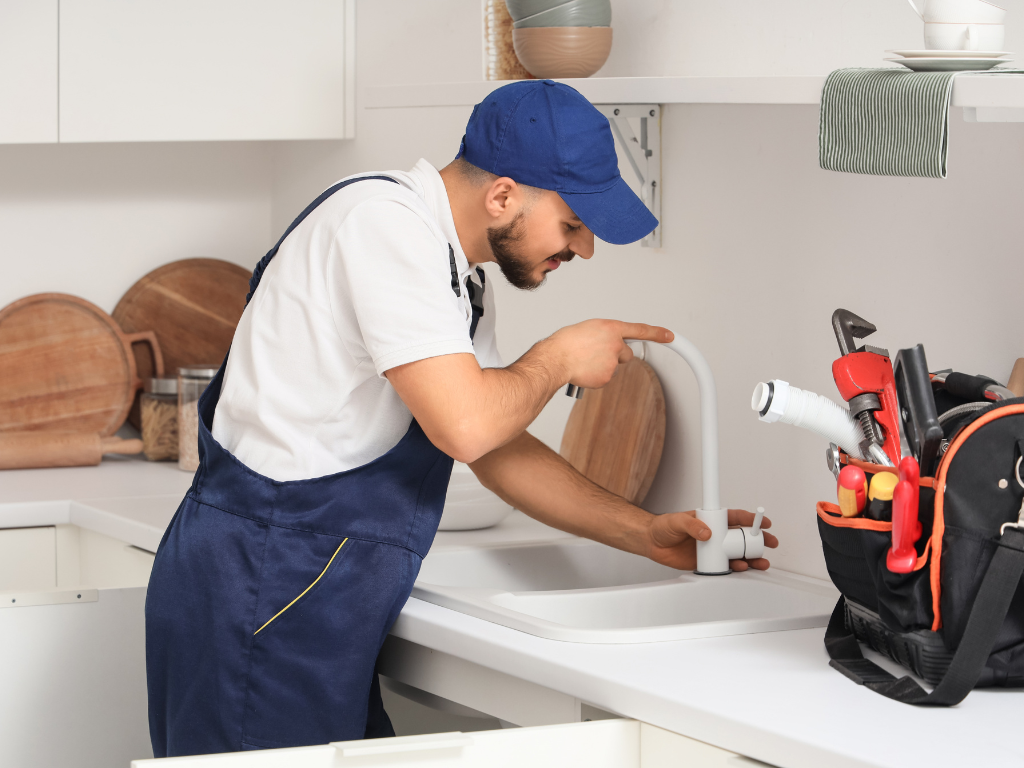
Does the baking soda and vinegar method actually work?
For a light clog and for odour, yes. For a hardened grease plug, no. Pour about half a cup of baking soda into the drain, follow with a cup of white vinegar, wait 15 minutes while it fizzes, then flush with hot water. The reaction lifts fresh food film and freshens a smelly drain.
The limit is physical. Baking soda and vinegar produce a mild scrubbing fizz, not enough force to cut through weeks of congealed fat lining the pipe. Treated as monthly maintenance on a working drain, it earns its place. Treated as a rescue for standing water, it fails, and you lose an evening waiting for a fizz that was never going to shift the blockage. The honest stance is that this method prevents chokes better than it clears them.
How do I clean the P-trap under my sink?
Opening the P-trap is the DIY step that actually removes a local clog, and most people skip it. Place a bucket under the bend to catch the water. Unscrew the two slip nuts by hand or with a wrench, slide the trap off, and clear out the grease and food packed inside. Rinse it, check the rubber washers, and reassemble.
This targets the exact choke point. The bend under a Singapore kitchen sink, whether a bottle trap or a P-trap, is where solids settle first, so clearing it by hand fixes the most common cause directly. Reassembly is where DIY goes wrong: a cross-threaded slip nut or a pinched washer leaks. If water weeps from the joint after you refit it, that crosses into under-sink leak repair territory. A cleaned trap that drains freely confirms the blockage was local, not deep in the branch pipe.
Why is there standing water that won’t drain even after plunging?
Standing water that survives a plunge and a trap clean means the blockage sits downstream, past the point DIY can reach. The clog is in the branch pipe running into the wall or in the shared stack, not in the trap under your basin. A plunger and a hand snake cannot reach that far.
This is the clearest signal to stop. Water pooling in the basin with the trap already clean tells you the pipe is blocked deeper in, and forcing more water or chemicals only risks an overflow onto your cabinet and floor. A kitchen sink overflow damages the carpentry below, which costs far more than the choke itself.
Two situations make it urgent. Water rising toward the rim while you work needs urgent overflow help, not another DIY attempt. And a second fixture gurgling or backing up at the same time points to a shared blockage, a job for a professional machine or hydro-jet that pushes water through the nozzle at 3,000 to 4,000 psi to scour the full pipe run clean.
Why does my kitchen sink smell even when it drains?
A kitchen sink that drains but smells has a greasy film lining the pipe or a dry trap seal. The film is rotting food and fat coating the inside of the waste pipe, and it produces odour even while water still passes. This is the early stage of the same grease buildup that later becomes a full choke.
The other cause is an empty trap. That P-trap holds a water seal, roughly 50 mm deep, which blocks sewer gas from rising into the kitchen. If the sink sits unused for days in Singapore’s heat, the seal evaporates and gas comes straight up the drain. Running the tap for a few seconds refills it.
The fix depends on which one it is. A greasy film needs the trap cleaned and the pipe flushed to strip the coating. A dry seal needs nothing more than water. A smell that returns within days of cleaning, though, signals grease has already caked the branch pipe beyond the trap, and that needs a machine clear rather than another flush.
Why does my sink keep clogging again after I clear it?
Recurring chokes mean the grease layer was never fully removed, only punched through. A plunger or a hand snake opens a hole in the blockage so water drains again, but the hardened grease ring stays on the pipe wall and closes back up within days or weeks. The buildup is structural, not loose debris.
Two Singapore-specific factors make it worse. Kitchen habits are the first: pouring oil, fat, and starchy water down the sink rebuilds the layer faster than any clearing removes it. Pipe gradient is the second: a waste pipe laid too flat, common in older or badly modified installs, lets debris settle instead of flushing through. A recurring kitchen choke is a grease problem, a gradient problem, or both, and neither is solved by repeated chemical pours.
The durable fix is a proper clear plus a change of habit. A machine or hydro-jet strips the full pipe wall, and a sink strainer over the drain catches food waste from then on. The 2026 plumbing rates show machine de-choke from $50, cheaper over a year than the chemicals that never reach the root.
When should I stop DIY and call a plumber?
Stop the moment the blockage is out of reach or the water starts winning. Three signals draw the line. Standing water survives both a plunge and a cleaned P-trap. The choke returns within a week of clearing. A second fixture backs up when the sink drains.
Any one of these means the problem is in the branch pipe or the shared stack, not the trap. Under PUB’s licensed-plumber rules, regulated water service and sanitary works must be “carried out by Licensed Plumbers,” even though clearing a simple choke can be done by a handyman. Replacing an encrusted or wrongly graded pipe is regulated work, not a DIY job.
Responsibility also decides your next call. HDB is direct: “You need to maintain the sanitary branch pipes in your flats,” while the Town Council maintains the shared main stack, as HDB’s home care guidance on pipes sets out. A choke affecting only your sink is yours to clear; a backup hitting several units is the Town Council’s. When the fix is beyond a trap clean, same-day plumber booking stops a slow sink becoming an overflow.
Conclusion
A blocked kitchen sink follows a fixed logic. Grease and food waste harden in the bend, so the first real fix is a hot flush, a plunge, and a cleaned P-trap. Baking soda maintains, it does not rescue. And once standing water survives the trap clean, returns within a week, or backs up a second fixture, the blockage is past DIY and into licensed pipe work.
Book a machine de-choke with Fix It Papa on +65 8091 6366, from $50 per point, and clear a stubborn kitchen sink before it overflows your cabinet.
Frequently Asked Questions
Can I pour boiling water down the sink to unclog it?
Hot water helps with light grease, but skip rolling-boiling water on PVC pipes. Repeated boiling water loosens the slip-joint seals under your sink over time, and it only melts grease enough to move it a metre down before it re-hardens. Fix It Papa uses a mechanical spring instead, clearing about 90% of chokes without opening the pipe.
Are chemical drain cleaners safe for my kitchen pipes?
No, not for repeated use. Caustic drain cleaners corrode PVC joints and thin older copper pipes, and they stall against a hardened grease plug anyway. Never mix them with other products, as the reaction releases toxic fumes. A cleaned P-trap or a $50 machine clear from Fix It Papa fixes the choke without the pipe damage.
How much does a plumber charge to unclog a kitchen sink in Singapore?
Fix It Papa clears a kitchen sink or basin choke from $50 per point in 2026, using a mechanical drain spring. Condo and landed jobs can add $20 to $50 for access and parking. Machine clearing costs less over a year than repeated chemical cleaners that never reach the grease at the root.
What should I never put down a kitchen sink?
Never pour grease, cooking oil, or fat down a kitchen sink, since they harden and coat the pipe. Coffee grounds, rice, and starchy rinse water also build up fast. The US EPA links 47% of sewer blockages to grease. A sink strainer catching food waste is the cheapest prevention there is.
Leave a Reply
You must be logged in to post a comment.