
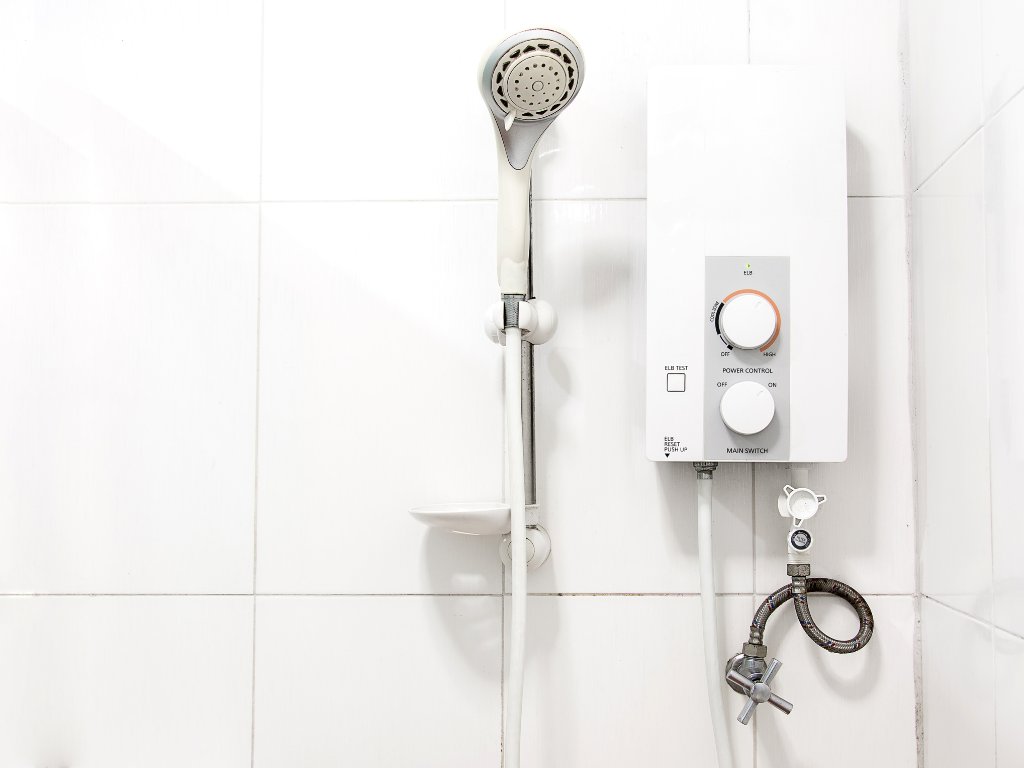

A cold shower in Singapore’s climate is rarely about the weather. A water heater not working in Singapore comes down to four faults: no power, a burnt heating element, a leaking tank, or a unit tripping the RCCB. Fix It Papa diagnoses these from $50. This blog walks you through what fails in storage and instant heaters, and when to call a professional for heater repair and installation.
Why is my water heater not producing hot water?
No hot water comes from one of three failures: the unit has lost power, the heating element has burnt out, or the thermostat has failed. Check the simple cause first. If the heater’s switch light is off, the isolation switch tripped or the RCCB in your DB box cut the supply. Reset it once and watch what happens.
If the light is on but the water stays cold, the fault is inside the unit. A burnt heating element is the most common cause, the metal coil that heats the water having failed open so no current flows through it. A failed thermostat is the second, the control that tells the element when to heat having stuck in the off position.
The distinction matters because the fix differs. An element or thermostat is a replaceable part on many storage models, a repair rather than a full swap. Fix It Papa tests the element and thermostat first, then advises repair or replacement based on the unit’s age and condition. A heater with power reaching it but no heat coming out has an internal component fault, not a wiring problem, and that is a job for a technician, not a reset button.
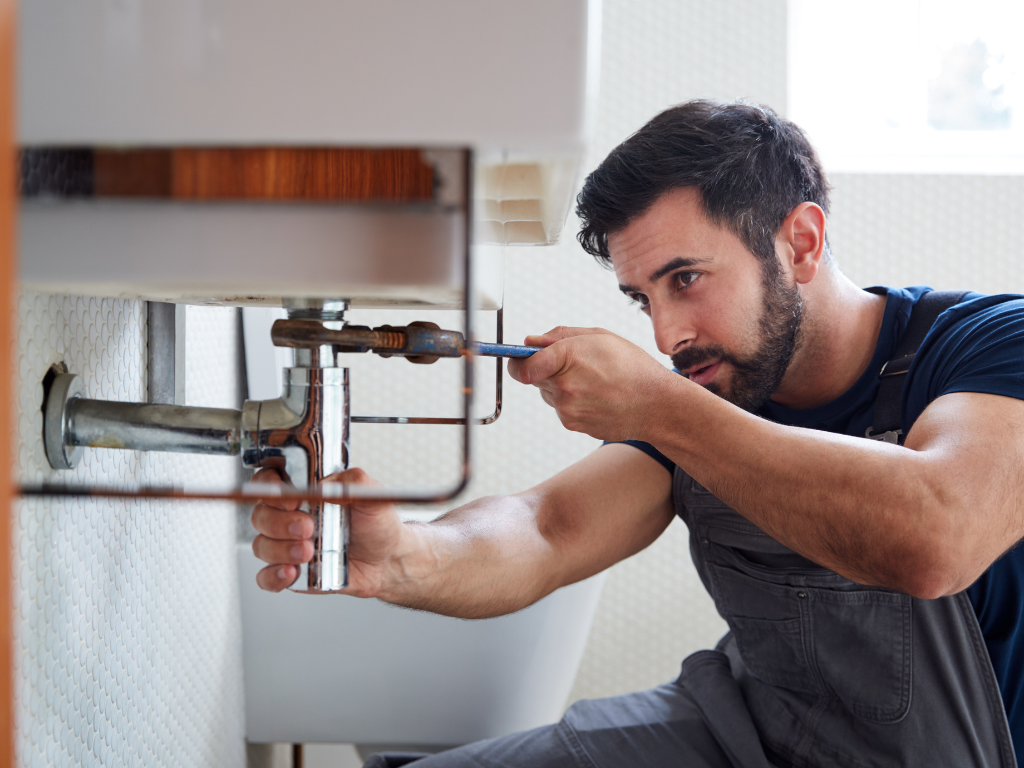
Why does my water heater keep tripping the RCCB or breaker?
A water heater that trips the RCCB is leaking current to earth, and that is a genuine shock hazard, not a nuisance. The Residual Current Circuit Breaker in your DB box cuts power the instant it detects leakage, and a failing heater is a classic trigger. EMA lists faulty electrical appliances among the main causes of the current leakage that trips these devices.
The usual culprit is a cracked heating element. When the element’s outer sheath fails, water reaches the live coil and current escapes to earth through the water, which the 30mA RCCB detects and cuts in milliseconds. Damaged insulation on the internal wiring does the same thing.
Repeated resetting is the wrong move. Each reset restores power to a unit that is leaking current into water you are about to touch, and the RCCB is the only thing standing between that fault and a shock. Singapore made the RCCB mandatory in all residential premises from 1 July 2023, with a fine of up to $5,000 for homes still without one after 1 July 2025, precisely because it prevents these incidents. A heater that trips the breaker every time you switch it on has an earth-leakage fault and must be isolated and diagnosed, not reset.
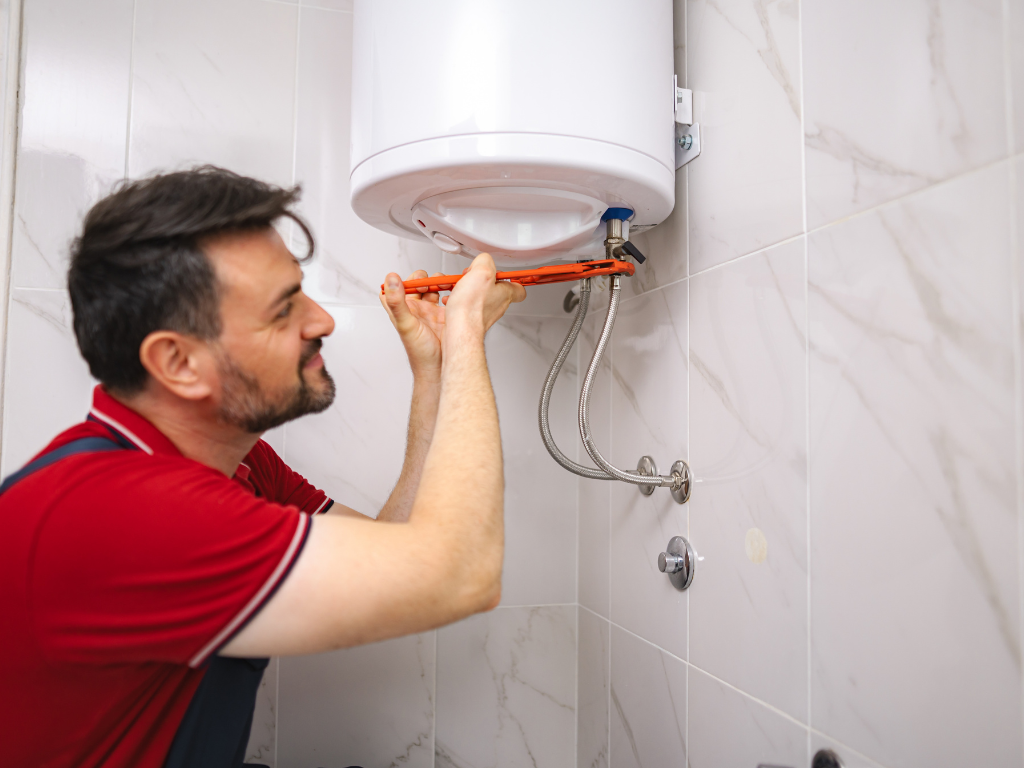
What is the difference between a storage heater fault and an instant heater fault?
The two heater types fail in different places, so diagnosis starts with knowing which you have. Storage water heaters, common in condominiums, hold a tank of 25 to 50 litres kept hot by an element and thermostat, and they fail through tank corrosion, sediment, and element burnout. Instant water heaters, common in HDB flats, heat water on demand as it flows, and they fail at the flow sensor, the element, or the electrical supply.
Storage faults build slowly. Sediment settles at the tank base over years, insulating the element until it overheats and fails, and a depleted sacrificial anode lets the steel tank corrode until it leaks. These are wear failures tied to age.
Instant faults are more binary. The unit either detects water flow and fires the element or it does not, so a faulty flow sensor produces cold water even when power and pressure are fine. Low incoming water pressure also stops many instant heaters from triggering at all. Knowing your heater type, storage in a condo tank or instant in an HDB wall-mounted box, narrows the fault before a technician arrives, and the two share almost no common failure point.
Why is my water heater leaking?
A leaking water heater comes from either the tank body or the pipe connections, and the two have very different outcomes. A leak at the flexible hose, the inlet, or the outlet connection is a fixable plumbing repair. A leak from the tank body itself is terminal, because the steel has corroded through and no seal will hold it.
Storage tanks corrode from the inside out. The sacrificial anode is a metal rod designed to corrode in place of the tank, and once it depletes, usually after several years in Singapore’s water, the tank wall starts rusting through. By the time water weeps from the body, replacement is the only real option.
A tank leak is also an urgent job because water and electricity share the same box. Fix It Papa treats a leaking storage tank as a replacement rather than a patch, and a leaking connection as a same-visit repair. If the leak has spread to the wall or ceiling below, that becomes same-day plumber booking territory. A heater over 5 to 7 years old that leaks from the tank body is at end of life, not mid-repair.
Why is my water only lukewarm instead of hot?
Lukewarm water points to a partially working system, usually a failing element, a drifting thermostat, or sediment. The heater is producing some heat but not reaching temperature, which rules out a total power loss and points inside the unit.
On a storage heater, sediment is the quiet cause. A layer of mineral scale at the tank base coats the heating element, so the element heats the sediment instead of the water and the tank never reaches its set point. A thermostat that has drifted low does the same thing, holding the water below a proper shower temperature.
On an instant heater, lukewarm water usually means the element is partly failed or the flow rate is too high for the unit’s wattage to heat in one pass. Turning the flow down often restores heat, which is a useful self-test. A steady drop from hot to lukewarm over weeks signals an element or thermostat degrading, and Fix It Papa’s water heater troubleshooting tips cover the checks worth doing before you call. Lukewarm water is a partial component failure, not a setting you forgot to change.
What causes a burnt heating element or a failed thermostat?
Heating elements burn out from overheating, and the most common cause is sediment coating them. When scale insulates the element, it runs hotter to push heat through the layer, and that sustained overheating cracks the sheath or burns the coil open. An element switched on in an empty or airlocked tank, called dry firing, fails the same way in seconds.
Thermostats fail from age and from the same heat stress. The thermostat senses tank temperature and switches the element on and off; a stuck or drifted thermostat either never heats or never stops, and a never-stops fault is dangerous because it can push the tank past its safe temperature. Both parts are consumables, not permanent fixtures.
Prevention comes down to flushing. A storage tank flushed of sediment every year or two protects the element and extends its life, which the affordable heater repair service can handle during a service visit. A heating element that fails within two years of a new install almost always failed because of trapped sediment or a dry-fire event, not a manufacturing fault.
Should I repair or replace my water heater?
Repair a young heater with a component fault; replace an old one or any unit with a leaking tank. The line sits at roughly 5 to 7 years and at the tank wall. A burnt element, a failed thermostat, or a loose connection on a heater under that age is a repair worth doing.
Age and corrosion flip the maths. A storage heater past 7 years has a depleting anode and a tank nearing the end of its service life, so spending on a new element buys a short reprieve before the tank itself fails. A tank already leaking from the body is a replacement, full stop, because corroded steel cannot be sealed.
Cost decides the borderline cases. Fix It Papa quotes heater diagnosis and replacement from $50 plus the unit, stocking common brands like Joven, Ariston, and Rheem, and the honest call is to replace when a repair costs more than half the price of a new unit. The full 2026 repair pricing helps you weigh it. A repair bill above 50% of a replacement on a heater older than 5 years is money better spent on a new unit.
Can I fix a water heater myself, or do I need a professional?
Do not open a water heater yourself. The unit combines mains electricity and water in one enclosure, which is the single most dangerous appliance in a Singapore home to work on live. Homeowner DIY safely stops at switching off the isolation switch and testing the RCCB.
Two regulators draw the boundary. EMA requires that electrical works be “carried out by Licensed Electrical Workers,” and a heater’s wiring, isolation switch, and supply fall under that scope, per EMA’s electrical safety rules. PUB requires that regulated water service works be “carried out by Licensed Plumbers,” and installing or replacing a storage water heater connects to the water supply, per PUB’s plumbing requirements.
That dual requirement is why a water heater is not a weekend job. The safe DIY checks are limited: confirm the switch is on, reset the RCCB once, and check that another appliance on the circuit still works. Beyond that, the unit needs a qualified technician who handles both the electrical and water sides. A heater that trips power, leaks, or produces no heat after a single reset needs professional diagnosis, not a screwdriver and a video.
Conclusion
A dead water heater tells you which fault it has if you read the symptom. No heat means a burnt element or thermostat. A tripping RCCB means current leaking to earth. Lukewarm water means sediment or a failing element, and a body leak means a corroded tank at end of life. Storage and instant units fail in different places, and both cross electrical and water rules that put repair in a professional’s hands.
Book a water heater diagnosis with Fix It Papa on +65 8091 6366, from $50, and get a straight repair-or-replace answer before your next cold shower.
Frequently Asked Questions
Why does my instant heater run but the water is not hot?
An instant heater that runs without heating usually has a faulty flow sensor or a partly failed element. The flow sensor triggers heating when water moves; if it fails, the element never fires. Turning the flow rate down often restores heat, since Fix It Papa notes most HDB instant units heat best at moderate flow.
How long does a water heater last in Singapore?
A storage water heater lasts roughly 8 to 12 years and an instant heater 5 to 10, depending on sediment and water quality. The sacrificial anode inside a storage tank depletes first, then the tank corrodes. Fix It Papa treats any heater over 5 to 7 years with a tank leak as a replacement, not a repair.
Is it safe to use a water heater that trips the breaker?
No. A heater that trips the RCCB is leaking current to earth, which is a shock risk, and the 30mA breaker is cutting power to protect you. Do not keep resetting it. EMA made RCCBs mandatory in all homes from 1 July 2023 precisely to catch this fault; isolate the heater and call a technician.
What is the isolation switch on my water heater for?
The isolation switch, usually a double-pole switch near the unit, lets you cut all power to the heater safely before any work. Always switch it off before touching the heater. It is the one control EMA-compliant installations include so a Licensed Electrical Worker can isolate the appliance without killing power to the whole flat.
Leave a Reply
You must be logged in to post a comment.