


If you are planning ceiling light installation Singapore work, the fixture itself is only part of the job. The mounting point, wiring condition, ceiling type, and switch setup all affect whether replacement will be simple or troublesome. This blog will walk you through what HDB and condo owners should check before changing a ceiling light, so the new fixture fits properly, works safely, and does not create avoidable electrical or ceiling issues.
Why a light fixture replacement is not just a swap job
Homeowners often assume a ceiling light replacement is straightforward because there is already an existing point in place. Sometimes it is. Sometimes the old fitting hides a weak mounting base, short wiring tails, a heat-marked connector, or a false ceiling opening that does not match the new light’s bracket or canopy.
That difference matters more in HDB flats and condos where ceiling conditions are not all the same. A flush LED ceiling light, a pendant light, and a feature fixture do not place the same load on the mounting point or require the same kind of support. EMA’s overview of electrical and supply installation licences defines an electrical installation as electrical wiring, fittings, or apparatus used to convey and control electricity in premises, and states that the licensing scheme does not apply to installations used exclusively for residential purposes, even though safe electrical work still matters.
For homeowners who already know they need a replacement or new fitting installed, lights and power point installation is the relevant Fix It Papa service page because it covers residential lighting points, switches, sockets, and related household electrical work.

What should you check before replacing a ceiling light fixture?
Check the existing wiring point first
The first thing that matters is not the new light. It is the condition of the existing wiring point. If the current point has old insulation, short conductors, signs of overheating, loose termination, or an awkward position inside the canopy, the replacement is no longer just decorative work.
In practical residential jobs, this is one of the biggest reasons a seemingly simple fixture change slows down on site. The new light may be compatible in theory, but the point behind it may not be neat, stable, or ready for direct reinstallation. A proper installer checks the wiring condition, connection integrity, and whether the point can support the new fitting without forcing the wiring into a cramped or stressed position.
Check the mounting base and fixture weight
A ceiling light needs more than electrical connection. It needs secure mounting. A lightweight LED ceiling light usually places less demand on the base than a decorative pendant light with a longer drop and heavier body. If the old mounting bracket was fitted for a light plastic fixture, it may not suit a heavier replacement.
This becomes more important when homeowners upgrade from a basic flush light to a statement pendant or feature fitting. The mounting point, screw position, bracket type, and ceiling material all matter. A weak installation point creates wobble, misalignment, and long term safety risk even if the light powers on correctly.
Check switch compatibility
Not every new light works cleanly with the existing switch setup. Some fixtures are simple on and off lights. Others use dimmable drivers, separate colour temperature controls, remote modules, or smart lighting components. If the home still uses a standard switch and the new fitting expects a different control setup, you can end up with flicker, incomplete control, or a fixture that never performs the way it was marketed.
This is especially common when homeowners buy integrated LED lights or imported decorative fittings without checking whether the switch arrangement in the home suits the driver and control system.
Check the ceiling type
There is a real difference between mounting a light on a solid ceiling slab, a plastered surface, and a false ceiling. A false ceiling can hide wiring neatly and improve the visual finish, but it also changes access, bracket fixing, and fixture support planning. HDB’s building works guidelines specifically include false ceiling works under renovation guidance, and HDB states that false ceiling installations must follow its building rules. HDB also states that electrical works in flats are subject to guidelines and conditions even when certain works do not require a permit.
If your new fixture is going into a false ceiling, the installer has to think about backing support, cutout size, bracket position, ceiling void access, and whether the existing opening can take the new fitting cleanly. That is not a detail you want discovered after the old light has already been removed.
What changes between HDB light installation and condo light fixture installation?
HDB light installation
In HDB homes, the replacement itself may be straightforward, but the surrounding rules matter. HDB’s electrical renovation guidelines state that electrical works in flats are subject to general terms and conditions, and that some works require a permit while other electrical works do not require a permit but still remain subject to guidelines and conditions.
For ceiling light replacement using an existing point, the main practical concerns are usually the existing wiring condition, the mounting surface, the switch arrangement, and whether any false ceiling or decorative works are involved. If the homeowner also wants new high-capacity points or larger electrical scope beyond a normal fixture replacement, the compliance picture changes.
HDB owners should also be careful with false ceilings. HDB’s building works guidance routes false ceiling installations under specific building rules, and other recent HDB guidance states minimum clearance requirements for false ceiling works. The key takeaway is simple: fixture replacement may be easy, but ceiling modification is a separate layer of planning.
Condo light fixture installation
Condo light fixture installation often involves fewer HDB-specific renovation rules, but more management and finish-related considerations. Access hours, protection of interior finishes, lift padding, and management approval for larger renovation work can all affect how the job gets done.
From the electrical side, the same technical questions still apply. Is the existing point sound? Is the bracket compatible? Is the driver accessible if the new light is integrated LED? Will the canopy cover the old paint line or previous screw marks? Condo owners often focus more on aesthetics, which makes these fit and finish details even more important.
Which type of ceiling light is easiest to replace?
LED ceiling light
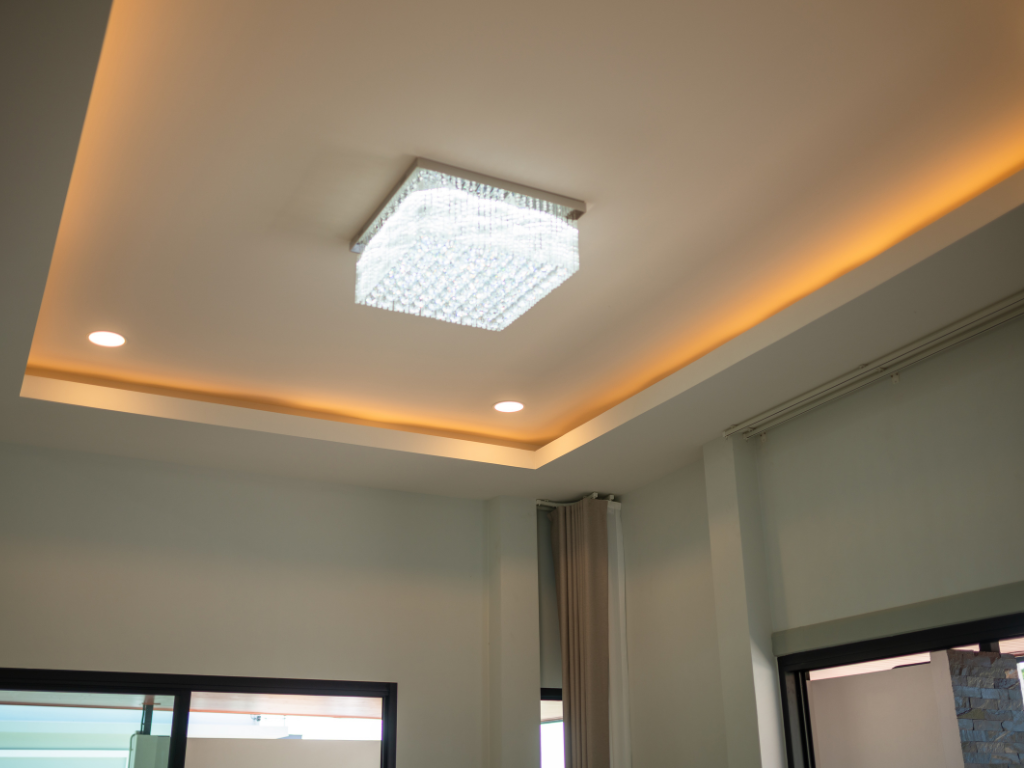
A flush or semi flush LED ceiling light is usually the cleanest replacement option when the home already has a standard lighting point at the correct location. It is compact, lighter than many decorative fixtures, and easier to align with a typical ceiling mounting bracket.
This is why LED ceiling light replacements are common in bedrooms, corridors, kitchens, and utility spaces. They suit practical residential use and tend to fit existing ceiling points better than elaborate decorative fittings.
Pendant light
Pendant lights create more visual impact but ask more from the installation point. The bracket must be secure, the drop length must suit the ceiling height, and the canopy must cover the connection point properly. In dining areas or condo living rooms, pendants are common upgrades, but they are not always the easiest replacement choice if the old light was a simple flush mount.
Lights installed into or near false ceilings
Downlights, cove lights, and feature lights near false ceilings need more planning than standard surface-mounted replacements. The installer has to consider cutout size, heat management, access to drivers, and whether the ceiling void is already crowded with other services.
For homeowners who are still deciding on fixture style, stunning light installations is a useful internal reference because it helps bridge the design choice with the practical reality of residential installation.
What usually goes wrong when homeowners buy the light first and check the point later?
The base does not fit the new fixture
This is one of the most common issues in real homes. The new mounting plate does not line up with the old screw positions, the canopy is too small to cover marks from the previous fitting, or the bracket interferes with the ceiling finish.
The light may still be installable, but the final result looks compromised.
The switch works, but the light does not behave properly
This happens with certain integrated LED fittings, smart lights, or imported fixtures with their own driver expectations. The light turns on, but flickers, fails to dim properly, or loses settings when switched off at the wall.
That is why switch compatibility should be checked before purchase, not after installation.
The light is too heavy for the chosen location
A decorative fixture that looks fine in the showroom can become a poor fit once the installer checks the actual ceiling point. Weight matters. So does how the load is transferred into the ceiling or support base.
The fixture change reveals a bigger electrical problem
Sometimes the light fitting is not the real issue. The installer removes the old fixture and finds brittle insulation, poor past workmanship, heat damage, or a point that has been loosely patched before. In that situation, the correct job is no longer just fixture replacement. It becomes fault diagnosis and rectification first.
If there are already signs of tripping, sparking, or unstable power around the same circuit, power trip and circuit breaker repair is the more relevant internal page because the light point may only be one symptom of a broader electrical fault.
When does a ceiling light replacement become a bigger job?
It becomes a bigger job when the homeowner is not just replacing a fixture on an existing point. New light points, extra switching, new trunking, relocation of the fixture position, false ceiling alterations, and control upgrades all move the work beyond a simple swap.
That is why some projects are better treated as broader power point and lighting installation scope rather than a single light replacement call. The difference is not just labour time. It is planning. The installer has to think about cable route, point position, switch logic, ceiling condition, and the final look of the room. Fix It Papa’s broader electrical repair services in Singapore also reflect that wider service range for residential households.
What Fix It Papa’s service positioning means for homeowners
Fix It Papa is not positioned as a decorative lighting showroom. It is positioned as a practical residential repair and installation provider for HDB flats, condos, and landed homes. That matters because most homeowners are not asking for abstract lighting advice. They are asking whether the existing point can take the new fitting, whether the fixture can be replaced cleanly, and whether the work will stay safe and tidy.
A reliable home service team should be able to assess the mounting base, wiring point, switch compatibility, and ceiling condition before the light goes up. That is what keeps a light replacement from becoming an avoidable callback.
Conclusion
A good ceiling light installation starts before the fixture is mounted. The point has to be sound, the base has to suit the new fitting, the switch has to match the light’s control setup, and the ceiling condition has to support a clean install.
If you are replacing a ceiling light in an HDB flat or condo, get the point and ceiling checked first so the new fixture fits properly, runs safely, and looks finished once the job is done.
FAQs About Ceiling Light Installation Singapore
Can I replace a ceiling light using the existing wiring point?
Yes, if the existing wiring point is in good condition and the new fixture suits the mounting base and switch setup. The easiest replacements are usually standard LED ceiling lights installed on an existing point.
What should HDB owners check before changing a light fixture?
Check the existing wiring point, the mounting base, the fixture weight, and whether false ceiling works are involved. HDB says electrical works in flats are subject to guidelines and conditions even where some works do not require a permit.
Why does switch compatibility matter for a new light?
Some fixtures use dimmable drivers, smart modules, or special controls. A normal wall switch may power the light, but still not support the way the fixture is designed to operate.
Are pendant lights harder to install than LED ceiling lights?
Usually yes. Pendant lights place more demand on the mounting point, bracket stability, and canopy coverage. A flush LED ceiling light is often the easier replacement option for HDB and condo homes.
Does a false ceiling affect light replacement work?
Yes. A false ceiling changes support, cutout, and access conditions. HDB’s renovation guidance treats false ceiling works under building rules, so homeowners should check the ceiling condition before choosing the fixture.
Leave a Reply
You must be logged in to post a comment.