
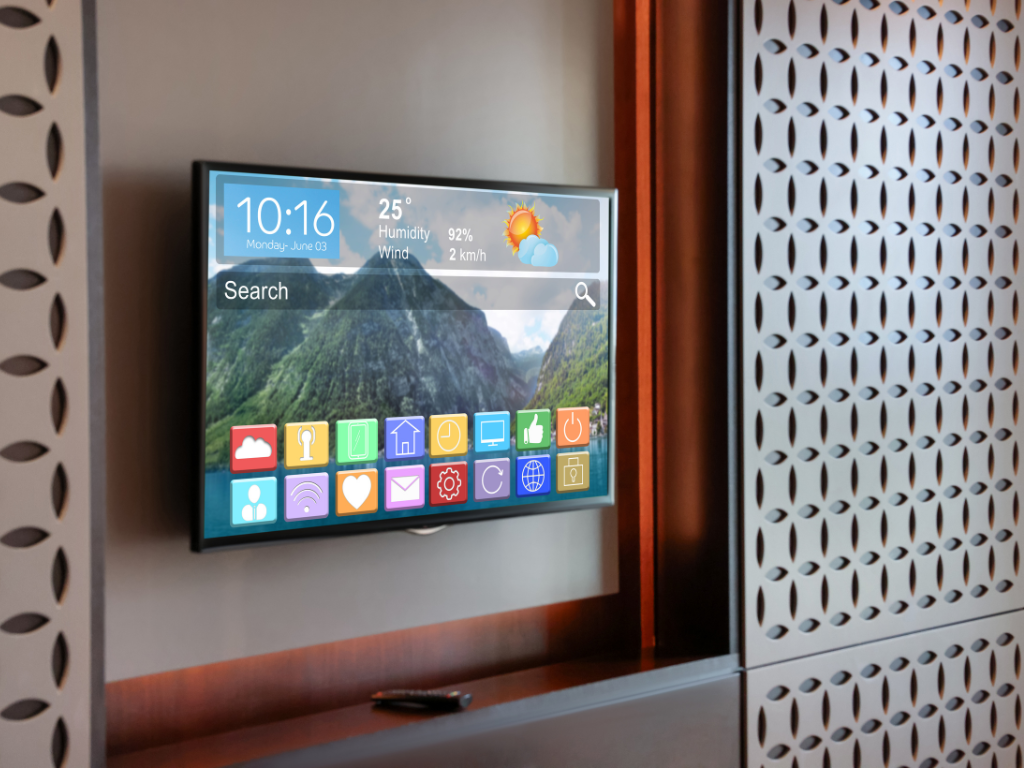

A 65-inch TV weighs 25 to 30kg before the bracket is on the wall. Get the VESA pattern wrong, the bracket undersized, or the anchor mismatched, and the assembly comes down on your console. This blog will walk you through a practical tv wall mount installation guide singapore homeowners can use, with general handyman support for the harder parts.
VESA Pattern: The First Number That Has to Match
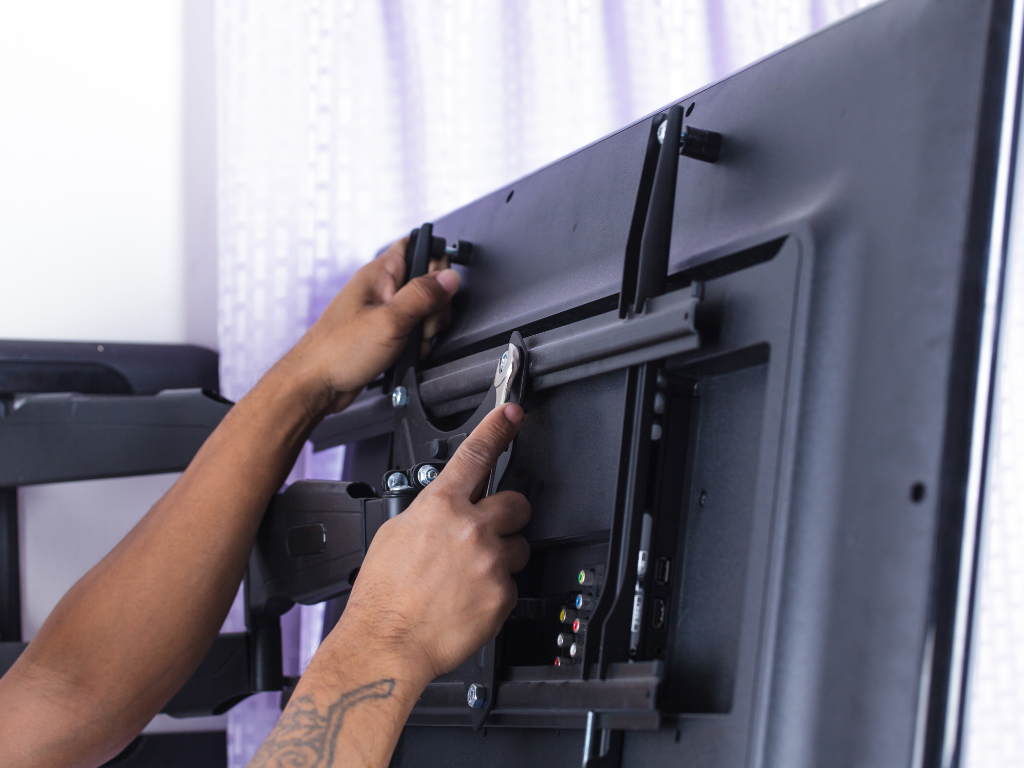
VESA is the screw-hole pattern on the back of your TV, expressed as horizontal x vertical in millimetres. Every modern TV from Samsung, LG, Sony, TCL and Hisense lists its VESA spec on the box and the manufacturer product page. Every wall bracket lists the VESA range it supports.
The pattern must match. A bracket sold as “VESA 400×400” works for any TV with that exact pattern, and many also accommodate smaller patterns like 200×200 or 300×300 because the bracket has multiple hole positions. A bracket rated for VESA 400×400 will not fit a TV with VESA 600×400 because the screw holes don’t line up.
Common VESA patterns for the TV sizes Singapore households buy:
- 32 to 43-inch: VESA 100×100 to 200×200
- 50 to 55-inch: VESA 200×200 to 400×300
- 60 to 65-inch: VESA 300×300 to 400×400
- 70 to 75-inch: VESA 400×400 to 600×400
- 75-inch and above: VESA 600×400 to 800×400
The VESA Mounting Standard from the Video Electronics Standards Association is published openly via the VESA standards organization and standardised across virtually every TV brand sold in Singapore. The screw-thread spec matters too. Most patterns use M6 or M8 screws; the wrong thread strips the receiving boss inside the TV chassis on the second turn, and that damage is non-warranty.
Bracket Choice: Fixed, Tilt, or Full-Motion
The fixed vs full motion tv bracket hdb decision is the second judgement call. Each style has a real use case, and one is overkill for most living rooms.
A fixed (low-profile) bracket sits the TV 15 to 30mm off the wall. Cheapest, strongest, easiest to install. Ideal for a feature wall where the TV is at viewing height and seating is square to the screen. Most HDB feature walls fall here. Pull-out load is highest because the lever arm is shortest.
A tilt bracket holds the TV 50 to 80mm off the wall and lets you angle the screen 5 to 15 degrees downward. Useful when the TV mounts above standard eye height (above a low console, on a high feature wall) or when you watch from a sofa lower than the screen midpoint. Adds about $30 to $50 over a fixed mount.
A full-motion (cantilever or articulating) bracket extends 400 to 700mm from the wall and pivots in three directions. Justified when you have a corner installation, a kitchen-living open layout where viewing position changes, or a bedroom where you watch from the bed and elsewhere. The trade-off: the extended arm multiplies pull-out force on the wall anchors. A 30kg TV at full extension can generate 60 to 90kg of effective pull-out load.
Soundbar shelf attachments live separately. Some brackets include a horizontal shelf for a Sonos Beam or Bose Solo; most don’t. Plan for it before purchase or accept a separate floating shelf.
Bracket Load Rating vs TV Weight
Bracket load rating is what the bracket itself can hold. TV weight is on your TV’s spec sheet (usually 5 to 60kg depending on size). Apply a 1.5x safety margin: a 30kg TV deserves a bracket rated for 45kg or more. Cheap brackets at the bottom of online listings often pass under-rated specs through unverified labelling. Stick to brands the local retail chains carry.

Identifying Your Wall Type Before the Drill Goes On
Singapore living-room walls fall into four categories, and the anchor strategy is completely different for each. The full breakdown of HDB wall types and safe anchors covers tap-test identification and anchor matching across all four. The summary for TV mounting:
Reinforced concrete (most HDB and older condo walls). Solid metallic ring on tap test. Hammer drill with SDS-Plus bit required. Sleeve anchors or wedge anchors at 8mm by 60mm hold a 65-inch TV without drama on a fixed bracket. For full-motion mounts on TVs above 65 inches, step up to chemical anchors.
Drywall partition (newer BTOs, most condos built post-2015). Drum sound on tap test, with tighter tone over the metal stud. The HDB feature wall in many BTO living rooms is now drywall, which surprises homeowners expecting concrete. The tv mounting on drywall partition singapore problem is real: a direct screw into 12mm gypsum holds maybe 5kg, nowhere near a TV bracket’s needs.
Brick wall (some older HDB and pre-2000 condos). Hollow drum sound. Brick wall hollow plug or a sleeve anchor into the brick core works. Watch for the hollow-block variant common in older flats; the air gap between block faces means a standard plug spins instead of expanding.
AAC block (some newer HDB and condos). Soft, deader sound on tap test. Standard expansion plugs strip out fast. AAC needs a frame anchor matched to the substrate.
Anchor Method by Wall Type
This is where most TV mount failures originate. Each wall type has a correct method.
For reinforced concrete and a TV up to 55 inches on a fixed bracket: 4 sleeve anchors at 8mm by 60mm, embedded 50mm minimum. For 65 inches and above, or any tilt bracket, step to 10mm by 80mm wedge anchors. For full-motion brackets above 50 inches, chemical anchors with M8 threaded rod at 80 to 100mm embedment is the safe spec.
For drywall partitions, the only correct approach is engaging the metal studs behind the gypsum. Drywall studs sit 400 to 600mm apart in residential framing, and a stud finder locates them in seconds. The bracket’s mounting holes need to hit at least two studs (most brackets are designed for 400mm centres). If the bracket spans cannot reach two studs, install a horizontal backing plate (timber or steel batten) screwed into multiple studs first, then mount the bracket to the plate. The HDB renovation guidelines on drilling permitted in resident flats cover the broader regulatory frame.
Toggle bolts are a fallback only when stud engagement is impossible. They handle 30 to 50kg per bolt in 12mm gypsum, which is sufficient for a small fixed mount on a 32 to 43-inch TV but inadequate for a full-motion arm on a 55-inch screen.
For brick walls, sleeve anchors into the brick core hold well. Hollow brick needs a chemical anchor or a long sleeve anchor that engages both faces. AAC walls require AAC-specific frame anchors.
Cable Management and Concealed Wiring
Visible cables behind a wall-mounted TV defeat the purpose of mounting it. Three approaches work, ranked from cheapest to cleanest.
Surface trunking. White or matching-finish PVC trunking screwed to the wall, hiding HDMI and power cables in a vertical run from TV to console. Cheapest, retrofittable, looks fine on plain walls.
In-wall fishing for drywall partitions. A 50mm hole behind the TV and another behind the console, with cables fished through the cavity. Tidy result, but the power cable must use an in-wall rated extension or a power point relocated by an LEW-registered electrician. If the existing power point sits in the wrong position, light and power point installation work is a separate trade with a separate quote.
Concrete chase-cutting. A vertical channel cut into the wall, cables buried, then plastered over. Visually perfect. HDB does not allow chase-cutting in structural concrete walls, and it’s an expensive job at $150 to $250 even where allowed in non-structural partitions. Almost never worth it for a single TV mount.
Whichever method, a stud finder with AC live-wire detection is non-negotiable before drilling the entry hole. Concealed wiring runs vertically from switches and outlets, and a hole 30cm above an outlet has real probability of striking the supply conduit. The Energy Market Authority’s consumer electricity safety guidance frames pre-drill detection as basic competency for any wall work.
When DIY Stops and Hire Begins
DIY is appropriate for a 32 to 50-inch TV on a fixed mount on a clearly identified concrete wall, where you have a hammer drill, the right plugs and screws, a stud finder, and a level. The process is achievable in 90 minutes for a competent first-timer.
Hire a handyman when any of these apply: TV size 55 inches or above, full-motion bracket, drywall partition, full cable concealment requested, fixings near electrical outlets, soundbar integration, or ceiling-height feature walls where balance and reach become awkward solo.
The hire cost runs $80 to $250 depending on screen size, bracket type, and cable concealment. A 55-inch fixed mount on concrete with surface trunking sits at $80 to $120. A 75-inch full-motion mount on drywall with in-wall cable fishing sits at $180 to $250. The pricing structure in what affects handyman quotes in Singapore breaks down trip charge, minimum job, and weekend surcharge across this range.
For TV mounting that forms part of a wider living-room refresh (painting, drilling, fixture changes), bundling with minor home improvement work saves the trip charge across multiple visits.
Conclusion
TV mounting is a five-decision job: VESA pattern, bracket type, wall identification, anchor method, and cable plan. Get the first four right and the install holds for ten years. Cheap out on any of them and the failure shows up at the worst possible moment, usually with the TV on the floor.
If your install involves a 65-inch or larger screen, a full-motion arm, drywall partitions, or cable concealment, book a Fix It Papa estimate with the wall type and TV model in your message so the quote covers the right anchor spec from the start.
FAQ About Tv Wall Mount Installation Guide Singapore
How do I know what VESA size my TV needs?
The VESA pattern is the four-screw hole spacing on the back of your TV, expressed in millimetres (e.g. 400×400). Check the manufacturer spec sheet, the box, or measure the holes. Match the bracket to the exact pattern. A VESA 400×400 bracket fits TVs with that pattern; it will not fit a 600×400 TV because the holes don’t line up.
Is it safe to mount a 65-inch TV on a drywall partition?
Yes if the bracket engages the metal studs behind the gypsum board. A direct screw into drywall holds under 5kg. Use a stud finder to locate studs 400 to 600mm apart. If the bracket can’t reach two studs, install a horizontal backing plate screwed into the studs first, then mount the bracket to the plate.
What’s the difference between a fixed and full-motion TV bracket?
A fixed bracket holds the TV 15 to 30mm off the wall, no movement. A tilt bracket adds 5 to 15 degrees of vertical angle. A full-motion (cantilever) bracket extends 400 to 700mm from the wall and pivots three ways. Full-motion suits corner setups and changing viewing positions; fixed suits standard living-room walls.
Can I mount a TV myself on an HDB feature wall?
DIY works for a 32 to 50-inch TV on a fixed bracket on identified reinforced concrete. You need a hammer drill, sleeve anchors sized to the bracket, a stud finder for safety scanning, and a level. For 55 inches and above, full-motion brackets, drywall partitions, or cable concealment, hire a handyman to avoid pull-out failure or hitting concealed wiring.
How much does TV mounting cost in Singapore?
A 55-inch fixed mount on a concrete HDB wall with surface trunking costs $80 to $120. A 65-inch tilt mount runs $120 to $180. A 75-inch full-motion mount on a drywall partition with in-wall cable concealment lands at $180 to $250. Weekend bookings add a 15 to 30% surcharge across all sizes.
Leave a Reply
You must be logged in to post a comment.