

Low water pressure in an HDB flat is common enough that PUB logs about 75 complaints a month about it. Most turn out to be a valve or a blockage rather than anything structural. This blog walks you through isolating the cause, the 25-metre rule that governs your supply, and why fitting a pump is restricted, before you book household plumbing repairs.
Why is the water pressure low in my HDB flat?
Most low-pressure cases are local to your unit, not your block. PUB attributes the majority to “localised issues such as stoppage of pumps, partially closed service valves or blockages in older service pipes or fittings.”
That finding should change where you look first. Households assume a pressure problem is the building’s fault and call the Town Council, when a partially closed valve inside their own flat explains it more often. Valves get nudged during renovation, appliance installation or a previous repair, and nobody notices until the shower weakens.
Blockages are the second bracket. Mineral deposits accumulate inside older service pipes and inside the aerators and filter screens on individual fittings, restricting flow at that outlet while the rest of the flat behaves normally.
Volume gives you scale on the problem. Over the five years to May 2026, PUB received an average of 75 low-pressure feedback cases per month from HDB units, a figure the ministry described as largely unchanged across the years. Steady, and mostly fixable at flat level.
Is the problem your flat, your floor, or the whole block?
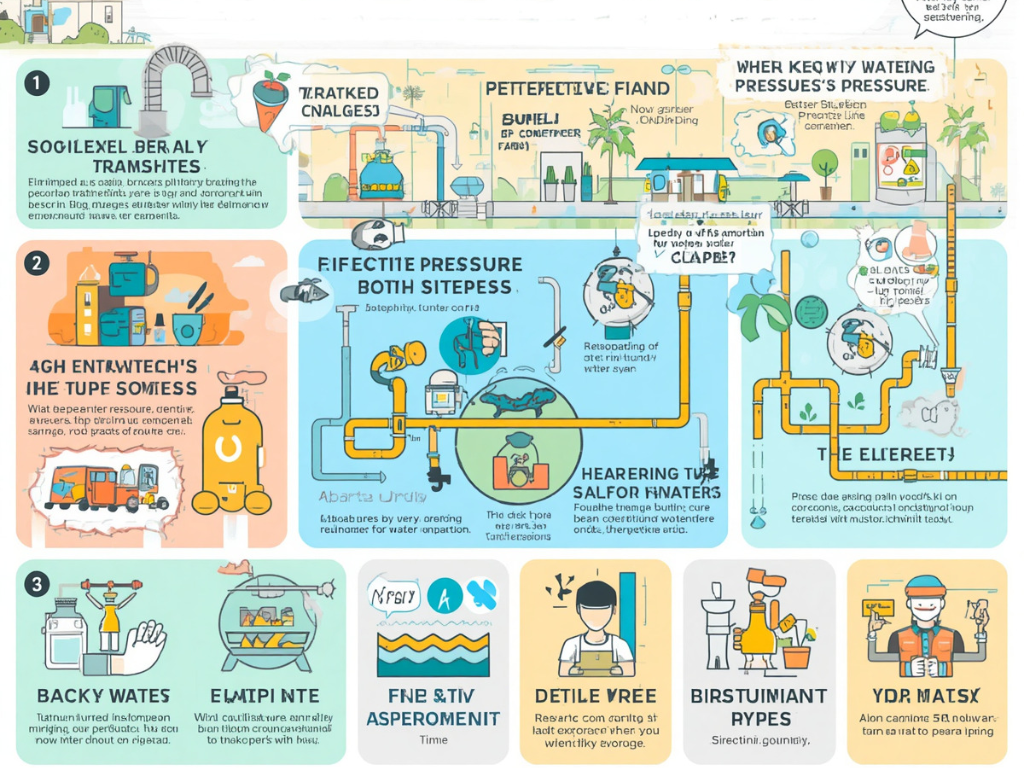
Three checks settle it in about five minutes, and doing them in order saves you calling the wrong party. Test multiple taps, then check hot against cold, then ask a neighbour.
Start inside. Run the kitchen tap, then the bathroom basin, then the shower. Weak flow at one outlet with normal flow elsewhere isolates the fault to that fitting, usually a clogged aerator or a partly closed isolation valve beneath it. Weak flow everywhere points upstream to the flat’s main stop valve or the supply into the unit.
Split hot from cold next. Low pressure on the hot side only, with cold running normally, is a water heater problem rather than a supply problem, and the fault sits at the heater’s inlet valve or inside the unit. Both sides weak means the supply itself.
Ask one neighbour on your floor. If their pressure is fine, the problem is inside your flat and a plumber is the right call. If theirs is weak too, the issue is the riser, the rooftop tank or its pump, and that belongs to the Town Council rather than to you.
Worth noting: a pressure drop that appears suddenly across the whole flat, with no renovation or repair beforehand, is worth reporting to PUB on 1800-2255-782 before spending anything, since block-level supply issues get resolved without a bill to you.
Does PUB guarantee a minimum water pressure?
No, and this is where most advice on the subject is wrong. Singapore’s Code of Practice for Water Services sets no minimum water pressure figure, and the ministry has confirmed there are no plans to introduce one.
Answering a parliamentary question on 7 May 2026, Minister for Sustainability and the Environment Grace Fu stated that the Code does not specify a minimum “because water pressure varies significantly across locations, building heights, pipe configurations and usage patterns.” Professional Engineers design each development’s water system instead.
Take the stance plainly: any page telling you a Singapore standard mandates a specific pressure at your fixtures is quoting something that does not exist. Several do, usually citing a figure in kilopascals attributed to a building authority. There is no such requirement to cite.
What PUB does commit to is a supply level rather than a fixture pressure. PUB maintains pressure adequate to supply water directly to fittings not exceeding 25 metres above mean sea level, and the Code requires anything above that line to be served indirectly from water storage tanks.
What is the 25-metre rule and which side of it is your flat on?
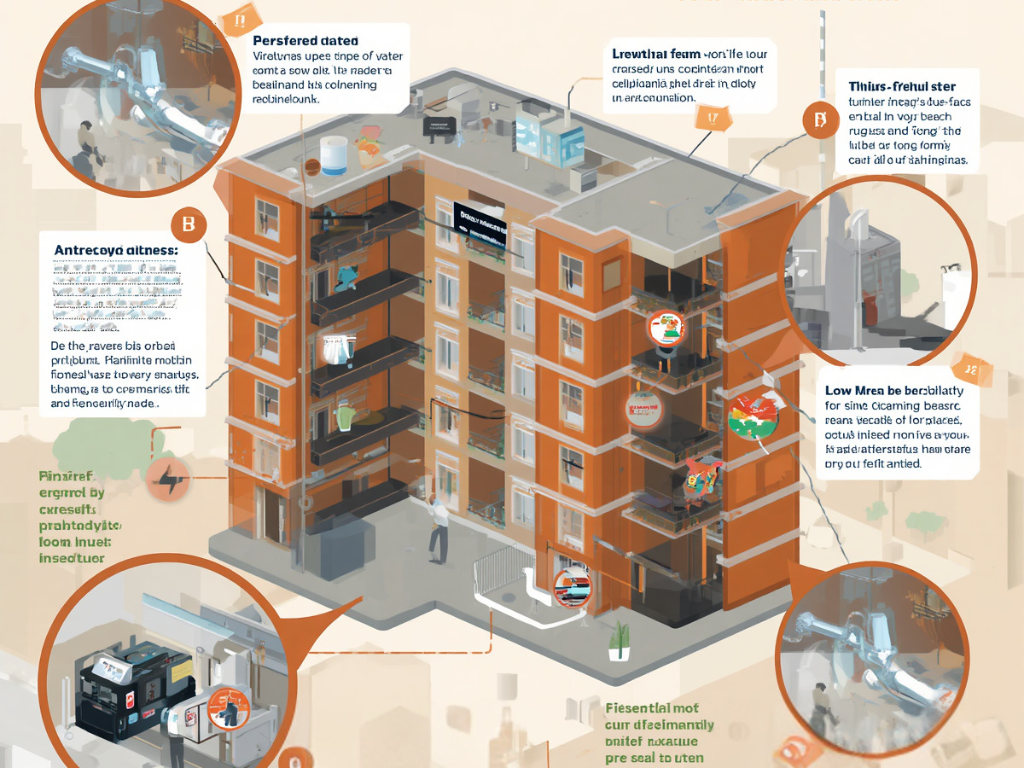
The 25-metre mark above mean sea level divides direct supply from indirect supply. Below it, water reaches your fittings straight from PUB’s mains. Above it, your flat is fed from a storage tank, and for HDB blocks those tanks sit on the roof and are maintained by the Town Council.
The practical consequence is who owns your pressure. A low-floor flat on direct supply depends on mains pressure, which PUB manages. A high-floor flat depends on the rooftop tank, its float valve and its pumps, all of which are Town Council equipment. Same complaint, two completely different escalation paths.
Height above sea level is not the same as your storey number. A block on elevated ground crosses 25 metres AMSL at a lower floor than a block near the coast, so two flats on the tenth storey in different estates sit on different sides of the rule.
Peak demand shows up on the indirect side. Pressure in the distribution system varies through the day, running highest when consumption is lowest and lowest at peak, which is why a shower at 7am feels weaker than the same shower at 11pm. That pattern is normal rather than a fault.
Can I install a booster pump to increase water pressure?
Not freely, and not on your own initiative. The Public Utilities (Water Supply) Regulations prohibit installing any pump in a manner that affects the Board’s supply, which is why a pump drawing directly off the shared supply is not a legitimate fix in an HDB flat.
The regulation is specific. It states that no person shall install, alter, repair or use any “water fitting, apparatus or pump in such a manner that affects or is likely to affect the quality, pressure or efficient supply of water by the Board.” A pump that boosts your flow by pulling harder on a shared riser does exactly that, at your neighbours’ expense.
The compliant route is a tank, not a pump alone. Where a property genuinely needs boosting, the design is a break tank feeding a pump, which draws from stored water rather than from the mains, and the PUB handbook on water supply applications sets out that supply above the 25-metre line runs indirectly through storage tanks for precisely this reason.
That design is realistic in a landed property and generally not in an HDB flat, where there is no space for a break tank and the block already has a rooftop tank serving the same purpose. Where a contractor offers to fit a booster pump in your flat without mentioning any of this, the offer itself is the warning.
What can you actually fix yourself?
Aerators and isolation valves cover most of the fixable cases, and neither requires a licence. PUB’s schedule of simple plumbing works places taps, mixers and their accessories in handyman scope.
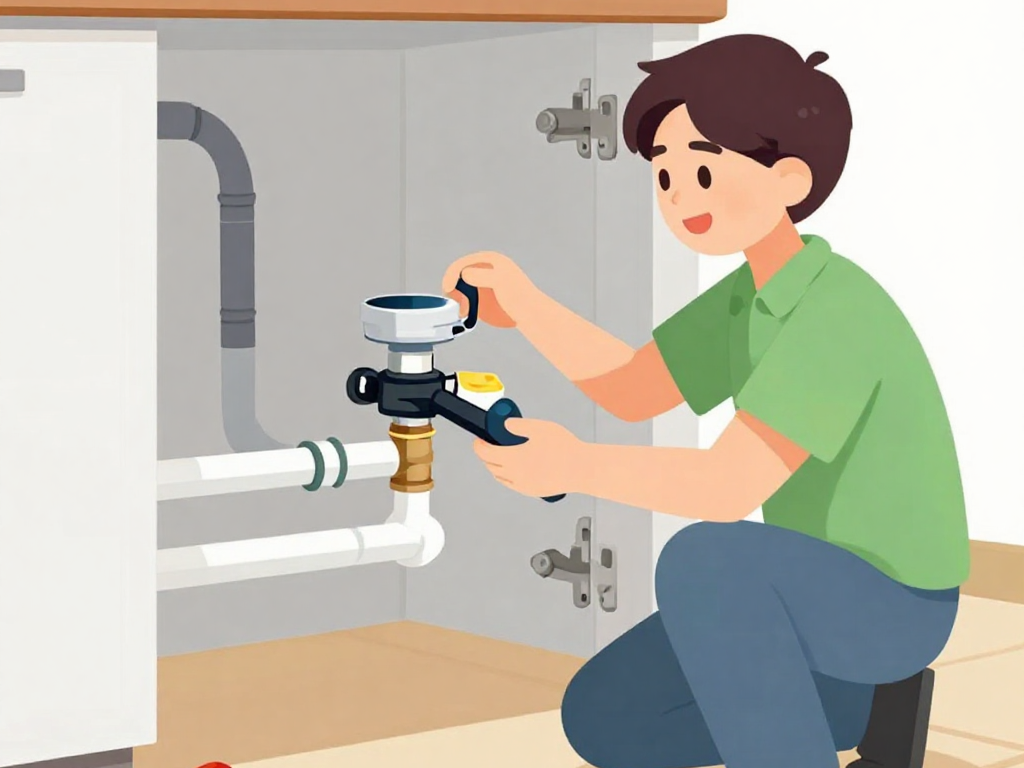
Start with the aerator. Unscrew the mesh insert at the tip of the tap spout, rinse out the trapped grit and mineral scale, and refit it. A clogged aerator produces weak flow at one outlet while the rest of the flat runs normally, and clearing it takes minutes with no parts.
Check the isolation valve underneath. Each fitting has a small valve on its supply, usually a quarter-turn lever or a screw type, and a valve left partly closed after previous work restricts that outlet permanently. Full open is the lever parallel to the pipe.
Shower heads deserve the same treatment. Mineral deposits block the individual spray holes, and descaling the head restores flow that people mistake for a supply problem. Where a 3-tick water-efficient head is fitted, note that its rated flow is below 5 litres per minute by design, so it will never feel like an unrestricted head no matter what the supply does.
Why is only the hot water pressure low?
The heater is restricting it, not the supply. An instant water heater passes water through a narrow heated element, and that restriction reduces flow on the hot side while cold remains unaffected.
Instant units are the usual culprit in Singapore flats. The heating chamber and its filter screen both constrain flow, and scale accumulating inside a unit past its fifth year narrows it further. A storage heater behaves differently, delivering water at roughly the pressure it receives, so a storage tank rarely explains a hot-side pressure complaint.
Check the heater’s inlet valve before assuming a fault. That valve gets closed during servicing and left partly shut, which produces exactly the symptom of weak hot water with healthy cold water.
Where an instant heater is genuinely the constraint and the household wants stronger flow, the fix is the appliance rather than the plumbing, and heater replacement options matter more than any pressure work. A storage tank preserves inlet pressure where an instant unit cannot.
Who do you call when the whole block is affected?
The Town Council, because HDB rooftop water tanks and their pumps are Town Council equipment. PUB handles the mains up to the point of supply; everything in the block’s internal distribution belongs to the estate.
Escalation depends on where the fault sits. Report to PUB on 1800-2255-782 for suspected mains issues, supply interruptions or pressure problems affecting an area. Report to the Town Council for rooftop tank, riser or block pump problems. Report to your MCST managing agent if you are in a condominium, where the equivalent equipment is common property under the MCST rather than a Town Council.
Get more than one household to report it. A single complaint about a block-level pump reads as an isolated issue; three from the same stack establishes a pattern and moves faster.
Inside your own flat, the boundary is the same one that governs every other plumbing job. Aerators and valves are handyman work, while altering the supply pipework is regulated and needs a PUB Licensed Plumber, a split set out in the HDB rules on plumbing works.
Could low pressure mean you have a leak?
Yes, and this is the case worth ruling out first. A concealed leak on the supply pipework bleeds off pressure before the water reaches your fittings, and it does damage while it does so.
The signs cluster. Pressure that has declined gradually over months rather than dropping suddenly, a damp patch or stain on a wall or ceiling, and a water bill rising without a change in household usage all point the same way. Any two of those together justify investigation before anything else.
Verify it at the meter. Close every tap and appliance in the flat, then watch the meter. Movement with nothing running means water is escaping somewhere between the meter and your fittings, and a smart meter’s overnight hourly reading shows the same thing more precisely.
A confirmed leak changes the job entirely. Concealed leak detection locates it without hacking the whole wall, and repairing the supply pipe is regulated work rather than a handyman fix.
What does it cost to fix low water pressure?
Most flat-level fixes are cheap because the parts are trivial and the labour is short. Fix It Papa’s rates start at $50 for tap and faucet work, which covers aerator cleaning and valve adjustment on the same visit.
Costs sort by where the fault sits. An aerator clean or valve adjustment is a single short visit with no parts. A tap or mixer replacement adds a fitting and stays within handyman scope. Supply pipework repair moves into regulated works with a PUB Licensed Plumber and a different price band entirely.
Block-level faults cost you nothing directly. Rooftop tank and pump work is Town Council maintenance funded through service and conservancy charges, which is the strongest argument for running the neighbour check before you engage anyone privately.
After-hours attendance carries a surcharge either way, and our 2026 plumbing rate guide puts that at $50 to $150 on top. Low pressure is rarely urgent enough to justify it.
Conclusion
No Singapore standard sets a minimum pressure at your fixtures, so the question is never whether your flat meets a number. It is whether the restriction sits in your fitting, your flat’s supply, or the block’s tank, and PUB’s case data says the first two account for most of it. Run the three tests first: the answer decides whether you pay a plumber or file a Town Council report.
Check your aerators and isolation valves, then book an inspection noting which outlets are affected and whether hot and cold differ, so the scope is confirmed before a technician is assigned.
Frequently asked questions
How do I increase water pressure in my HDB flat?
Clean the tap aerators and confirm every isolation valve is fully open, which resolves most single-outlet cases. PUB attributes most low-pressure incidents to partially closed valves or blockages in older pipes and fittings. Fitting a booster pump is restricted, since regulations prohibit pumps that affect the Board’s supply.
Who do I call for low water pressure in Singapore?
Call your Town Council if neighbours on your floor are also affected, since HDB rooftop tanks and pumps are Town Council equipment. Call PUB on 1800-2255-782 for suspected mains or area-wide issues. Call a plumber only once you have confirmed the problem is inside your own flat.
Is there a minimum water pressure standard in Singapore?
No. The Code of Practice for Water Services specifies no minimum, and MSE confirmed on 7 May 2026 that there are no plans to introduce one. PUB maintains pressure adequate for fittings up to 25 metres above mean sea level, with anything higher supplied indirectly from storage tanks.
Why is my water pressure low only in the shower?
Mineral deposits have blocked the spray holes in the shower head, or the isolation valve on that supply is partly closed. Descaling the head restores flow. A 3-tick water-efficient head flows under 5 litres per minute by design, which feels weaker than an unrated head regardless of supply pressure.
Why is my hot water pressure lower than cold?
Because an instant water heater restricts flow as water passes through its heating element, while cold water bypasses it. Check the heater’s inlet valve is fully open first, since servicing often leaves it partly closed. A storage water heater delivers roughly the pressure it receives and rarely causes this.
Leave a Reply
You must be logged in to post a comment.