

By David Tan Certified Electrical Technician & Home Safety Specialist
About the Author: David Tan is a certified electrical technician with over 15 years of experience in appliance repair, specializing in ceiling fan installation and servicing in Singapore. As the lead technician at “Fixitpapa.sg,” he has diagnosed and repaired thousands of fans, making him an expert in troubleshooting common (and uncommon) fan issues, from dangerous wobbles to mysterious electrical faults.
My Personal Take

Let’s be honest—there are few things more annoying (and slightly terrifying) than a ceiling fan that’s gone rogue.
You know what I mean. That constant click… click… squeak… that keeps you up at night. Or even worse, the dreaded wobble. The one that starts slow and builds up until you’re pretty sure the whole thing is about to launch itself across the room.
As a technician, I can tell you that in a hot, humid place like Singapore, a ceiling fan isn’t a luxury; it’s a necessity. When it breaks, it’s a real problem. But a broken fan isn’t just annoying; it can be inefficient (costing you money) or even dangerous. Getting it serviced isn’t giving up—it’s just a smart, safe move.
Your Quick Summary (The Lowdown)
The Main Takeaway: Professional fan servicing is a crucial safety and maintenance check, not just a simple cleaning. It’s designed to fix dangerous issues like wobbling (a safety hazard), electrical faults (a fire hazard), and annoying noises before they lead to a total breakdown.
Here’s what you need to know:
- Why Call a Pro? Safety. Fans are heavy, spinning, electrical appliances. A professional has the expertise to handle the wiring and secure the mounting safely, preventing accidents.
- What’s That Noise? Squeaking or grinding is often a cry for help. It’s usually from worn-out parts or a lack of lubrication that a pro can fix.
- Why Is It Wobbling? A wobble is a danger sign. It means the blades are unbalanced or, worse, the fan is loose from the ceiling. This needs immediate professional attention.
- How Do I Choose? Look for a repair service with good reviews, clear pricing, and a warranty on their work.
What Are “Fan Services” (And What Am I Paying For)?
The short answer: You’re paying for an expert to safely diagnose and fix your fan, covering everything from the blades to the motor and wiring.
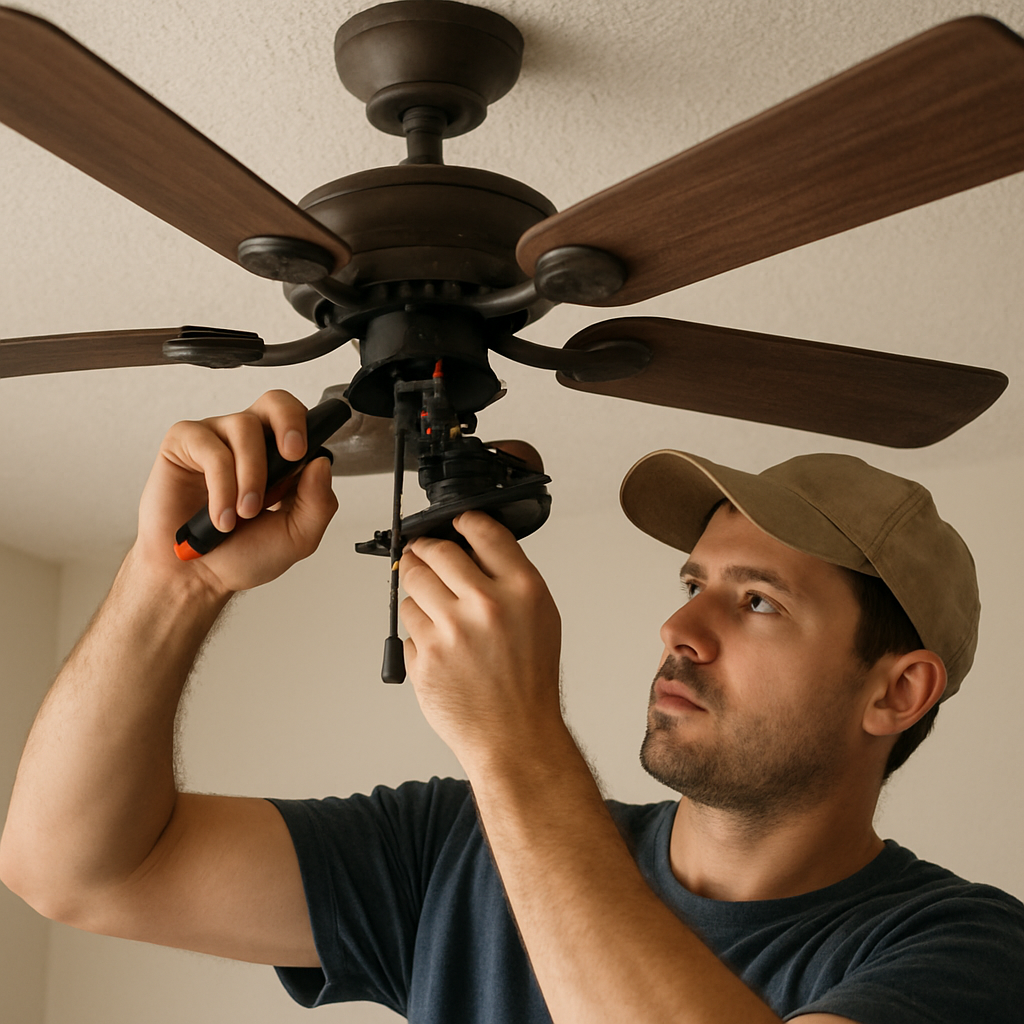
The details: When I come out for a “fan service” call, I’m doing a lot more than just dusting the blades. This is a technical check-up that includes:
- Safety & Security Check: Tightening all the screws on the blades and, most importantly, the mounting bracket on the ceiling. This is the first thing I check, especially if a fan is wobbling.
- Electrical Inspection: Opening the housing to check the wiring, replacing hardened or faulty capacitors (the #1 reason a fan won’t start or runs slow), and ensuring there are no fire hazards.
- Motor & Bearing Service: Lubricating the moving parts and bearings (the source of most squeaks and grinds) and checking the motor for signs of overheating or failure.
- Balancing: If the fan is wobbling, I’ll balance the blades using a special kit to ensure it runs perfectly smooth.
Why Should I Pay a Professional to Fix It?

The short answer: Because it’s safer, faster, and cheaper in the long run. DIY-ing a heavy, electrical, spinning appliance is a recipe for disaster.
The details: I’ve seen homeowners make small problems worse. They try to fix a wobble, over-tighten a screw, and crack a blade holder. Or worse, they get a shock from faulty wiring.
- Safety: This is the big one. We’re trained to work safely with electricity and at heights. We know how to secure a 10kg fan so it doesn’t fall.
- Experience: I can tell from the sound of a click or a hum what the problem is 9 out of 10 times. That experience saves you hours of guesswork.
- Cost-Efficiency: A struggling fan (one that’s unbalanced or has a bad motor) works harder. That draws more electricity, hiking up your bill. A service call is almost always cheaper than a new fan or a future electrical repair.
- Peace of Mind: I stand by my work. Most professional services offer a warranty. If the problem comes back, we come back. You don’t get that from a YouTube tutorial.
The Top 3 Fan Problems I See Every Week
1. The Wobbling Fan (The Scary One)
- What it is: The fan shakes or sways, often getting worse at higher speeds.
- Why it happens: This is a danger sign. It can be simple, like unbalanced blades, or very serious, like the mounting screws coming loose from the ceiling.
- My advice: Stop using the fan and call a pro. Do not sleep under a wobbling fan. It’s not worth the risk.
2. The Noisy Fan (Squeaking, Clicking, or Grinding)
- What it is: Any repetitive noise that wasn’t there when you bought it.
- Why it happens: A click is often a loose screw or a wire hitting the housing. A squeak or grind almost always means the bearings in the motor are worn out or dry.
- My advice: This is your fan’s “check engine” light. If you catch it early, a simple service and lubrication can fix it. If you ignore it, that grinding will eventually kill the motor.
3. The Dead (or Slow) Fan
- What it is: You flip the switch, and the fan does nothing, hums, or spins very slowly.
- Why it happens: This is almost always an electrical issue. 90% of the time, it’s a dead or dying capacitor (a small, cheap part inside the housing). It could also be a bad wall switch or a loose wire.
- My advice: Because this involves wiring, leave it to a professional. It’s a quick fix for me, but a big risk for a homeowner.
How to Hire a Fan Repair Service You Can Trust
The short answer: Look for reputation, experience, and a warranty.
- Check Their Reputation: Look at their Google Reviews. Are customers happy? Do they sound legitimate?
- Ask About Experience: Ask them, “Have you worked on my brand of fan before?” (e.g., KDK, Fanco, etc.).
- Get Clear Pricing: Ask for a quote upfront. Be wary of anyone who is way cheaper than the rest—it’s often a red flag.
- Ask for a Warranty: A good technician will always offer a warranty (e.g., 30-90 days) on their repair. This shows they stand by their work.

Leave a Reply
You must be logged in to post a comment.