
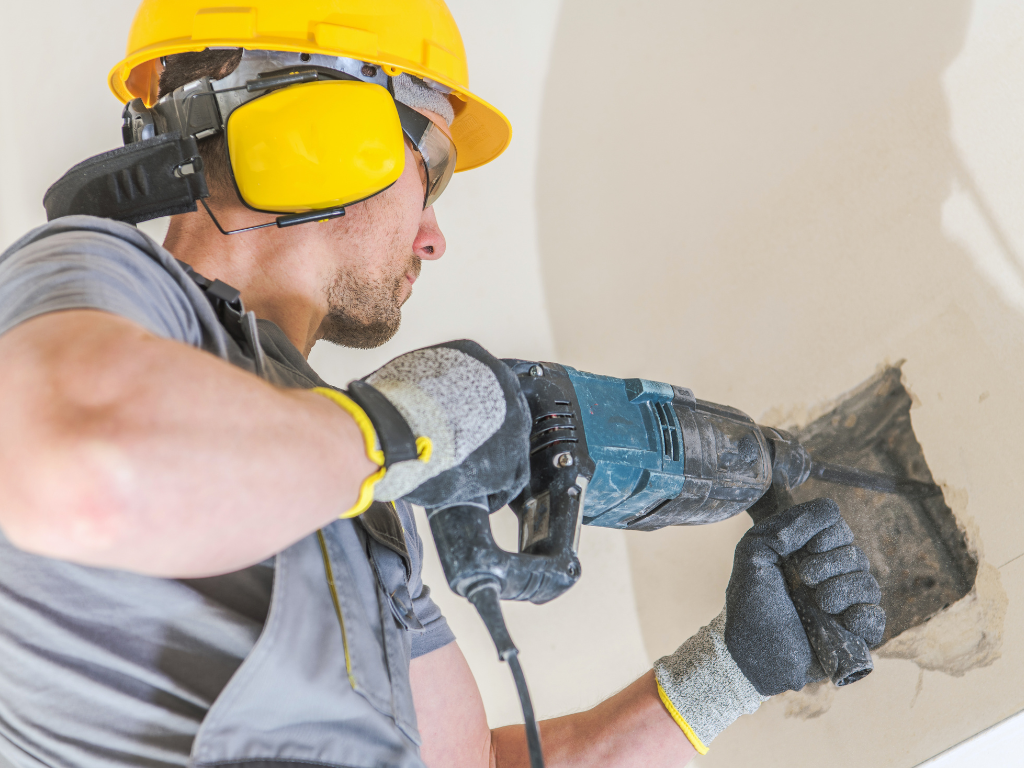

A 75-inch TV mounted on the wrong HDB wall can pull out within months, and one drill bit through a concealed conduit costs $300 to fix. This blog will walk you through the rules around drilling into hdb walls, the four wall types in Singapore flats, and how a working general handyman chooses anchors for real load.
What HDB Allows You to Drill (and What’s Off Limits)
HDB lets residents drill into flat walls for normal fixings: shelves, mirrors, curtain rails, TV brackets, kitchen accessories. The rules in HDB’s renovation guidelines for resident flats draw the line at structural integrity and concealed services.
You cannot:
- Hack or remove structural walls (load-bearing reinforced concrete walls, household shelter walls, walls between flats, external walls, bay window walls)
- Drill deep enough to compromise reinforcement bars in a structural element
- Damage concealed conduit (live electrical wiring runs through the wall)
- Drill into floor slabs beyond approved fixing depth
- Run drilling work outside reasonable hours (typically 9am to 5pm weekdays, restricted weekends, no public holiday work)
The penalty side matters. HDB can require reinstatement at the owner’s cost for unauthorised hacking, and home insurance claims for water or electrical damage routinely get voided when the trigger is unapproved drilling. The cheap option of “let me try it myself” turns expensive at exactly the moment you needed it not to.
For practical fixings (TV brackets, shelves, mirrors, curtain rails), drilling is allowed across all wall types in the flat. The constraint is doing it without hitting reinforcement bars, conduit, or pipes, and using an anchor matched to the wall material.
HDB Wall Types and How to Identify Them
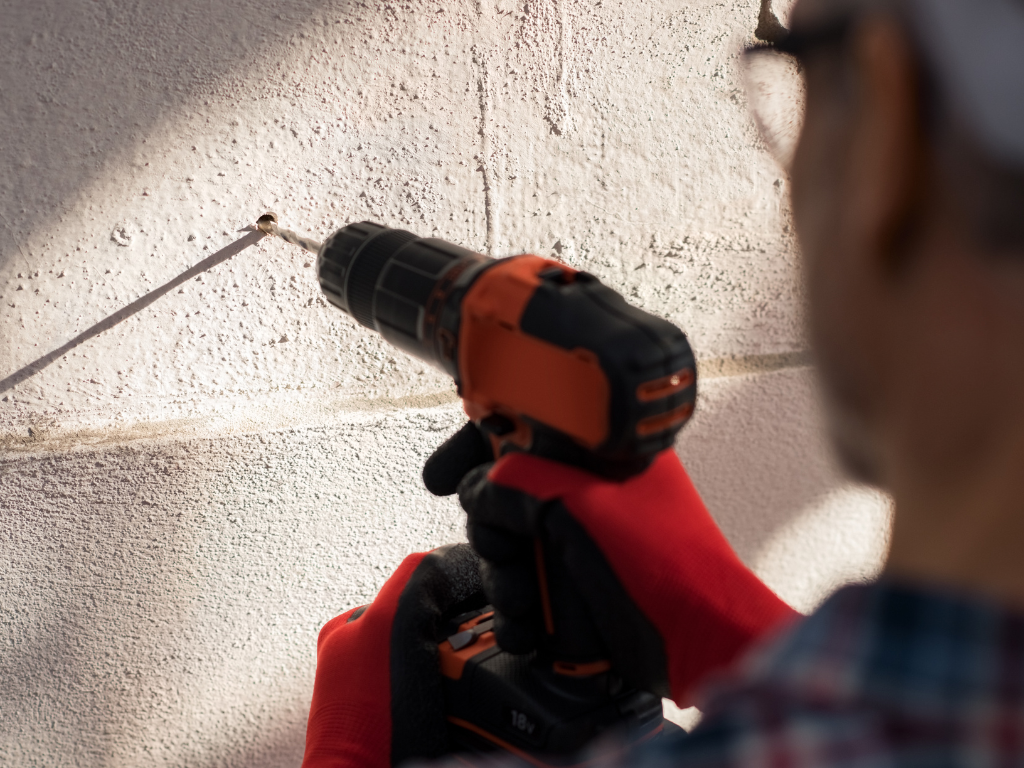
Singapore HDB flats use four broad wall types. Knowing which one you’re drilling into is the single most important call you’ll make before the drill goes on. The hdb wall types concrete drywall split is the first fork; what sits behind the surface is the second.
Reinforced Concrete Walls
Reinforced concrete forms every load-bearing wall in your flat: external walls, the wall around the household shelter, walls between adjacent units, and certain internal walls in the structural grid. They’re typically 150 to 200mm thick.
Tap test: a solid, ringing tone with a slight metallic edge from the embedded reinforcement bars. The drill resistance is unmistakable. A standard cordless drill struggles after 5mm of penetration; you’ll need a hammer drill with SDS-Plus or SDS-Max bit and a masonry tip rated for the work.
Drilling is permitted for fixings, but stay shallow. A 6mm hole at 60mm depth is fine for a light shelf. A 10mm hole at 80mm depth for a TV bracket is fine. Going beyond 100mm risks contact with the rebar grid, which dulls bits, throws sparks, and on rare occasions pops a chunk of cover concrete.
Brick and Cement-Fiber Partition Walls
Older HDB flats (pre-2000) often have brick or cement-fibre partition walls between bedrooms and between living and dining areas. These are non-structural and 100 to 150mm thick.
Tap test: a hollow drum sound, sometimes with a faint cement-board rattle on cement-fiber partition versions. Drill resistance is moderate; a hammer drill on light setting works without issue.
The catch with these walls is layered construction. A cement-fiber partition has gypsum or cement board on each face with insulation or air gap between. Your fixing has to either hit the inner block core or use an anchor designed for hollow construction. Driving a screw into face board with no anchor is the most common failure mode for shelves in older flats.
Drywall Partitions
Newer BTO flats and renovated resale units increasingly include drywall partitions: gypsum board over metal studs, 60 to 80mm thick. The setup mirrors what most condos use.
Tap test: a clear drum sound everywhere except over the drywall stud, where the tone tightens noticeably. A stud finder confirms stud positions in seconds.
Drilling is straightforward but the anchor choice is everything. A direct screw into gypsum holds maybe 5kg dynamic load before pull-out. The fixing must engage the stud or use a toggle bolt rated for cavity work. The contrast with HDB-only readers managing condo drywall sits in condo handyman work and MCST rules, which goes into drilling-hour restrictions.
AAC (Autoclaved Aerated Concrete) Blocks
Some newer HDB blocks use AAC for non-structural partitions. AAC is a lightweight grey block, 75 to 100mm thick. Tap test reveals a softer, deader sound than reinforced concrete.
Drilling AAC is fast (a regular drill on hammer setting works), but the material is friable. Standard expansion plugs strip out under load. AAC needs a proper frame anchor designed for the substrate.
Spotting Concealed Conduit Before You Drill
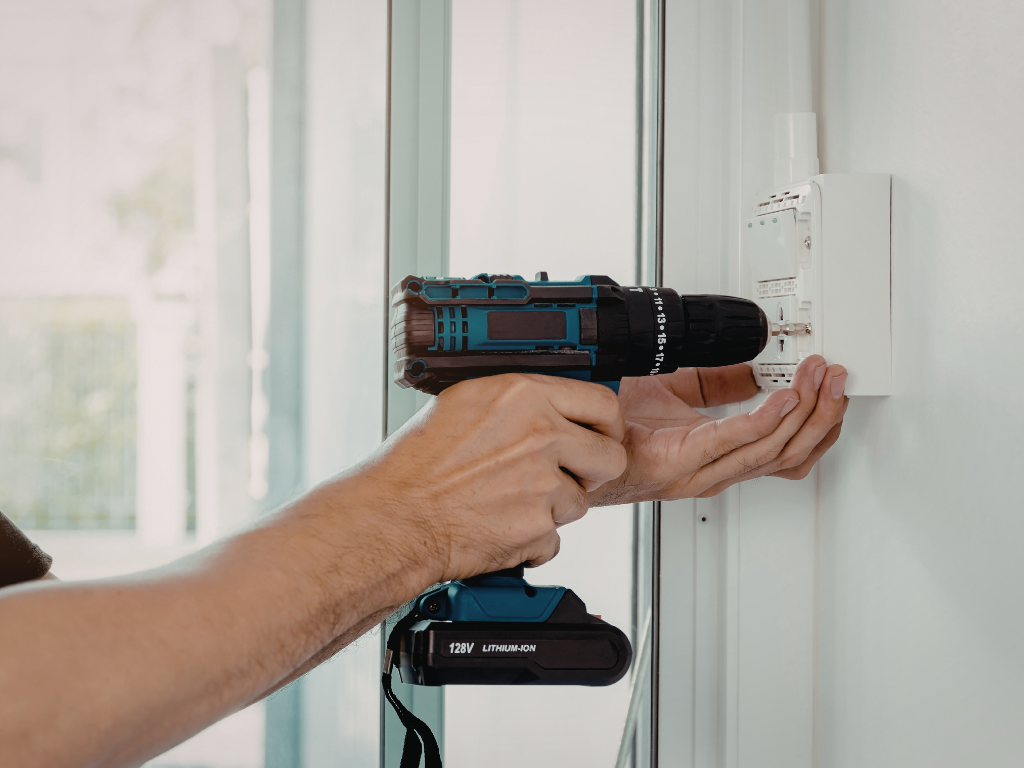
Concealed conduit is the wiring run buried in your walls between the distribution board, switches, and outlets. The Energy Market Authority’s consumer electricity safety guidance treats concealed wiring detection as a baseline competency before any wall work, and for good reason: a drill bit through a live conductor trips the breaker if you’re lucky and arcs into the bit if you’re not.
The non-negotiable rule for HDB drilling: keep at least 50cm vertical clearance from every light switch, power point, and ceiling light fitting. Conduit runs vertically up and down from these fittings inside the wall. Drilling 30cm directly above a power outlet has a real probability of hitting the supply conduit.
Use a stud finder with AC detection mode before any drill on the wall. The unit beeps when it detects live wiring within 50mm of the surface. It is not infallible, especially on thicker concrete, but it catches the obvious cases. Drill bits are cheap; replacing a damaged conduit means breaking the wall, retracing the cable, and patching the surface afterward. That’s a job for an LEW-registered electrician under light and power point installation work, and it doesn’t come back together for under $300.
Choosing the Right Anchor for Your HDB Wall
Anchor selection is the decision that determines whether your shelf stays up for ten years or pulls out at the wrong dinner party. Pull-out load rating is the spec on every anchor packaging in kg or kN, and it matters more than the screw size.
For wall plugs for hdb concrete walls and other reinforced concrete:
- Plastic expansion plug (6mm to 8mm): light loads up to 15kg per anchor (single picture, small shelf)
- Sleeve anchor or wedge anchor: 30 to 80kg per anchor (TV bracket, towel rail, medium mirror)
- Chemical anchor (resin injection): 80kg to 500kg+ per anchor (heavy kitchen overhead, full-height standing mirror, structural fixing)
For brick and cement-fiber partitions:
- Hollow-wall metal anchor (Molly bolt): 20 to 40kg per anchor
- Direct masonry screw into the brick core if accessible: 30 to 50kg per anchor
For drywall partitions:
- Toggle bolt (butterfly toggle): 30 to 50kg per anchor in 12mm gypsum
- Self-drilling drywall anchor: 15 to 25kg per anchor (light frames, small mirrors)
- Direct screw into the drywall stud: rated higher than any cavity anchor for the same load class
For AAC blocks:
- AAC-specific frame anchor (Hilti HRD-K or equivalent): 40 to 100kg per anchor
- Standard expansion plugs in AAC: not rated, will pull out under dynamic load
Apply a 50% safety margin for any dynamic load. A 50kg TV on a swing-arm mount generates well over 50kg of pull force when the arm extends or when someone bumps the screen. Match the anchor to twice the static weight.
Tools That Earn Their Keep (and What’s Not Worth Buying)
For occasional household drilling, a corded hammer drill with SDS-Plus chuck is the single piece of kit that pays for itself fast. Cordless impact drivers are convenient but underpowered for repeated concrete work; the battery dies halfway through the third anchor. A stud finder with AC live-wire detection is the second purchase. Anything beyond that, including specialist masonry bits in odd sizes and chemical anchor cartridges, sits in the rent-not-buy column for most homes.
If your project covers multiple jobs (shelves, brackets, curtain rails, kitchen accessories) in one visit, the bundle works better as a single booking. The sequencing logic and pricing for that approach sits in what affects handyman quotes in Singapore, where multi-task visits beat separate trips on cost.
When to DIY and When to Hire
DIY is appropriate for:
- Light fixings (under 10kg) into reinforced concrete with a 6mm plug
- Curtain rail brackets into brick or AAC partitions
- Picture hooks anywhere
Hire a handyman for:
- TV brackets above 50 inches on any wall type
- Full-height standing mirrors
- Kitchen overhead cabinets
- Anything within 50cm of a switch, outlet, or light fitting
- Any fixing where the load rating matters and you don’t have torque experience
The judgement call sits on the load. A 32-inch TV on a fixed mount on concrete is a $30 plug-and-screw job for a competent DIYer. A 75-inch TV on a full-motion arm on a drywall partition is a $200 hire job that includes wall-type assessment, stud location, anchor specification, and bracket levelling. Anchoring tall furniture against tip-over follows the same logic; IKEA Singapore’s SECURE IT safety program makes that case clearly.
For drilling that forms part of a wider refresh (mounting plus painting plus minor repair), bundling with minor home improvement work lets the contractor sequence the work in one day and skip the second trip charge.
Conclusion
Drilling into HDB walls is allowed within sensible limits, but the wall type and the anchor make every difference between a fixing that lasts and one that pulls out. Reinforced concrete needs masonry anchors. Drywall needs toggle bolts or stud engagement. Stay 50cm clear of any electrical fitting and use a stud finder with AC detection. Match anchor pull-out load to twice the dynamic weight, not the static.
If your job involves a heavy mount, a tricky wall, or a fixing position close to electrical services, request a Fix It Papa estimate before the drill goes anywhere near the wall.
FAQ About Drilling Into HDB Walls
Can I drill into any wall in my HDB flat?
You can drill into walls for normal fixings, but you cannot hack structural walls (external walls, walls around the household shelter, walls between flats, bay window walls), and you must avoid concealed conduit. HDB renovation guidelines treat structural integrity and concealed services as the two hard limits.
How do I know if an HDB wall is load-bearing?
A load-bearing wall is reinforced concrete, 150 to 200mm thick, and gives a solid metallic-edged ring when tapped. Walls around the household shelter, external walls, and walls between flats are always load-bearing. Internal partition walls in older flats are usually brick or cement-fibre partition and non-structural.
What anchor should I use for a TV bracket on an HDB concrete wall?
For a 50-inch TV (under 30kg static), a sleeve anchor or wedge anchor sized 8mm by 60mm holds well in reinforced concrete. For 65-inch and above, or any full-motion bracket, use a chemical anchor or step up the wedge anchor diameter. Always confirm the bracket’s pull-out load rating against the anchor spec.
Why do drywall fixings keep pulling out?
Direct screws into gypsum board hold under 5kg before pull-out. Drywall needs an anchor that engages the metal stud behind the panel, or a toggle bolt that opens inside the cavity. Standard plastic expansion plugs are designed for masonry, not drywall, and fail quickly under any meaningful load.
How do I avoid hitting concealed conduit when drilling?
Stay at least 50cm vertical clearance from every switch, power point, and ceiling light fitting because conduit runs vertically from these. Use a stud finder with AC live-wire detection mode before drilling. If the fixing must sit close to an electrical fitting, hire a handyman or LEW-registered electrician to assess the wall first.
Leave a Reply
You must be logged in to post a comment.