

A tap that still drips after a new washer usually means the washer was never the problem. PUB puts silent household leaks at more than 10 litres of wastage an hour, so a persistent drip is worth diagnosing properly rather than re-buying parts. This blog walks you through the six real causes, starting with the one most people miss, before you book tap and plumbing repairs.
Why does a tap still drip after replacing the washer?
The valve seat is worn. A washer seals by pressing against a brass seat inside the tap body, and once that seat is scored or pitted, a new washer cannot form a watertight contact against it no matter how good the washer is.
Seats wear because they take the same abrasion the washer does. Grit in the supply, mineral scale, and years of a hardened washer being screwed down against soft brass all cut a groove into the seating surface. The washer is the sacrificial part, so it degrades first and gets blamed, while the damage that actually causes the drip sits underneath it.
The tell is a drip that improves briefly then returns. A new washer deforms slightly on first use and fills a shallow groove for a few days, which is why households report the repair working and then failing within a week. That pattern points at the seat, not the part you fitted.
Worth noting: fitting a third washer after two have failed is the most common wasted afternoon in home plumbing. When the second washer fails the same way as the first, stop replacing washers.
How do you check whether the valve seat is worn?
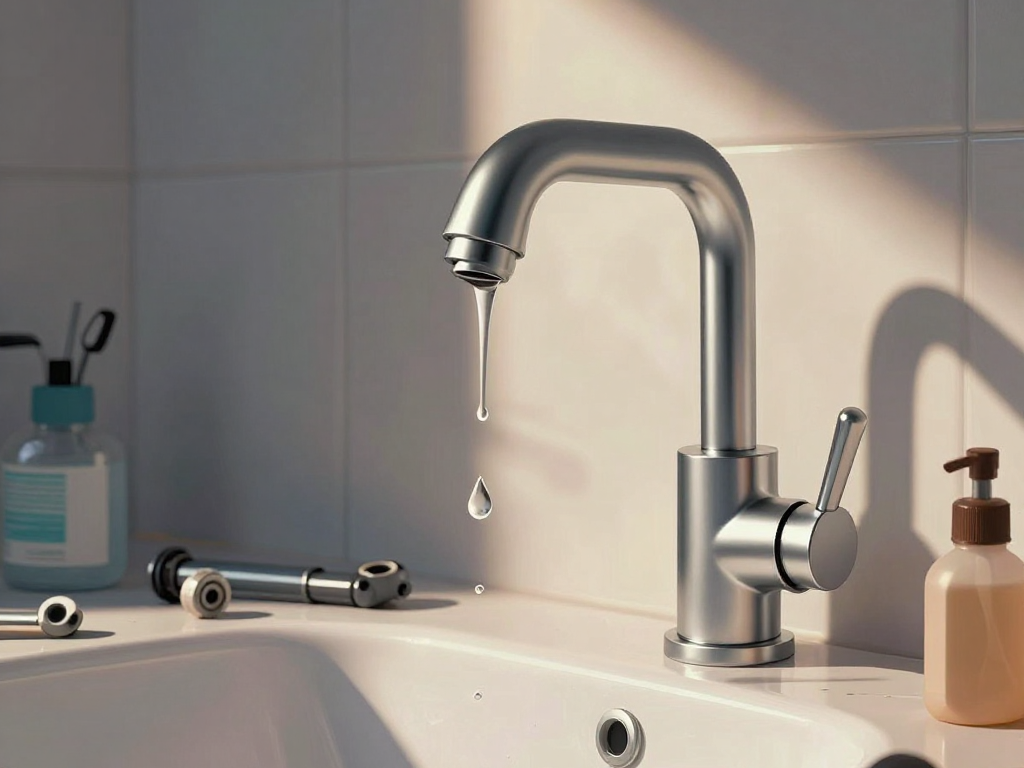
Feel it with a fingertip. Shut off the supply, remove the tap head and spindle, then run a finger around the brass seat at the bottom of the opening. A smooth ring means the seat is sound; ridges, pitting or a distinct groove mean it is not.
Light works better than touch for confirmation. A torch angled into the tap body shows scoring as a visible line or rough patch on the seating face, and a phone camera on macro captures it well enough to compare against the other tap in the same bathroom.
Compare taps in the same home. The hot tap and cold tap in one basin have identical age and water supply, so a seat that looks noticeably rougher than its twin has genuinely worn rather than simply looking unfamiliar.
Where the seat is damaged, two routes exist. Reseating grinds the surface flat again with a seat cutting tool, and a seat insert or a full tap replacement handles seats too far gone to recut. Grinding removes brass, so a seat can only be recut a limited number of times before replacement becomes the answer.
Does your tap even have a washer?
Many Singapore taps do not. A ceramic disc tap seals with two polished ceramic plates inside a sealed cartridge, and it contains no rubber washer to replace, so anyone who “changed the washer” on one has changed an O-ring that was never causing the drip.
Handle movement identifies the type in seconds. A tap that turns through several full rotations to open is a compression tap with a washer. A tap whose handle sweeps a quarter turn, or a single lever that moves through roughly 90 degrees, is a ceramic disc unit with a cartridge.
The distinction changes the whole repair. Compression taps are serviceable component by component, so washers, O-rings and seats are all individually replaceable. Ceramic disc taps are not, and a dripping cartridge is replaced whole rather than repaired.
Our general leaking tap guide covers the first-line fixes; this page picks up where those stop. Take the stance plainly: most UK and Australian guides on dripping taps assume a compression tap, because that is what dominates their housing stock. Singapore’s newer HDB flats and condominiums are largely fitted with mixer and quarter-turn taps, so a guide that opens with “unscrew the washer” was not written for your kitchen.
Why does a ceramic disc cartridge start dripping?
Grit gets between the discs. Two ceramic plates seal by sitting perfectly flat against each other, and a single particle of sand or scale trapped on that face holds them microns apart, which is enough to pass water continuously.
Cartridges also crack. Ceramic is hard and brittle, so water hammer, a sharp knock, or a handle forced closed against resistance can fracture a disc, and a cracked disc drips permanently regardless of how gently the tap is used afterwards.
Diagnosis is largely by elimination. A quarter-turn or lever tap that drips from the spout with the handle firmly closed has a failed cartridge, because there is no other component in the flow path that seals. Dripping that starts immediately after a supply interruption or nearby pipework repair points at grit disturbed in the line.
Match the replacement precisely. Cartridge diameter, spline count on the stem and overall length vary between manufacturers and even between models from one brand, so the old cartridge needs to come out and travel to the shop with you rather than being guessed from a photograph.
Did over-tightening cause the problem?
Forcing a tap closed damages both the washer and the seat, and it is the single most common self-inflicted cause of a repeat drip. Households respond to a drip by turning harder, which drives the washer into the brass and cuts the groove that guarantees the next drip.
The damage compounds. A crushed washer no longer seals, so the tap drips more, so the user turns harder still, deepening the score in the seat with each cycle. A tap that has been through months of that arrives needing reseating rather than a washer.
Correct closing pressure is light. A sound tap seals under gentle hand pressure, and needing force is itself a fault signal rather than a technique. If a newly washered tap needs to be cranked shut, the seat is already compromised.
The same logic applies to the packing nut when reassembling. Over-tightening it crushes the gland packing and produces a leak around the spindle, which is a different symptom from a spout drip and gets misdiagnosed as a failed repair.
Did you fit the wrong washer?
Size and material both matter, and neither is standardised across taps. A washer that is fractionally undersized seats unevenly, and one that is oversized binds against the housing so it never sits flat on the seat.
Take the old washer to buy the new one. Washers come in a range of diameters and thicknesses, and matching by eye from a multi-pack is how households end up with a technically new washer that seals worse than the original.
Material matters on the hot side. Standard rubber hardens faster on hot supply, so the hot tap of a pair typically fails first, and fibre or a higher-grade synthetic lasts longer in that position.
Check the jumper valve while you are in there. On many compression taps the washer sits on a jumper valve, a small brass or plastic carrier, and a corroded jumper holds the washer at a slight angle so that even a perfect washer meets the seat unevenly.
Is the drip actually coming from somewhere else?
Where the water appears tells you which seal has failed, and spout drips and base leaks are different repairs. Water leaving the spout with the tap closed is a washer, seat or cartridge fault. Water pooling around the base of the tap is an O-ring or a body seal.
Trace it dry. Wipe the entire tap and the surrounding surface completely dry, then watch with the tap closed. Water reappearing at the spout tip confirms the sealing mechanism; water seeping around the base of the body confirms the O-rings, which sit around the spout swivel on mixer taps and wear from rotation rather than from closing pressure.
Handle leaks are a third category. Water escaping around the handle when the tap is open, and stopping when it is closed, is the gland packing or the spindle O-ring, and no amount of washer work addresses it.
A base leak that soaks the cabinet below deserves separate attention, since the water is landing on chipboard rather than in the sink. Where the moisture appears under the sink rather than on top, checking for a concealed leak matters more than the tap repair itself.
When should you stop repairing and replace the tap?
Replace once the seat has been recut and it drips again, or when the body shows internal corrosion. Reseating removes brass each time, and a seat that will not hold after being ground flat has reached the end of its serviceable life.
Age gives a rough threshold. Taps past roughly fifteen years in Singapore’s supply accumulate enough internal scale and corrosion that individual component replacement becomes a rolling expense, and the cost of a plumber’s second visit exceeds the price gap to a new fitting.
One Singapore constraint sits on top of the decision. Taps and mixers fall under PUB’s Mandatory Water Efficiency Labelling Scheme, so any replacement sold here carries a WELS tick rating, and a replacement will often flow at a lower rate than the fitting it succeeds. That is a compliance fact rather than a defect, and it surprises households who expect a new tap to feel stronger.
PUB also supplies free thimbles, flow-restricting inserts, for households whose taps sit below the 2-tick rating, alongside a method for measuring your own flow rate: collect water for six seconds, then multiply the volume by ten to get litres per minute.
Can you do this yourself, and what does it cost?
Tap work is handyman scope in Singapore. PUB’s schedule of simple plumbing works permits anyone without a licence to replace or remove any tap or mixer, along with shower hoses, showerheads and flexible hoses, so no PUB Licensed Plumber is required for a washer, a cartridge or a whole tap.
That makes a dripping tap one of the cheapest faults in the house to have fixed properly. Fix It Papa’s published rates start at $50 for tap and faucet work, with after-hours and public holiday attendance adding a surcharge that our 2026 rate guide puts at $50 to $150 on top.
Reseating is where DIY tends to stop. A seat cutting tool costs more than a call-out for a single tap and takes practice to use without cutting the seat crooked, so paying someone who owns one is the cleaner route for a one-off repair.
The boundary shifts if the supply pipework is involved. Altering the pipe feeding the tap is regulated work rather than simple works, a split covered in the HDB plumbing rules guide, and the same applies to anything upstream of the isolation valve.
Conclusion
A washer that fails twice is telling you about the seat underneath it. Check whether the tap has a washer at all before buying one, since quarter-turn and lever taps in newer Singapore flats seal with a ceramic cartridge instead. Where the seat is scored, reseating or replacement is the fix, and PUB puts it in handyman scope.
Look down the tap body with a torch before you buy another part, then get a quote with a photo of the seat and a note of how far the handle turns, so the right parts arrive on the first visit.
Frequently asked questions
Why is my tap still dripping after I changed the washer?
The valve seat is worn. A washer seals against a brass seat inside the tap body, and a scored seat prevents any new washer sealing against it. The giveaway is a drip that stops for a few days then returns, as the fresh washer deforms into the groove and then fails.
Can you fix a dripping ceramic disc tap?
Replace the cartridge rather than repairing it. Ceramic disc taps have no washer, and a drip means grit between the discs or a cracked disc. Bring the old cartridge to the shop, since diameter, length and spline count vary between manufacturers and even between models from one brand.
What is reseating a tap?
Grinding the worn brass valve seat flat again with a seat cutting tool so a new washer can seal against it. Reseating removes metal each time, so a seat can only be recut a limited number of times. After that, a seat insert or a replacement tap is the remaining option.
Do I need a licensed plumber to change a tap in Singapore?
No. PUB’s list of simple plumbing works permits replacing or removing any tap or mixer without a licence, alongside shower hoses and flexible hoses. A PUB Licensed Plumber becomes necessary only when the work touches the supply pipework rather than the fitting itself.
Will a new tap have weaker flow than my old one?
Often, yes. Taps and mixers sold in Singapore fall under PUB’s Mandatory Water Efficiency Labelling Scheme and carry a tick rating, so a replacement is frequently rated at a lower flow than an older unrated fitting. Measure your current flow by collecting water for six seconds and multiplying by ten.
Leave a Reply
You must be logged in to post a comment.