
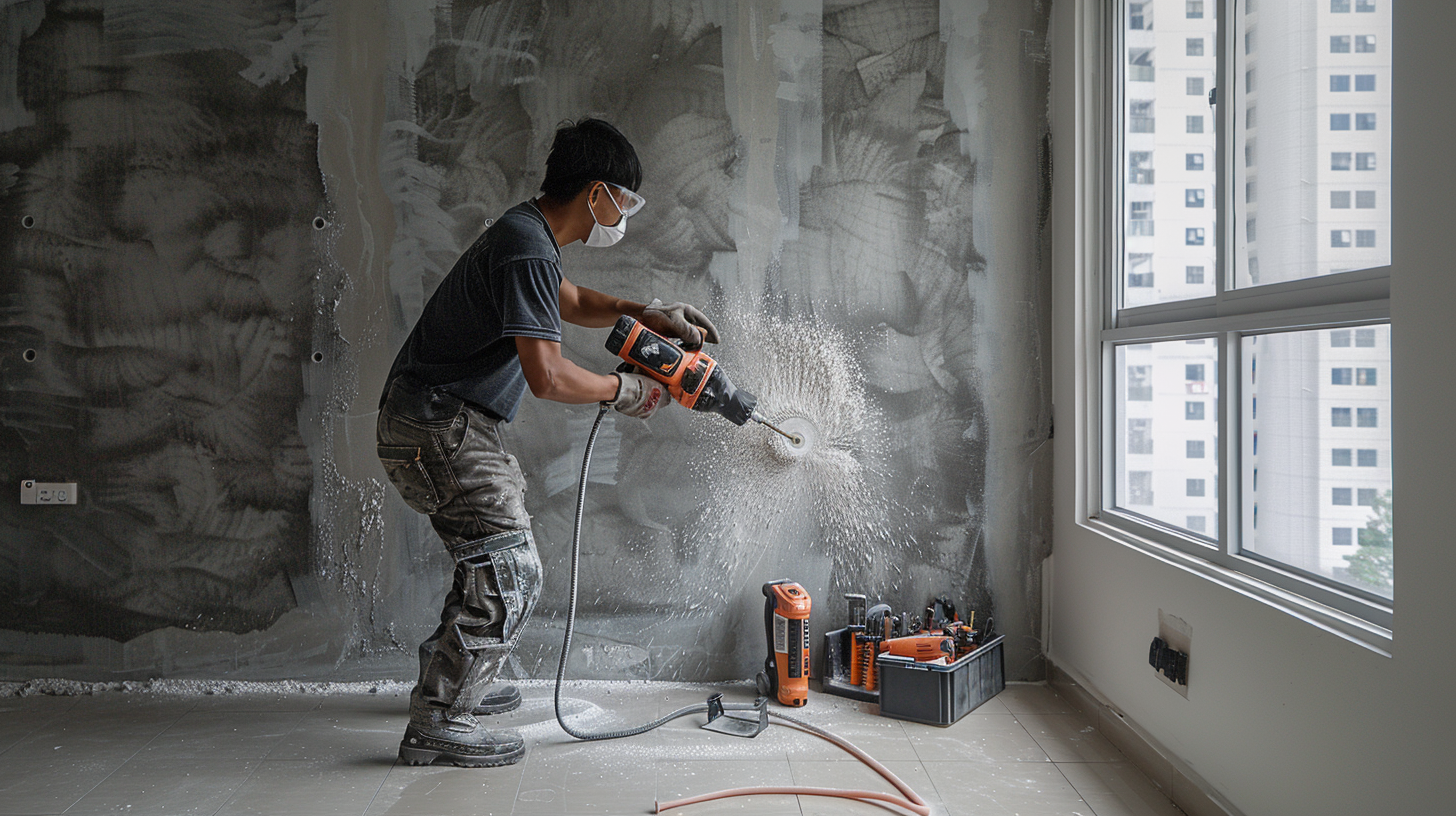

If you searched wall drilling service singapore, you likely want one thing: install something securely without cracking tiles, hitting concealed wiring, or getting complaints from management. This blog will walk you through safe drilling practices for HDB and condo walls, what a drilling handyman actually does, and when professional minor renovation & home improvement support is the smarter option.
What “Wall Drilling” Means in Singapore Homes
Wall drilling is the act of creating holes in a wall substrate so you can install anchors and fasteners that hold weight. In Singapore flats, drilling is rarely just about making a hole. It is about what the wall is made of, what sits behind it, and how the load behaves over time.
A safe drilling job produces three outcomes:
- The hole size matches the anchor specification, not “close enough.”
- The anchor type matches the wall material, not the installer’s habit.
- The installed item remains stable after repeated daily use.
This applies to common requests such as TV brackets, curtain rods, mirrors, bathroom accessories, floating shelves, wall-mounted cabinets, and picture rails.
Why HDB Wall Drilling Has Extra Risk
Most homeowners worry about cosmetic damage. The bigger risk is drilling into concealed electrical wiring.
HDB publishes specific guidance on drilling into walls with concealed electrical wiring, including a safe zone approach around switches and sockets to reduce the risk of hitting concealed cables.
That guidance exists because cable routes in walls are predictable in many cases, but not perfectly predictable after years of renovations, alterations, and contractor workmanship across older flats.
HDB Wall Drilling Rules You Must Know Before You Drill
A drilling handyman who understands HDB housing conditions typically checks these constraints first:
- Keep away from common concealed wiring zones near switches, sockets, and their vertical or horizontal runs where cables are often routed.
- Follow HDB renovation responsibilities and guidelines. The homeowner remains responsible for ensuring works comply with HDB requirements.
- Never drill the household shelter walls. SCDF explicitly states household shelter walls, floor, and ceiling must not be hacked or drilled.
That last point is where many DIY jobs go wrong. The shelter wall looks like “just another wall” until you damage something that was designed to remain intact.
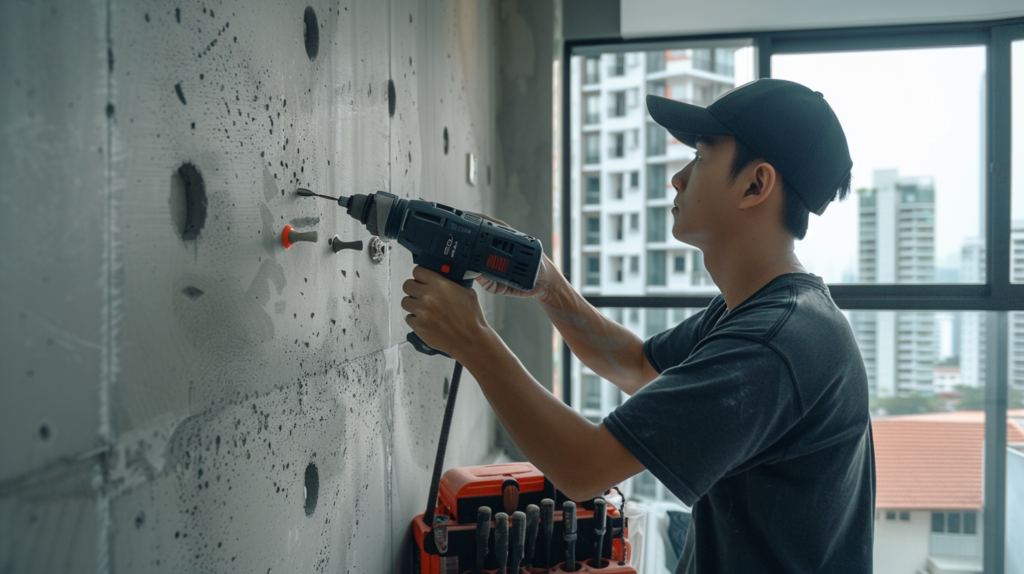
Condo Walls Are Not Always Concrete
Condo units often mix wall types within the same home:
- Solid concrete external walls
- Internal partition walls that may be drywall or lightweight block
- Tiled feature walls
- Laminated panels installed over a wall surface
A safe installer treats wall type as a technical constraint, not an aesthetic detail.
Drywall is common in newer housing layouts and renovations because it is lighter, faster, and cleaner than hacking concrete. HDB’s drywall user guide explains anchor options and installation steps for drywall, including light-duty and heavy-duty anchors.
If your condo bedroom wall is drywall and you drill it like concrete using a generic plug, shelves will gradually loosen, especially if people lean on them or load them with books.
What a Drilling Handyman in Singapore Actually Installs’
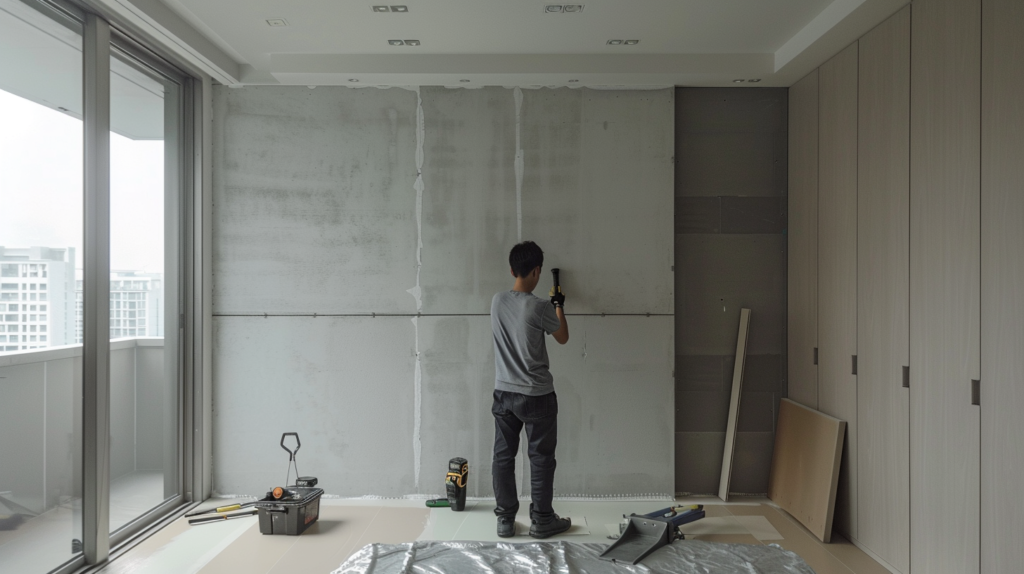
Most wall drilling installation Singapore requests fall into a few predictable categories.
Bathroom and Kitchen Accessories
- Towel bars
- Toilet paper holders
- Shower caddies and glass shelves
- Mirrors and mirror cabinets
These are high moisture zones. Poor installation leads to rusting fasteners, cracked tiles, and fittings that detach.
Living Room and Bedroom Fixtures
- TV bracket installation Singapore
- Floating shelves and display ledges
- Curtain rod installation
- Wall-mounted shoe cabinets
- Picture frames and rails
These fixtures experience repeated vibration and pulling forces. Stability matters more than the initial “it looks okay.”
Home Office Mounting
- Monitor arms mounted to a wall
- Acoustic panels
- Whiteboards
- Pegboards and tool boards
These are load-sensitive because the weight is not always static. People pull and push frequently.
Drill Concrete Wall Singapore: Tools and Technique That Prevent Damage
Concrete is strong, but it punishes bad technique.
A professional drilling approach usually includes:
Correct Drill Type
- Hammer drill for masonry
- SDS rotary hammer for tougher concrete and repetitive drilling work
The tool choice affects hole cleanliness and reduces the tendency to over-force the drill, which is how you crack plaster or chip tile edges.
Correct Drill Bit
- Masonry bits for concrete and brick
- Tile bits for tile surfaces
- Pilot drilling strategy for delicate surfaces
Tile drilling is a finishing skill. One wrong angle or too much pressure can spider crack a tile. That becomes a replacement job, not a “touch-up.”
Depth Control
A good installer uses a depth stop or marking method to avoid drilling deeper than needed. Depth matters because:
- Deeper holes weaken some substrates
- You increase the chance of hitting concealed elements
- Anchors may not seat correctly if the hole is too deep or too shallow
Wall Anchors Explained in Plain Terms
Anchors are the difference between “it holds today” and “it holds for years.”
For Concrete Walls
Common solutions include:
- Nylon wall plugs for light to moderate loads
- Sleeve anchors for heavier fixtures
- Concrete screws where appropriate
Load stability depends on correct hole diameter and clean hole debris removal. Dust left in the hole reduces grip.
For Drywall and Partition Walls
Drywall requires anchors designed to spread load behind the surface.
HDB’s drywall user guide describes the use of self-drill anchors and toggle style anchors, including step-based installation.
If you are mounting something that can be pulled, like a shelf or a foldable table, you want anchors that distribute load rather than relying on friction inside a thin surface layer.
For Tiled Walls
The anchor might still be for concrete behind the tile, but the drilling method must respect the tile surface first. Cracked tile is often the costliest “small mistake” in wall drilling.
Safe Zone Thinking: How Pros Avoid Concealed Wiring
A real wall drilling service does not rely on luck.
HDB’s drilling guide for concealed electrical wiring provides practical spatial guidance to reduce drilling into concealed cables.
Professional installers usually combine:
- Visual mapping of sockets and switches
- Conservative avoidance of likely cable runs
- Appropriate detection tools where feasible
- Controlled drilling depth and staged drilling
If the wall location is near multiple electrical points, the safest decision is often to shift the mounting location slightly rather than forcing an exact aesthetic position.
HDB Household Shelter Walls: A Hard No
This deserves its own section because it is a frequent mistake.
SCDF’s guidance for household shelters states they must not be hacked or drilled, and it lists restricted works due to safety requirements.
Practical rule for homeowners:
If the wall has the shelter door, treat that whole enclosure as off-limits for drilling. Mount shelves or hooks elsewhere. No exceptions.
When Wall Drilling Becomes “Minor Renovation” Territory
Some drilling jobs are not simple fixture installs. They become minor renovation work because they involve multiple mounting points, alignment requirements, and finishing standards.
Examples:
- Installing several shelves as a full feature wall
- Mounting a TV with concealed trunking and repositioned power points
- Mounting heavy wall cabinets with precise leveling and repeated anchoring
- Installing a wall panel system that requires repeated drilling and clean finishing
This is where Fix It Papa’s positioning as a one-stop home repair and handyman provider matters. The same visit can cover drilling, mounting, touch-ups, and small adjustments, without splitting work across multiple vendors.
What to Expect From a Professional Wall Drilling Installation Singapore Service
A high-quality service flow usually looks like this:
1) Site Check Before Drilling
- Confirm wall type
- Confirm load and usage pattern
- Confirm alignment lines and height requirements
- Confirm restrictions such as shelter walls and obvious cable zones
2) Marking and Leveling
Installers use a laser level or manual leveling method. For shelves, leveling matters because it changes load distribution across anchors.
3) Pilot Drilling and Controlled Progress
Pilot drilling reduces surface damage and keeps holes accurate. This matters for tiled walls and painted finishes.
4) Anchor Seating and Load Check
A good installer checks for micro-movement before mounting the fixture fully. If the anchor spins or feels loose, the hole is corrected early, not hidden behind the fixture.
5) Clean Finishing
Clean holes, aligned fixtures, and tidy debris removal are part of what homeowners pay for. Dust control matters, especially in occupied homes.
Pricing Logic: How Wall Drilling Services Are Usually Quoted
Instead of quoting random numbers, it is more useful to understand what drives cost in Singapore.
Most service quotes are influenced by:
- Wall type complexity, concrete vs tile vs drywall
- Number of holes and fixtures
- Load risk, light accessories vs heavy shelves
- Access constraints, tight corners, high ceilings
- Finishing requirements, neat trunking alignment, patching small chips
If you want a realistic baseline for household job pricing in 2026, you can reference a local benchmark like the handyman services price list for Singapore in 2026
When You Should Hire a Drilling Handyman Singapore
Hiring a professional is the practical choice when:
- You are mounting anything heavy or pull-sensitive, like shelves, cabinets, TV brackets
- Your wall is tiled or finished with panels
- Your wall is drywall and you are unsure about anchor selection
- The mount zone is near sockets or switches and you want to reduce wiring risk
- You live in an HDB unit and want to avoid restricted zones, especially the household shelter
The goal is not just to mount something. The goal is to mount it in a way that does not degrade over time.
What to Prepare Before Booking Wall Drilling Service Singapore
This makes the job faster and reduces rework:
- Photos of the wall and the surrounding area
- What you are mounting, with weight if known
- Desired height measurement from floor
- Whether you have the fixtures and brackets already
- Any building restrictions from condo management, such as drilling hours
If you are mounting in a bathroom, share whether the surface is full tile, half tile, or painted plaster.
Conclusion
Wall drilling is safe when wall type, anchor choice, and restricted zones are treated as engineering, not guesswork. HDB flats add extra rules because concealed wiring zones and household shelters carry real risk. Condos add variety in wall substrates that demand the right anchors and technique.
Contact Fix It Papa if you want secure installation work that respects HDB constraints, condo wall types, and clean finishing expectations.
FAQs About Wall Drilling Service Singapore
Is wall drilling allowed in HDB flats?
Yes for normal mounting, but you should follow HDB renovation responsibilities and avoid drilling into zones where concealed electrical wiring is likely to run. HDB provides drilling guidance to reduce wiring damage risk.
Can I drill into the household shelter wall?
No. SCDF states household shelter walls, floor, and ceiling must not be hacked or drilled. Mount shelves or fixtures outside the shelter enclosure.
What anchor should I use for drywall in condos?
Drywall needs anchors designed for hollow or board systems, not generic concrete plugs. HDB’s drywall user guide shows light-duty and heavy-duty anchor methods and how they are installed.
How do I know if my wall is concrete or partition?
Solid concrete typically feels dense and requires a hammer drill for clean holes. Partition walls can sound hollow and behave differently with anchors. If you are unsure, a drilling handyman can confirm on-site before choosing anchors.
What counts as wall drilling installation Singapore service?
It usually includes marking, leveling, drilling, anchor installation, and mounting of the fixture. For heavier items, good installers also perform stability checks and basic finishing so the fixture stays secure long term.
Leave a Reply
You must be logged in to post a comment.