
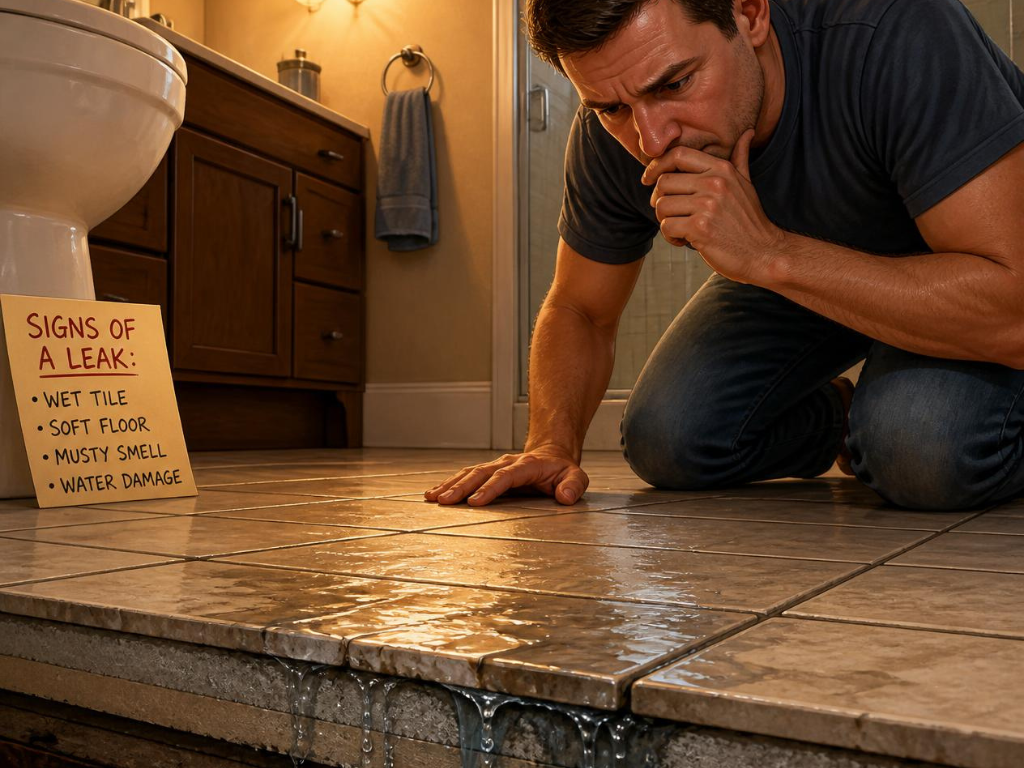

Water seeping up through bathroom floor tiles gets quoted as a hacking job far more often than it needs to be. Four cheaper causes account for most cases, and three of them sit inside a handyman’s scope under PUB rules. This blog walks you through ruling those out first, then the HDB specifications any waterproofing contractor must meet, before you commit to bathroom plumbing repairs.
Why is water coming up through my bathroom floor tiles?
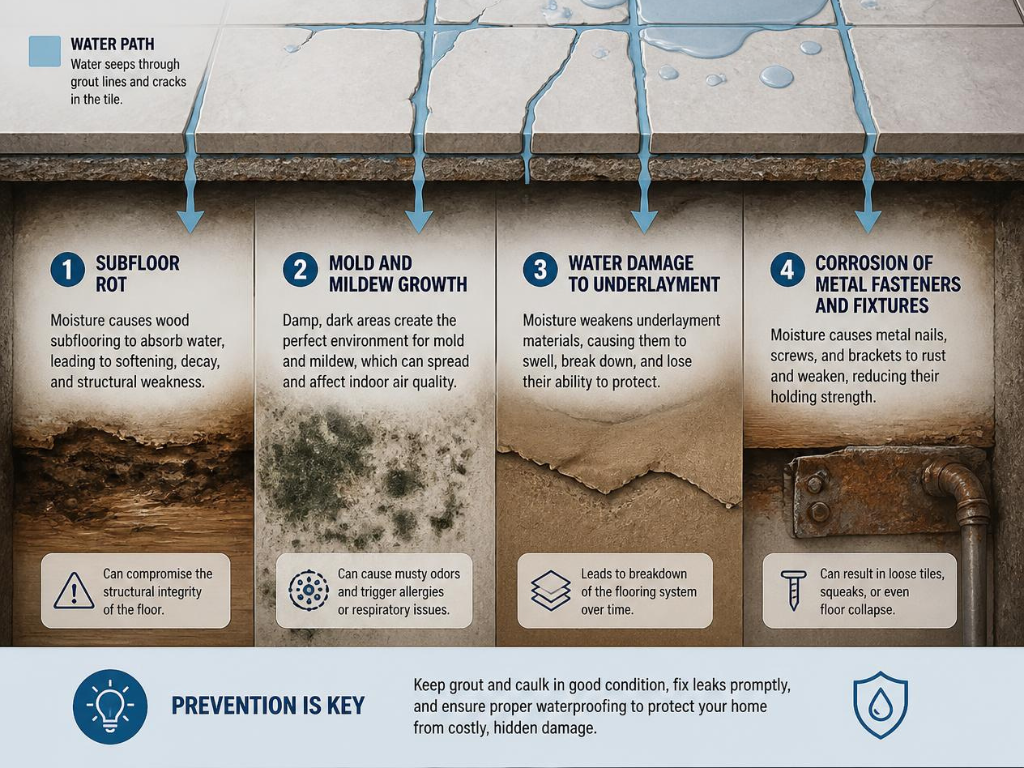
Water appearing at grout lines means the screed beneath the tiles is saturated and pushing moisture back up to the surface. The screed is a porous cement layer, so once water gets into it faster than it can drain away, it holds that water and releases it through the weakest path, which is the grout.
Four causes put water into the screed, and they differ enormously in cost. A failed seal at the floor trap, a leaking concealed pipe, degraded grout letting shower water past, and a genuinely failed waterproofing membrane. The first three are contained repairs. Only the fourth needs hacking.
The order in which people investigate is usually backwards. A wet floor gets a waterproofing quote before anyone has checked whether the floor trap seal is intact, which is how a $150 problem becomes a four-figure one.
Worth noting: the entire first page of search results for this problem belongs to waterproofing contractors, whose answer to every version of the question is hacking and re-waterproofing. That is a real solution for a real failure mode, and it is also the most expensive one on the list.
Is the floor trap the actual source?
The floor trap penetration is the most common entry point in Singapore bathrooms. It is the one place where the waterproofing membrane has to be cut and sealed around a pipe, and a seal that has degraded lets shower water run straight past the membrane into the screed.
The geometry explains the failure rate. Every other part of the floor is a continuous membrane surface, while the trap is a junction between two materials with a joint that has to stay watertight for decades in a wet, warm environment. Sealant hardens and shrinks; the membrane edge lifts.
Look at the collar. HDB’s technical conditions require a UPVC floor trap grating with long collar at floor traps when floor finishes are replaced, precisely because the long collar carries the seal down into the trap rather than relying on a surface bead. A short grating sitting loose in the opening is a defect worth photographing.
Resealing the trap junction is a contained job. It targets the actual failure point rather than the whole floor, and where the membrane elsewhere is sound, it stops the ingress without touching a single tile.
Could a choked floor trap be causing the water?
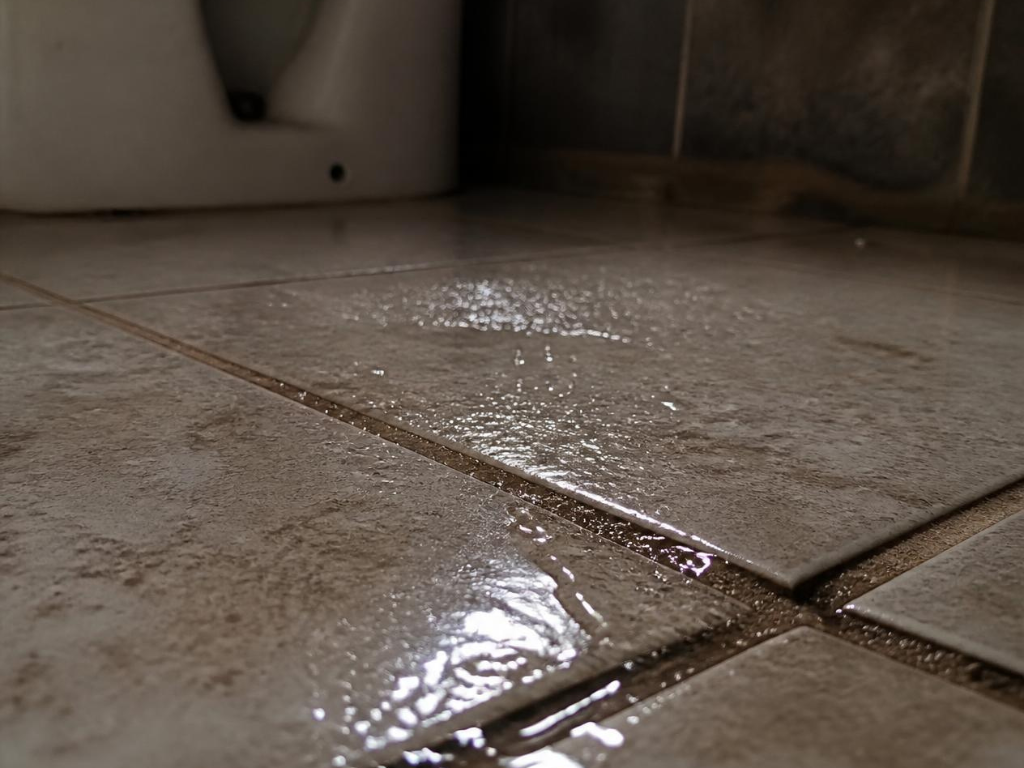
A partly blocked floor trap causes ponding, and standing water sits on the tiles long enough to work through grout that would otherwise shed it. The floor is not seeping; it is failing to drain.
The test takes a minute. Pour a bucket of water onto the floor and watch it go. Water that disappears immediately means the trap is clear. Water that pools and drains slowly means hair, soap scum or debris has narrowed the trap, and the standing water is the reason the floor stays wet.
Renovation is a common cause and HDB names it directly. Contractors are prohibited from washing renovation debris down the floor trap, and the guidance states plainly that any resulting choke has to be cleared and repaired at the owner’s expense. A bathroom that started ponding shortly after renovation usually has cement slurry in the trap.
Clearing a blockage in a floor trap sits on PUB’s list of simple plumbing works, so floor trap and drain clearing needs no licence and no hacking. This is the cheapest possible outcome and it is worth eliminating before anything else.
Is it the grout, or the membrane underneath?
Grout is not waterproof and was never meant to be. It is a porous cement filler, so water passes through it by design and the membrane below is what actually stops it. Failed grout accelerates the process rather than causing the leak on its own.
Inspect the lines. Cracked, crumbling or missing grout, especially at the perimeter where the floor meets the wall and around the trap, lets water reach the screed faster than the drainage can clear it. Regrouting slows the ingress and buys time.
Where regrouting fails, the membrane is the problem. A floor that stays wet after fresh grout has cured has water entering by another route or a membrane that stopped working years ago, and no amount of surface work will fix it.
Movement cracks tell you something structural. Grout cracking repeatedly along the same line, or tiles sounding hollow when tapped, points to a debonded tile bed rather than to grout wear, and that condition brings the membrane below into question too.
Could a leaking pipe under the floor be the cause?
A concealed supply pipe leaking beneath the screed saturates the floor continuously and looks identical to membrane failure from above. The distinction matters because one is a plumbing repair and the other is a renovation.
The water meter separates them in 30 minutes. Close every tap and appliance, read the meter, wait, and read again. Movement confirms a pressurised leak somewhere in your pipework. No movement means the water arriving in the screed comes from the bathroom’s own use, which points at the membrane or the trap.
Timing gives a second signal. A pipe leak wets the floor at a steady rate regardless of whether anyone showers, so a bathroom that stays wet through a week’s holiday has a pipe problem, not a waterproofing problem.
Confirming a pipe leak changes the whole job. Concealed leak detection locates it without opening the entire floor, and repairing a water supply pipe is regulated work requiring a PUB Licensed Plumber under rules that have applied since 1 April 2018.
What if the toilet or shower fitting is the real leak?
A failed seal at a toilet base or shower tray puts water onto the floor at exactly the point people assume the membrane has failed. Fixtures are the cheapest thing on the list to check and the most frequently skipped.
Dry and watch. Wipe the floor around the toilet base completely dry, then flush and observe. Water reappearing at the base within seconds indicates the seal beneath the bowl rather than anything structural, and confirming the toilet base and seal takes minutes.
Shower screens and trays deserve the same check. Silicone at the tray perimeter and along the screen channel hardens and pulls away, letting water track underneath and out onto the floor slab, which reads as seepage rising from below.
The pattern differs from true seepage. Fixture leaks concentrate at the fixture, while screed saturation spreads broadly across the floor and shows at grout lines well away from any fitting.
How do you test the floor before anyone hacks anything?
Run a ponding test. Block the floor trap, fill the bathroom floor with water to a shallow depth, leave it for 24 hours, and check the ceiling of the unit below for any change. Water appearing downstairs confirms the floor itself is passing water.
HDB requires this test after any floor finish replacement. Its technical conditions state that the flat owner and renovation contractor must conduct a water test on the bathroom or toilet upon completing the replacement of floor finishes, which is the same test used diagnostically before work begins.
The test is decisive precisely because it isolates the floor. Every fixture is out of use during the 24 hours, so a positive result cannot be blamed on a toilet seal or a shower screen, and a negative result rules the membrane out entirely.
Coordinate with the neighbour below and photograph their ceiling before and after. That evidence matters later if a cost-sharing conversation follows, and it stops the test becoming a dispute of its own.
Can you fix it without hacking the tiles?
Yes, for three of the four causes. Trap resealing, regrouting and fixture reseals all work from above and leave the floor intact, which is why they belong at the front of any diagnosis rather than as an afterthought.
Overlay is the compliant route where new finishes are wanted. HDB permits laying new toilet floor finishes over existing ones using adhesives, so a floor can be refreshed without breaching the membrane beneath.
Where the membrane itself has failed, surface work is a delaying tactic rather than a repair. Overlaying tiles on a floor that already leaks traps the problem underneath and adds height, and the water continues reaching the slab exactly as before.
Take the stance plainly: a contractor who offers to overlay a bathroom that is actively leaking downstairs is selling you a cosmetic job for a structural problem. Overlay is for appearance. Re-waterproofing is for leaks.
What does HDB actually require for bathroom waterproofing?
Specific materials and a specific method, published and enforceable. Pre-packed waterproofing screed and waterproofing membrane must be used in bathrooms and toilets before laying new floor finishes, and the membrane must be upturned a minimum of 150mm against walls, kerbs and pipes.
That 150mm upturn is the detail worth checking. A membrane laid flat across the floor without turning up the walls leaves an open joint at the perimeter, which is where water enters even on a newly waterproofed floor, and it is the most common shortcut in a rushed job.
New flats carry a separate restriction. HDB states that the toilet floor and wall finishes it provides must not be replaced for three years from the completion date of the block, since a waterproofing membrane is laid on the cement screed to prevent water leaking into the flat below. Note the wording: three years from block completion, not from your key collection, which usually falls three to six months later.
Only contractors from HDB’s Directory of Renovation Contractors are permitted to carry out this work, and the same guidance covered in the HDB plumbing and renovation rules applies to any permit needed alongside it.
What does each repair actually cost?
Cost spreads across roughly an order of magnitude depending on which of the four causes you have, which is the entire reason to diagnose before quoting. Fix It Papa’s rates start at $50 for tap and faucet work and $80 for choke clearing.
Trap clearing and fixture reseals sit at the bottom, as short visits with inexpensive parts. Trap resealing and regrouting are contained jobs needing no permit and no hacking. Concealed pipe repair prices by access, since reaching the pipe is most of the work.
Full re-waterproofing is a different category entirely. Hacking, membrane, pre-packed screed, retiling and the mandatory water test make it a renovation rather than a repair, with a permit and a DRC-listed contractor required.
After-hours attendance adds a surcharge on the plumbing work, and our 2026 plumbing rate guide puts that at $50 to $150. Seepage is never urgent enough to justify paying it.
When do you genuinely need to hack and re-waterproof?
When the ponding test is positive and the trap, fixtures, grout and pipework have all been cleared. At that point the membrane has failed across the floor and there is no surface repair that reaches it.
Age supports the decision. HDB attributes ceiling leaks to the waterproof membrane and screed deteriorating through natural wear and tear, and identifies them as particularly common in older flats. A bathroom past two decades with a positive ponding test is at the end of its membrane’s life rather than suffering a one-off defect.
Repeated targeted repairs are the signal to stop. Two or three trap reseals and regrouts that each buy six months are collectively more expensive than doing the floor once, and they extend the period during which water is reaching the slab.
Fix It Papa handles the diagnosis and the plumbing-side repairs. Where the answer is a full re-waterproof, the work belongs to a DRC-listed renovation contractor, and knowing that before you pay for a diagnosis is worth more than a quote that assumes it.
Conclusion
A wet bathroom floor is a saturated screed, and four faults put water there at wildly different costs. Check the floor trap seal, clear the trap, inspect the grout, and run the meter test for a concealed pipe before anyone mentions hacking. Only a positive 24-hour ponding test, with everything else ruled out, confirms membrane failure and justifies the expensive answer.
Run the bucket test and the meter test this week. Book a diagnostic visit with both results and a photo of your floor trap, and you will know which of the four you have before spending anything.
Frequently asked questions
Why is my bathroom floor wet when there is no visible leak?
The screed under the tiles is saturated and pushing moisture back through the grout. Four causes put water there: a failed floor trap seal, a choked trap causing ponding, degraded grout, or a leaking concealed pipe. Only the fourth possibility, a failed waterproofing membrane, requires hacking the floor.
Can bathroom waterproofing be done without removing tiles?
Only for targeted faults. Resealing the floor trap junction, regrouting and resealing fixtures all work from above. A genuinely failed membrane cannot be repaired from the surface, and overlaying tiles on a leaking floor traps the problem while water continues reaching the slab below.
How do I know if my waterproofing membrane has failed?
Run a 24-hour ponding test. Block the floor trap, flood the floor shallowly, and check the ceiling below. HDB requires this same water test after any floor finish replacement. A positive result with the trap, fixtures, grout and pipework already cleared confirms membrane failure.
Can I hack my BTO bathroom floor tiles to fix seepage?
Not within three years of the block’s completion date. HDB prohibits replacing the toilet floor and wall finishes it provided during that period, because the waterproofing membrane sits on the cement screed beneath. You can lay new finishes over the existing ones using adhesives instead.
Does a choked floor trap cause water seepage?
It causes ponding, which produces the same wet floor. Standing water sits on tiles long enough to work through grout that would otherwise shed it. Clearing a blockage in a floor trap is on PUB’s list of simple plumbing works, so no licensed plumber is required.
Leave a Reply
You must be logged in to post a comment.